Fouga MagisterNo longer available, this page for information only
|
|
|
|
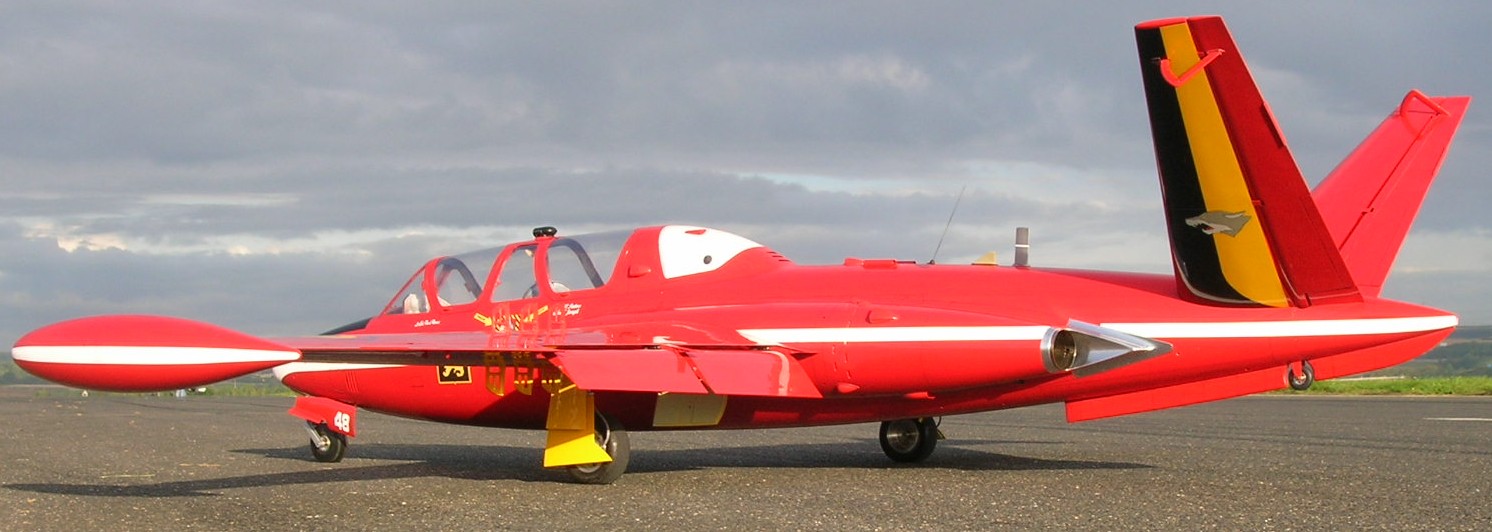
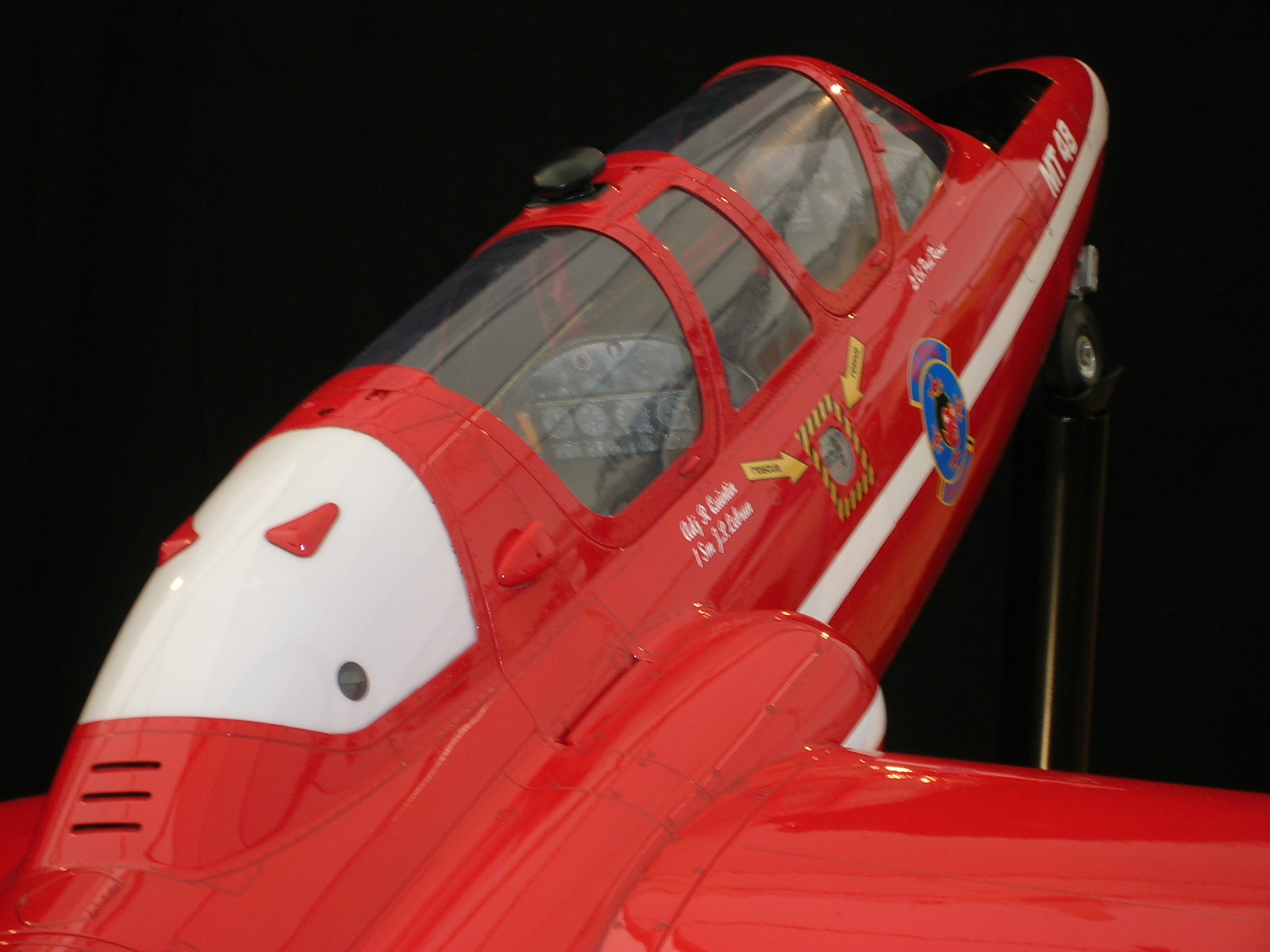
We started this project back in June 2000. The goal was to create a unique precision scale jet model, setting new standards in scale modelling. The model is perfectly suited for both IJMC Jet World Masters events and F4C scale competitions. We chose the scale of 1/4.5 with a wingspan of 2.7 metres giving the right size for super detailing while still allowing easy transport and handling. The model is designed around the latest generation of 80N (18 lbs) to 100 N (22 lbs) thrust class turbines like the JetCat RX100 and the Wren 100 DCi (my personal choice). Other turbines like the Graupner G-Booster 80, the IQ Hammer 90, the EvoJet Booster 90 or the Wren 80 will work fine. These are all compact and lightweight turbines which are perfectly matched for this airframe and provide plenty of power (more than twice the thrust to weight ratio of the full size!). Another suitable turbine is definitely the Hawk 100R. Due to the relatively small tailpipe diameter (only 62 mm), turbines with a larger exhaust nozzle diameter than the recommended turbines mentioned above are probably not suitable. |
|
|
|
Design philosophy |
|
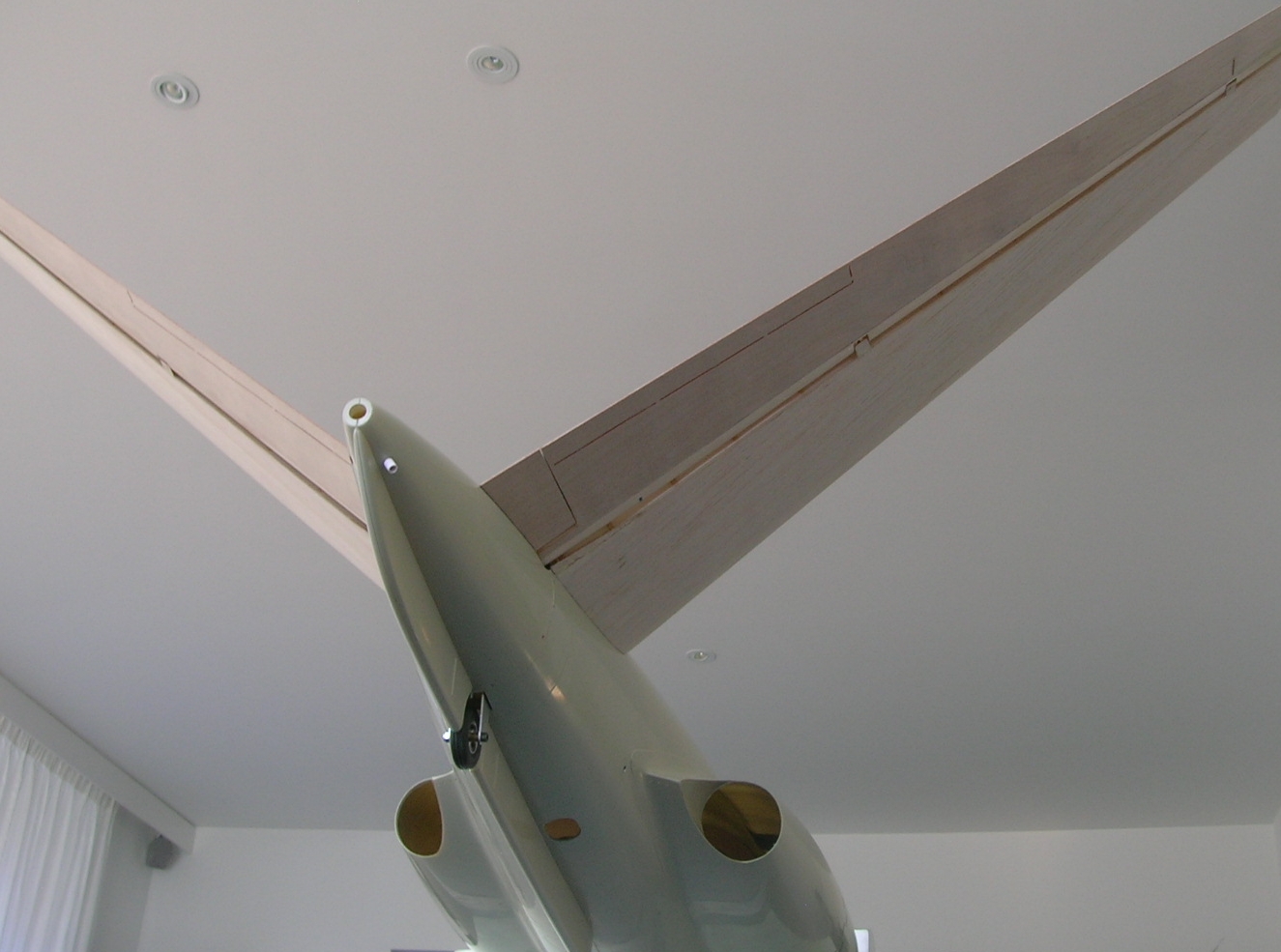
From the beginning, it was decided not to make any concessions to scale, even if this meant a lot more work (for me, the designer). All documented dimensions were respected to a tenth of a millimeter, resulting in outlines which are as true to scale as humanly possible. This includes the typical glider airfoil with its very thin trailing edge. All panel lines and fastener detailing is authentic. The landing gear is scale in all respects and we have taken special care to get the air intakes right. We decided to go for a traditional kit, so with built up wings and stabs. In fact, this was the only way we could also reproduce the internal hinging of the ailerons and the scale hinging of the ruddervators (mixed rudders and elevators) with their respective counterbalances, the gear door geometry and especially the demanding fowler flap setup on curved tracks (rather than the easy to reproduce offset hinges seen on more recent full size jet trainers). As a consequence, the model is aimed at the modeller with a minimum of experience in traditional building of flying RC models. Although the flying surfaces are built up, assembly is straightforward because of the precision interlocking CNC routed parts. Built up is also lighter, and lighter means a better flying model. If a repair is needed, you will know how to do it. Spare parts are available. Finally, satisfaction is greater when you have built your own model. A comprehensive set of vacformed scale details is included with the kit! |
|
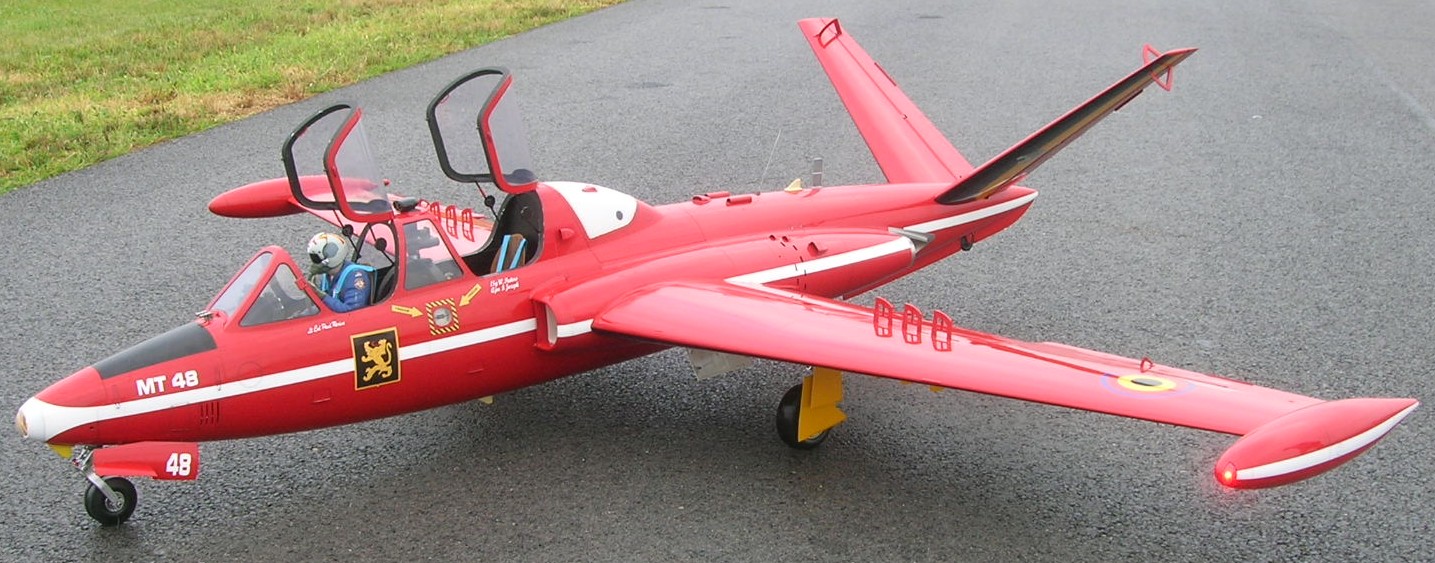
photograph of prototype model |
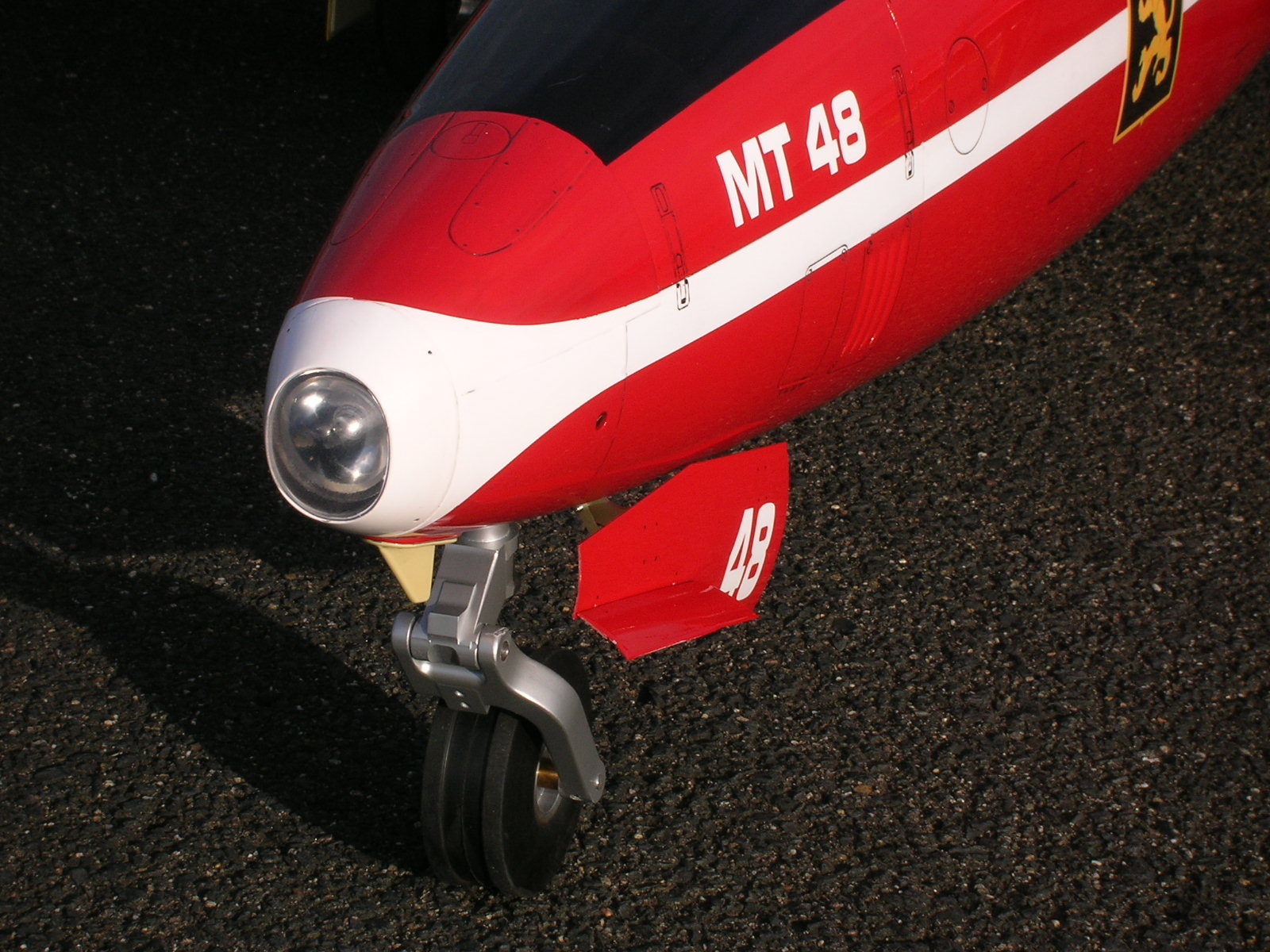
| The landing gear is designed to be fully scale. More info on the Fouga landing gear pages. |
|
nose wheel, nose strut and gear door on prototype |
|
All the experience of 40 years of modelling and 22 years of business were used to create this model. It would not have been possible to achieve the precision required without the modern CAD/CAM software and the CNC tools available at our workshop. |
|
|
|
|
|
Early stages |
|
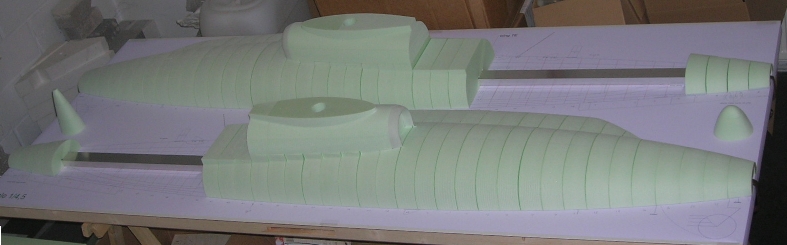
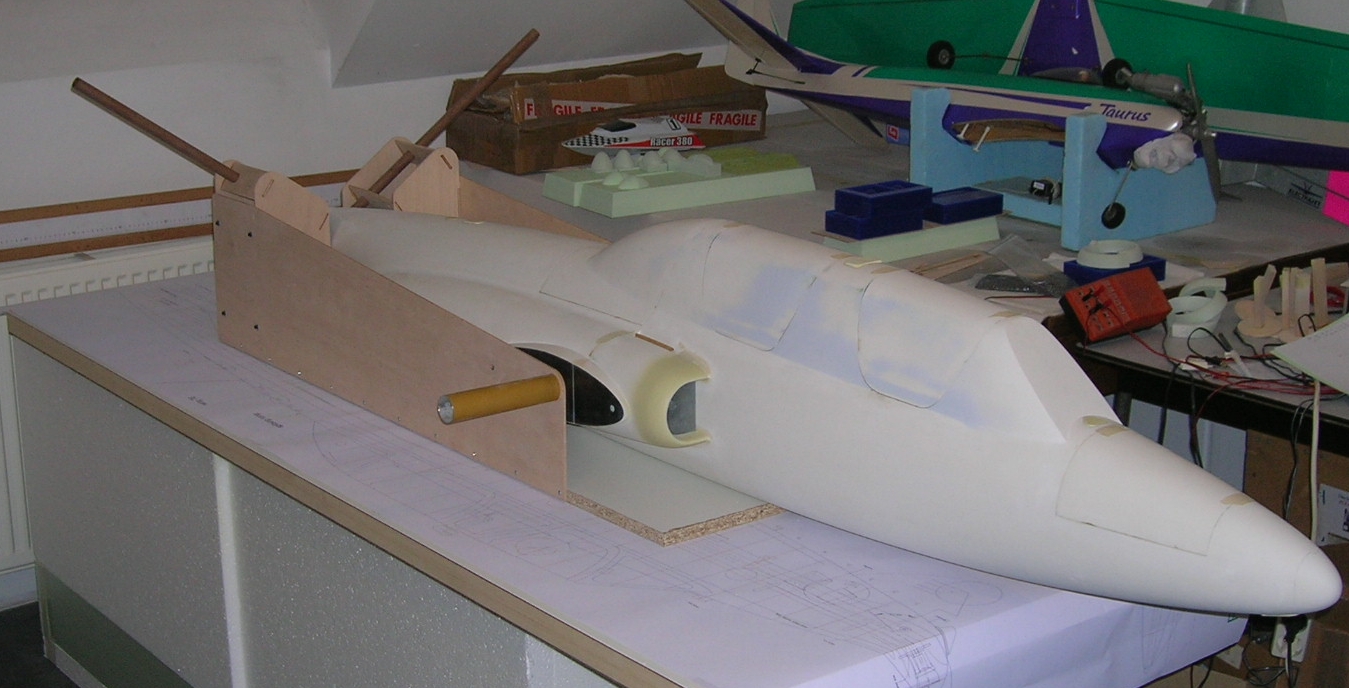
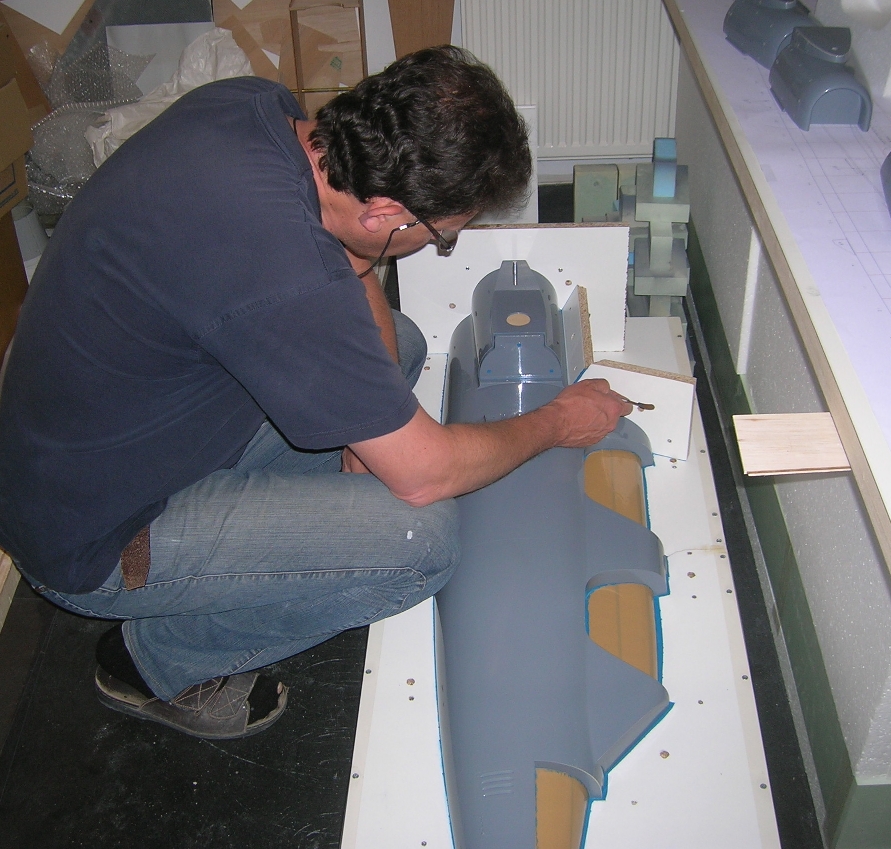
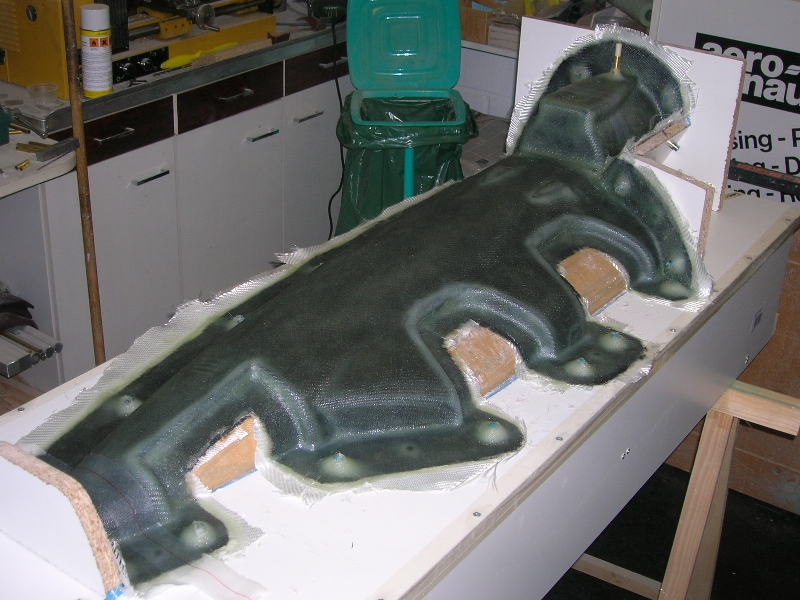
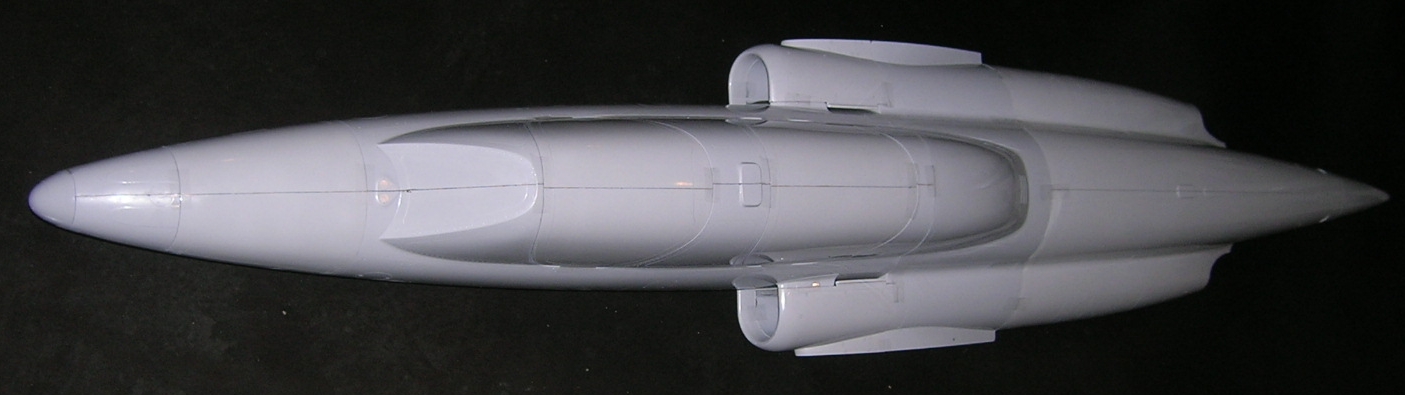
Here are some images of the model and the way it was
created. The pictures below show the building of the master and the
moulds for the fuselage.
|
|
building stages of the fuselage moulds
|
|
|
| The Fouga Magister is offered as a traditional kit. This means that all the fuselage parts and the tiptanks are made from lightweight epoxy fibreglass strategically reinforced with carbon. All panel lines and grilles are integrally moulded as well as the most prominent rivets and fasteners. |
|
epoxy fibreglass fuselage |
|
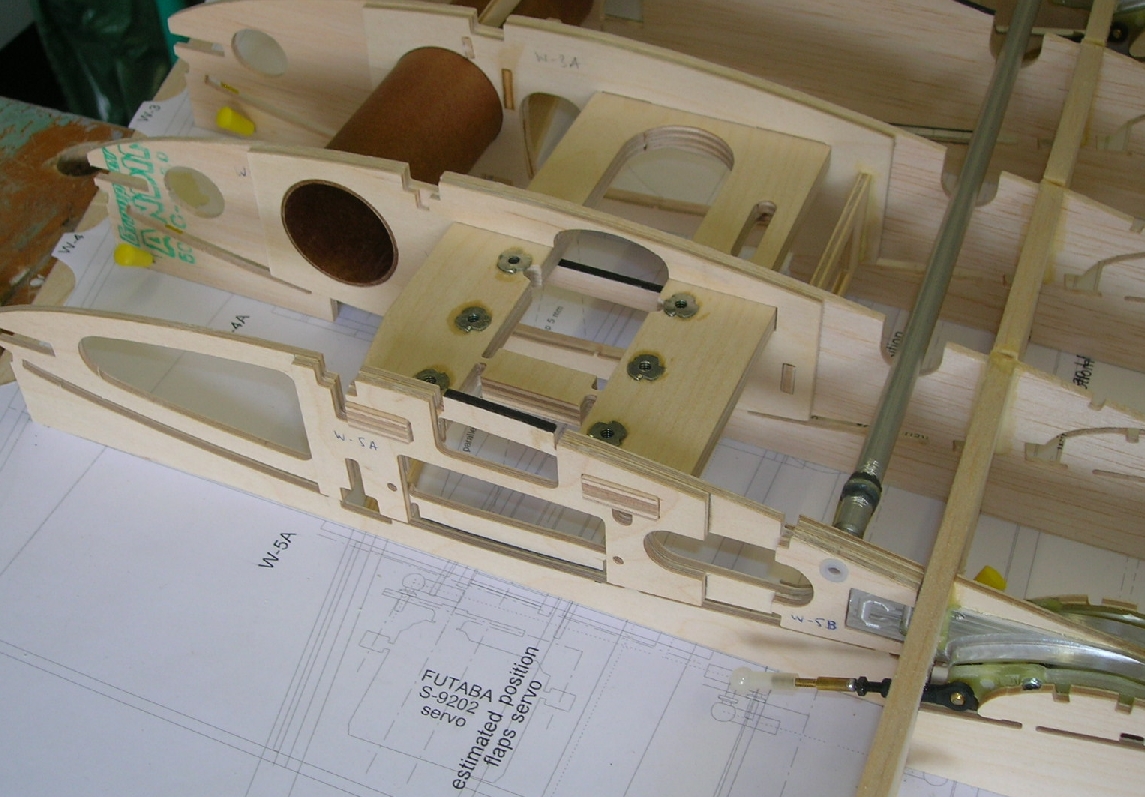
The wings and stabs need to be built by the modeller but that's
an easy task with all interlocking CNC routed parts which go together like
a 3D puzzle. All ribs and spars are designed with alignment tabs so everything can be built
straight and true directly on the building board. The scale 2 degree washout
on the outer wing panel is automatically achieved. Building a wing has
never been that easy!
The wings are sheeted with 3 mm balsa, except the area of the flaps and the ailerons which are sheeted with precision CNC cut 0,4 mm plywood. The modeller then needs to apply a durable covering to the wings, preferably a lightweight glass cloth (49 g/m2) with epoxy resin. The stabs are finished in a similar way. |
|
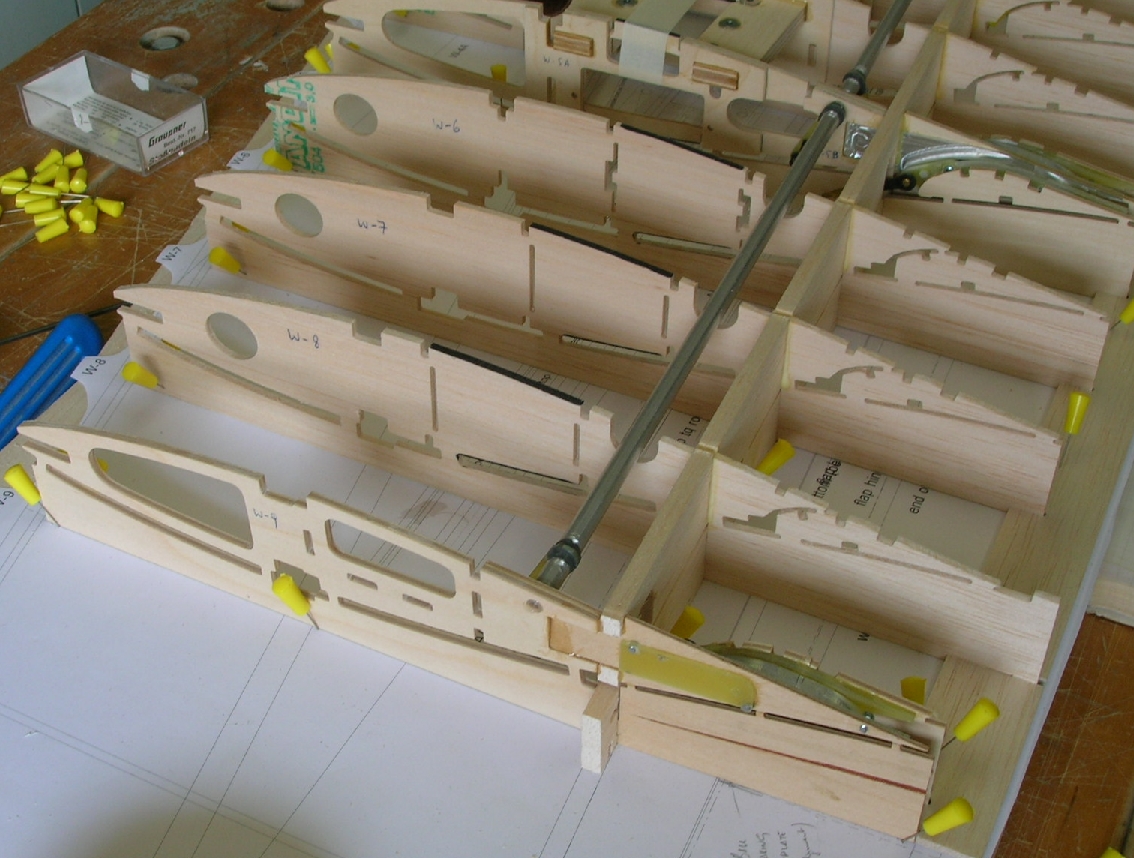
interlocking parts with large building tabs make assembly easy note the pinned down wood strip on the right hand side: it is a CNC cut template to hold the aft end of the ribs and subribs with flap rails at the correct angle and of course, this is included in the kit! |
|
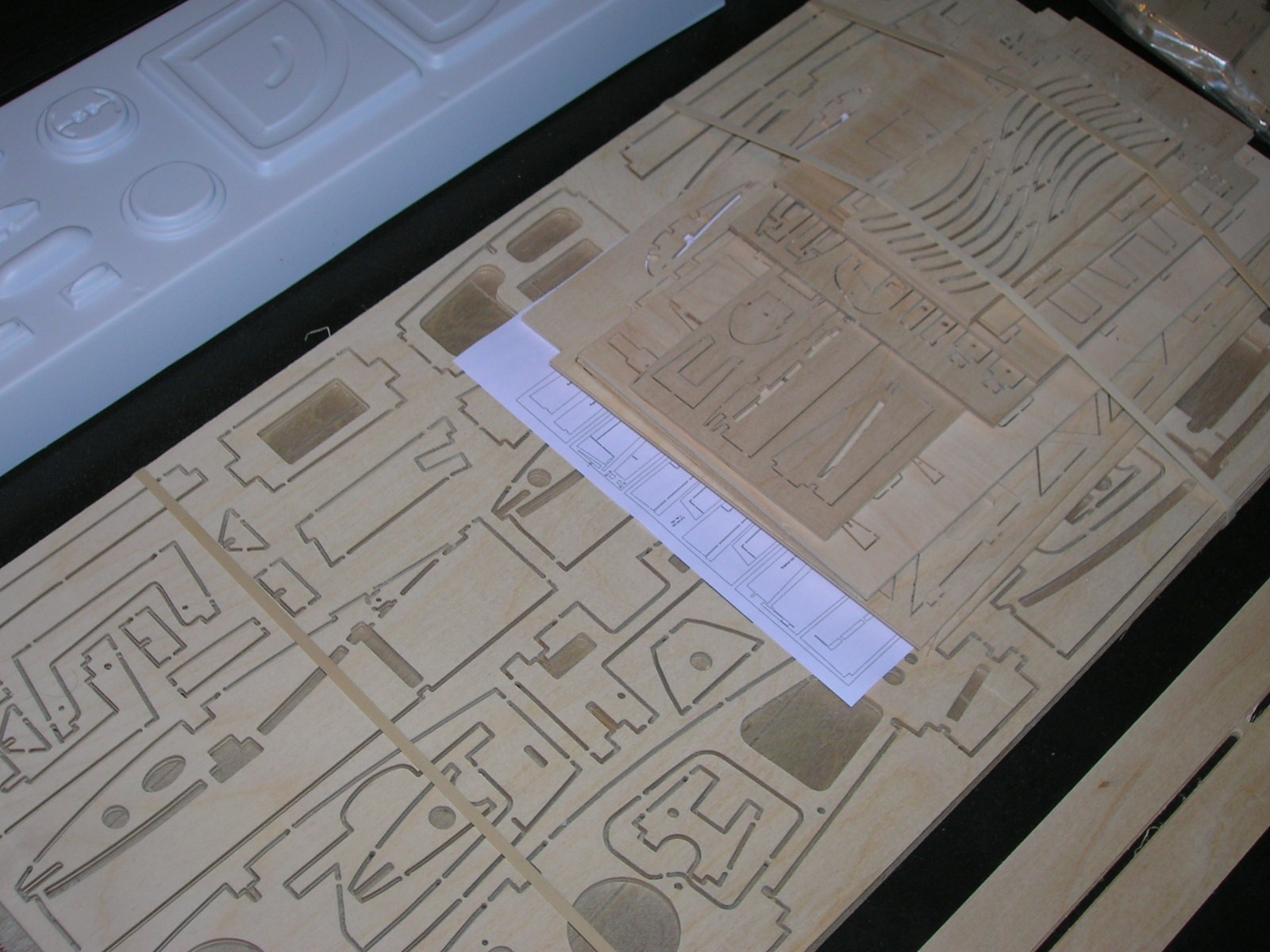
All balsa, plywood and FGB (fibreglass board) parts for the wings and stabs are precision CNC cut. Even the shear webbing (vertical grain balsa between the spruce spars) is already CNC cut to size. Only the strip wood and 3 mm balsa sheeting will need cutting to size. With this kind of prefabrication, framing up a wing goes surprisingly fast. |
|
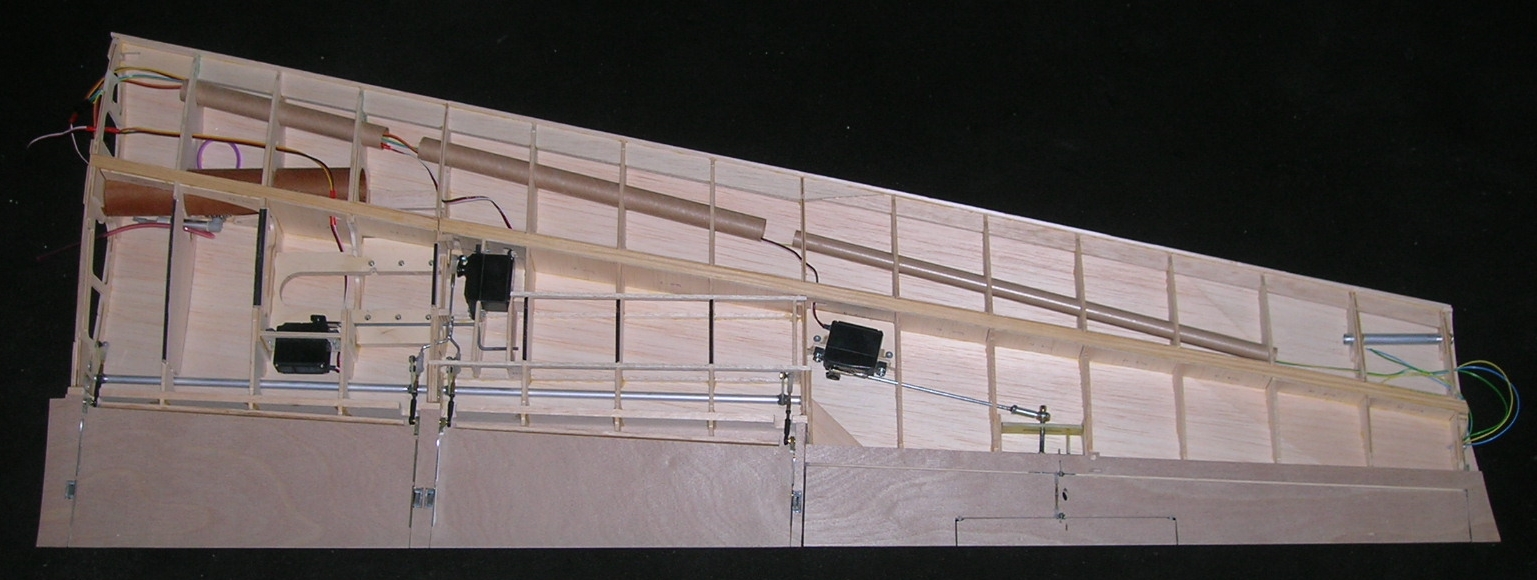
view of a completed wing panel just before adding the bottom 3 mm balsa sheeting; all servos are installed and the leads are neatly routed through cardboard tubes which are included in the kit; additional leads for tiptank navigation lights are installed on this wing (not included) |
|
|
|
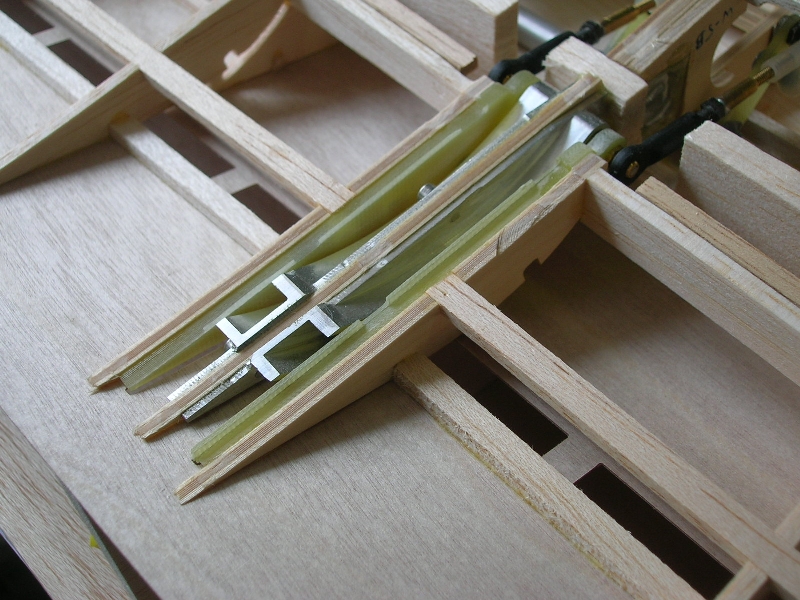
No concessions to scale: all linkages to the ailerons, ruddervators, flaps and airbrakes are internal, exactly as on the full size. The fowler flaps run on ball bearings inside CNC machined dural tracks. This produces exactly the same geometry as offset hinges but it is quite more difficult to reproduce. The original designers of the Fouga did not want to compromise the clean lines of the aeroplane for maximum efficiency. The geometry is indeed very complex but thanks to the interlocking CNC machined parts, the assembly is straightforward for the modeller. The hard part (designing all the parts) has been done for you!
|
|
|
|
internal aileron linkage on the left side, flap tracks with ball bearings on right side |
|
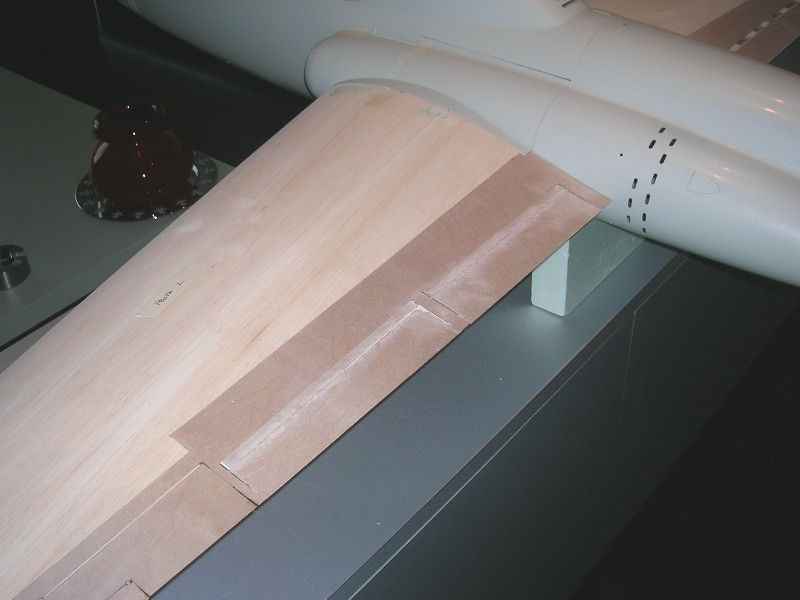
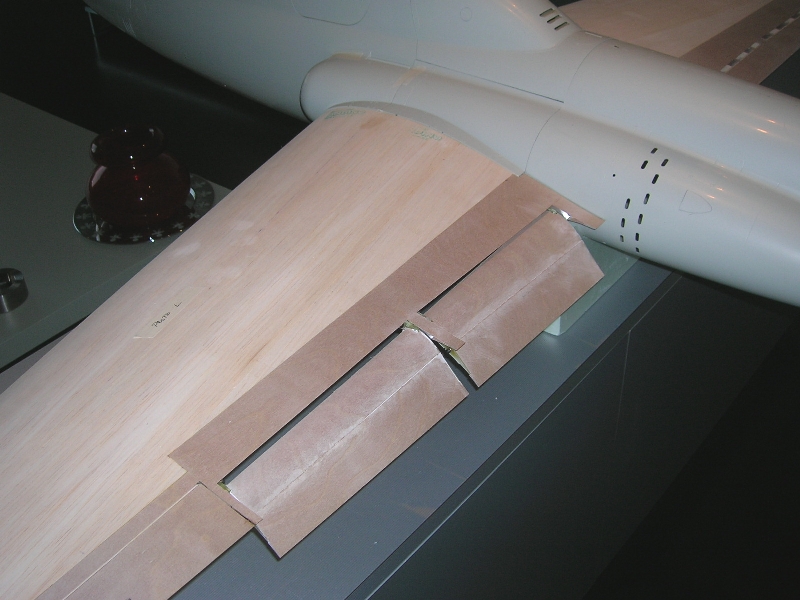
The sheeting of the flaps and ailerons are CNC cut from
0.4 mm plywood and interlock on the ribs for easy positioning. This also
allows the thin trailing edge of the full size to be faithfully reproduced.
|
|
|
|
flaps raised flaps lowered |
|
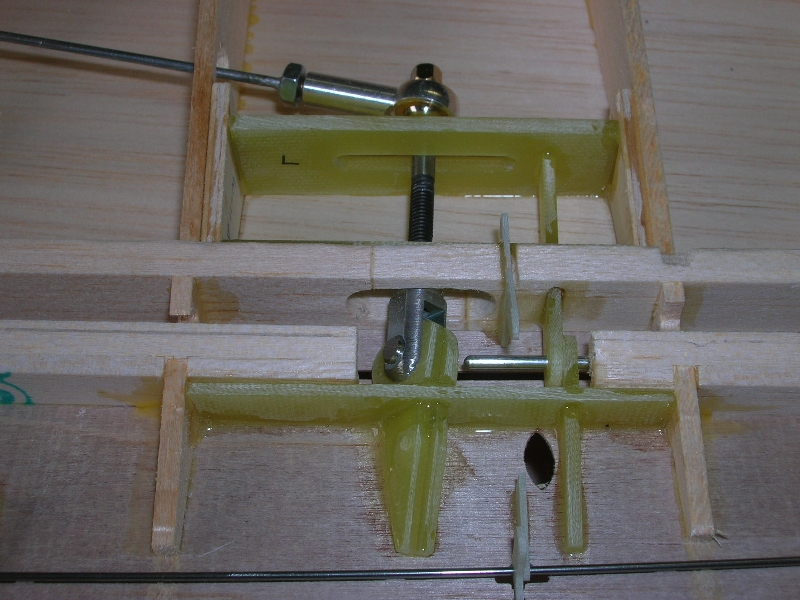
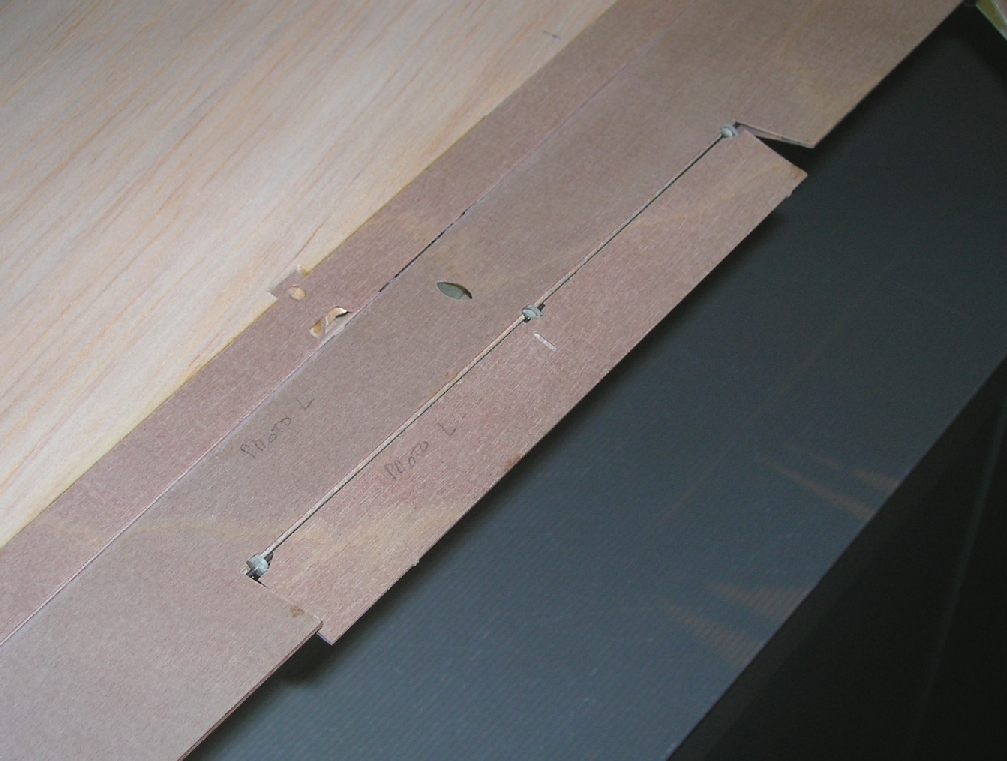
Even the aileron compensators (servo tabs) are standard in the kit. Again, all interlocking CNC machined parts make building this characteristic scale detail a breeze.
|
|
|
|
servo tab on aileron |
|
|
| The ruddervators (combined rudders and elevators) on the butterfly tail are hinged just as the full size.Again, the CNC cut parts make this part of the construction easy. |
|
|
|
scale hinging on butterfly tail |
|
|
|
Lightweight epoxy fibreglass components |
|
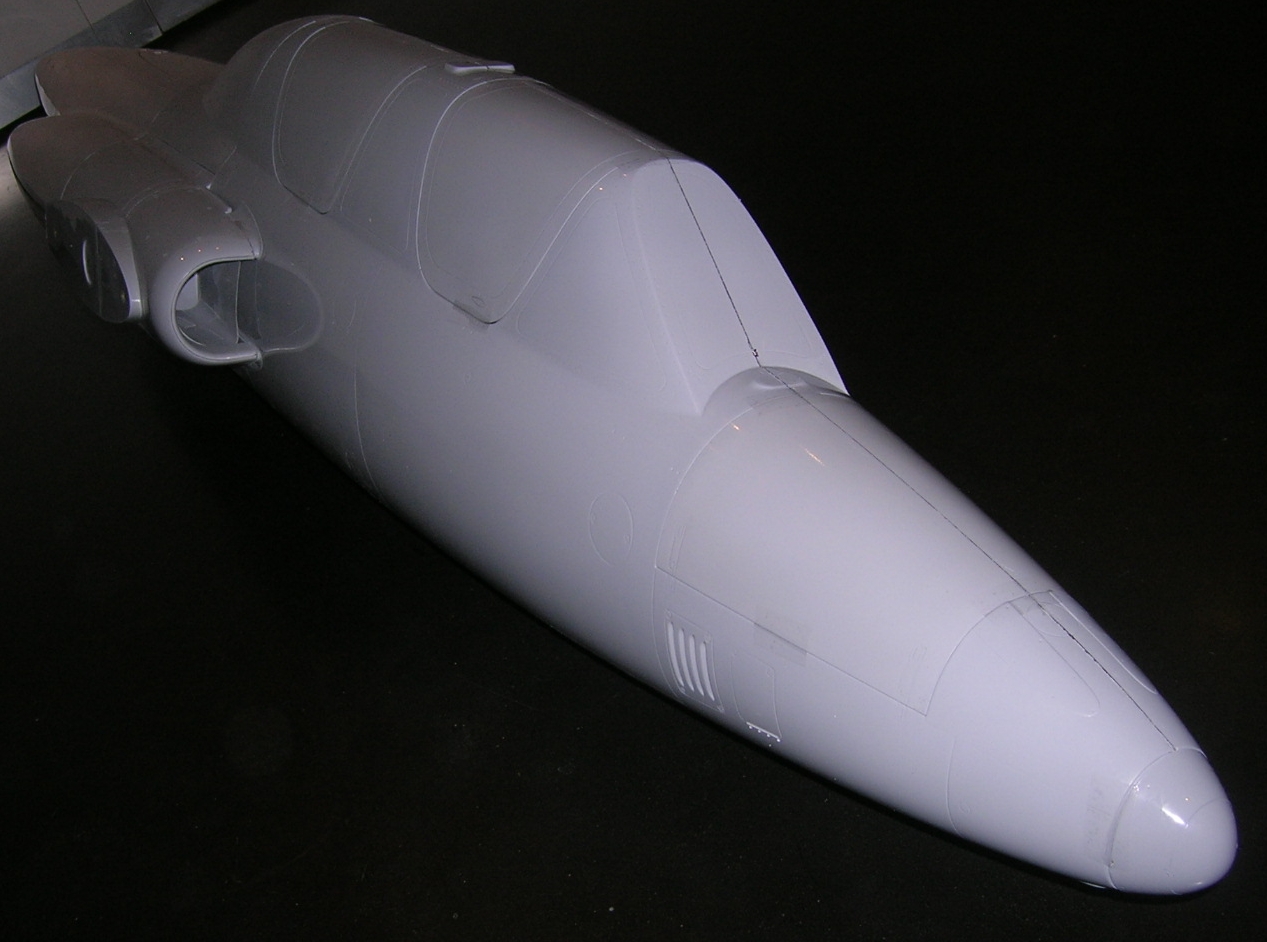
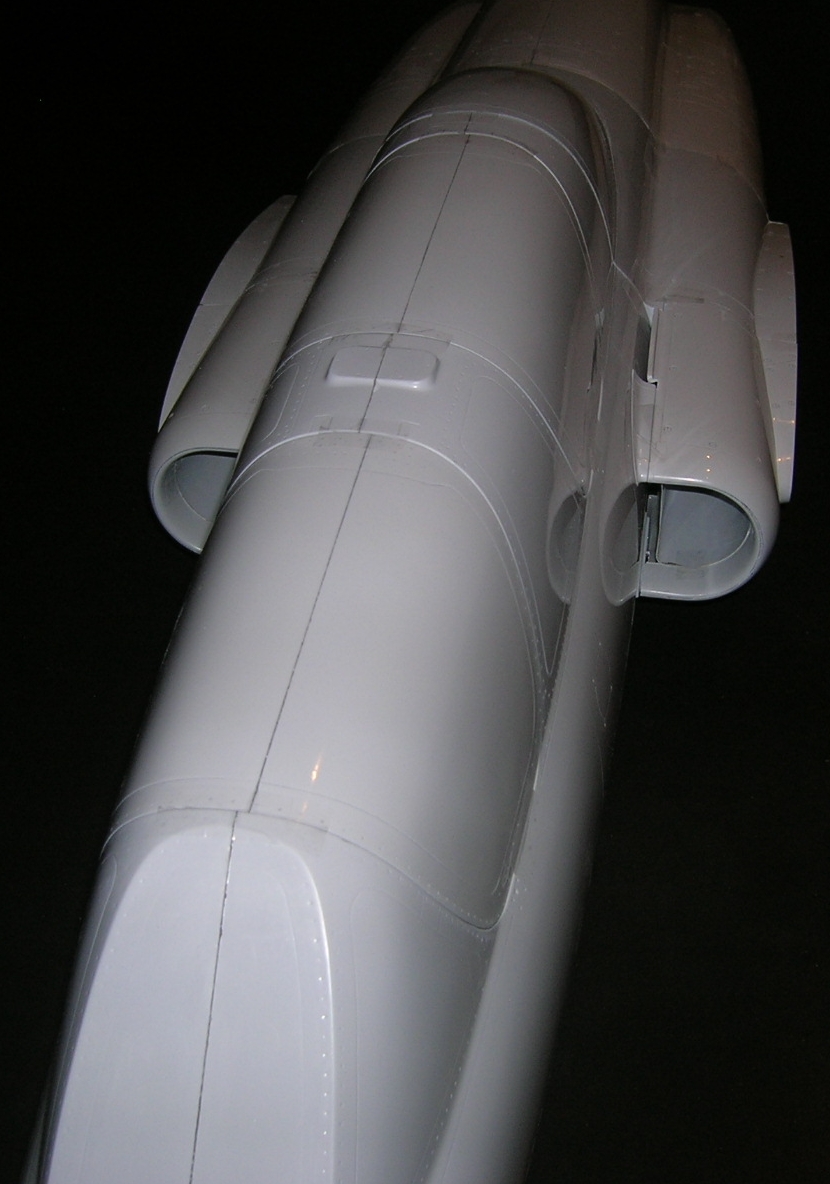
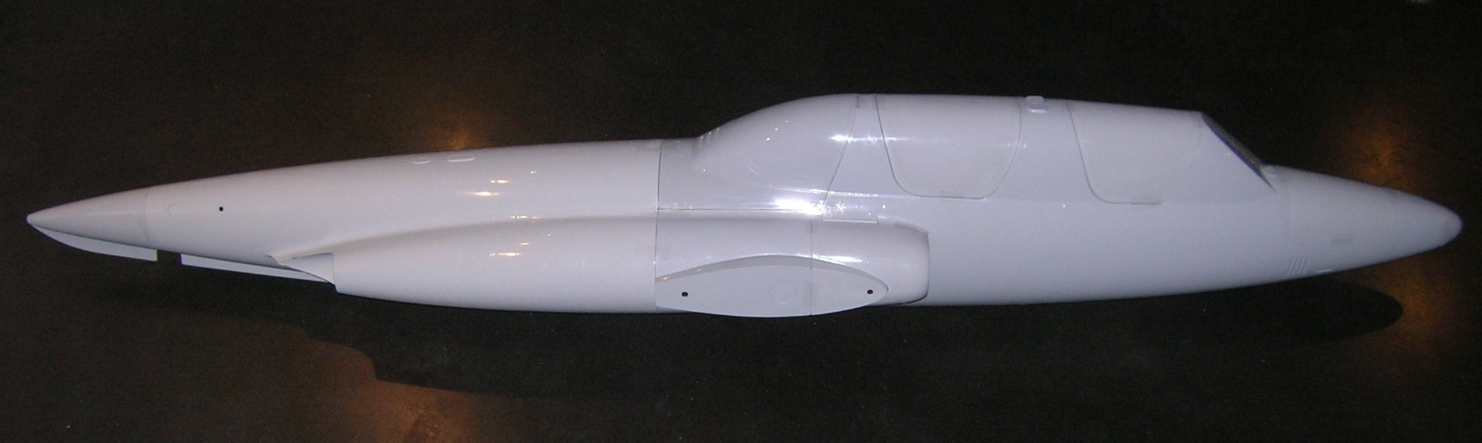
The fuselage is made from epoxy fibreglass with strategic carbon reinforcements. The nose cone is moulded separately to allow easy installation of the vacformed clear section. A landing light can be added at the modellers' discretion. The complete fuselage measures over 2,20 metres long and still, we managed to keep the weight down to only 1825 grammes! Yes, this is the weight of the complete fuselage as pictured below... |
|
some photographs of the assembled epoxy fibreglass fuselage |
|
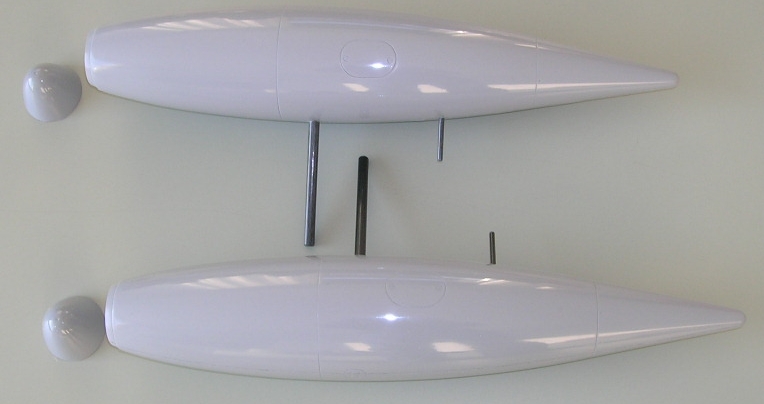
Also the tiptanks are lightweight: approx. 95 grammes each, including the 8 mm plug in carbon shaft and the 4 mm anti rotation carbon shaft. The nose cones of the tiptanks are moulded separately to allow easy installation of the vacformed clear section. Navigation lights can be added at the modellers' discretion. |
|
pair of tiptanks with carbon shafts installed |
|
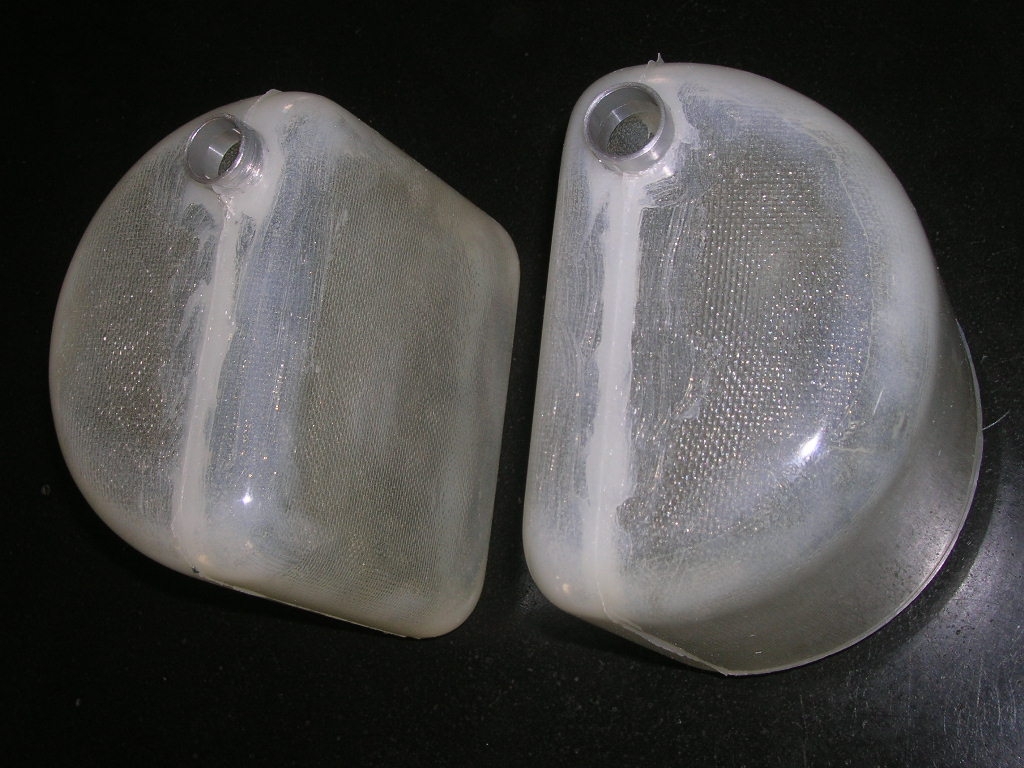
The clear epoxy fibreglass internal fuel tanks are approx. 95 grammes each, including the aluminium neck for the fittings.The capacity is 1400 ml each, so the total capacity including central auxiliary tank (480 ml) and hopper tank (120 ml) is 3,5 litres, which is plenty for this low drag airframe. The fuel tanks are very close to the Centre of Gravity, so no trim changes are needed following fuel burn off. |
|
pair of internal fuel tanks, capacity each 1400 ml |
|
|
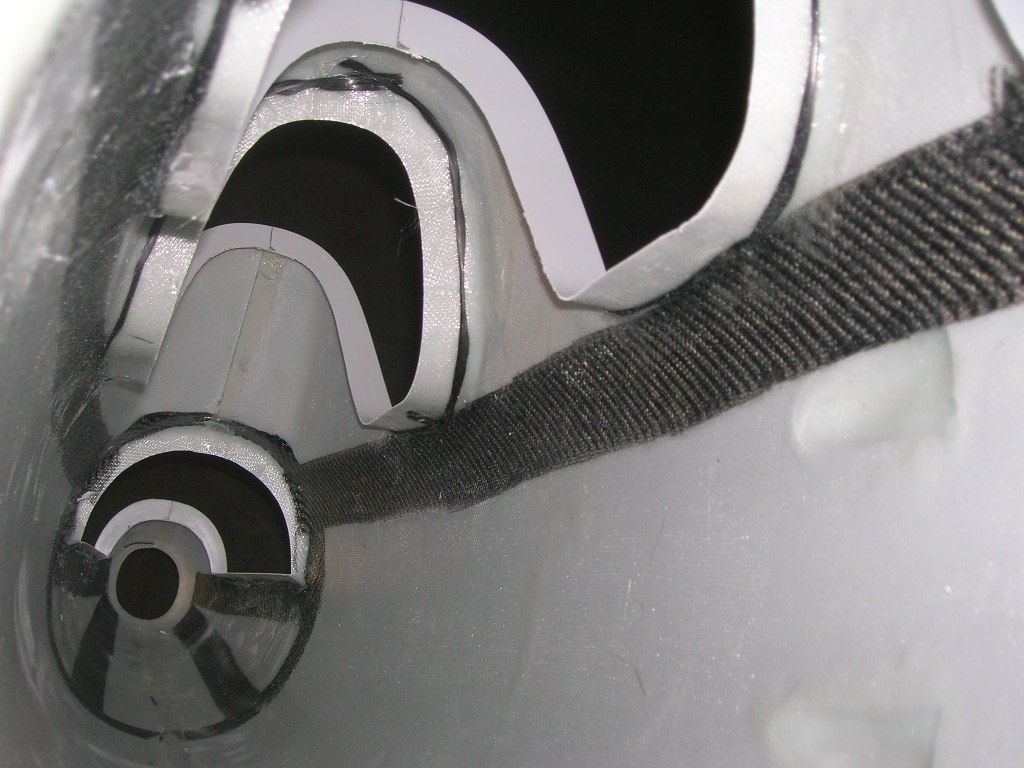
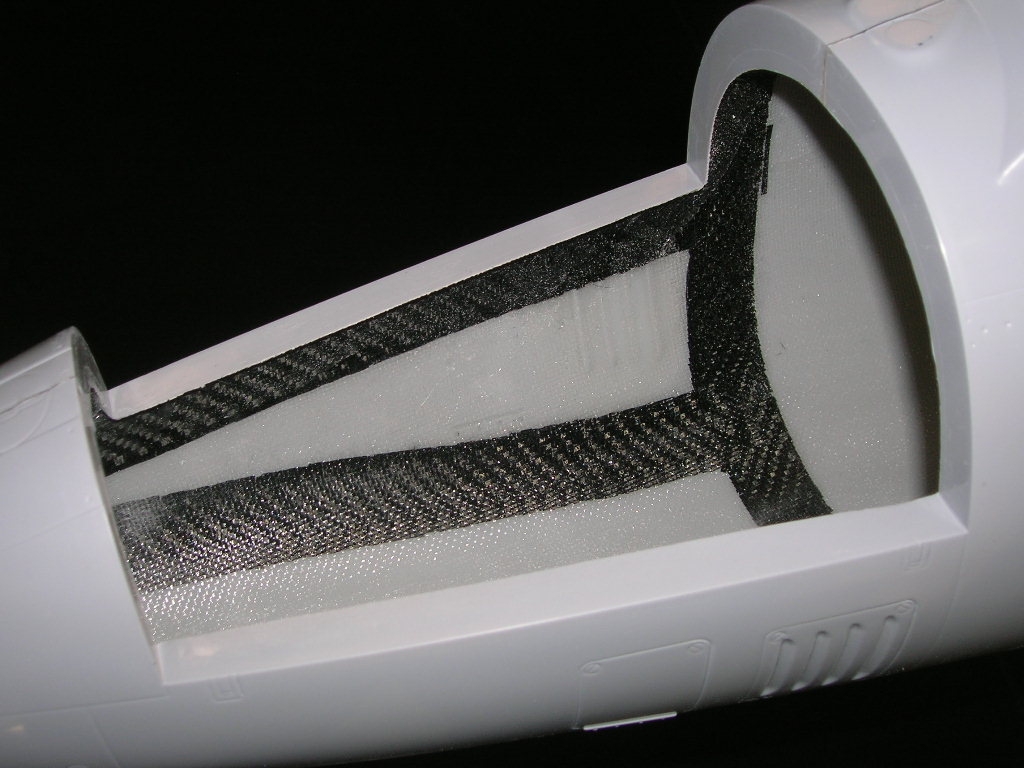
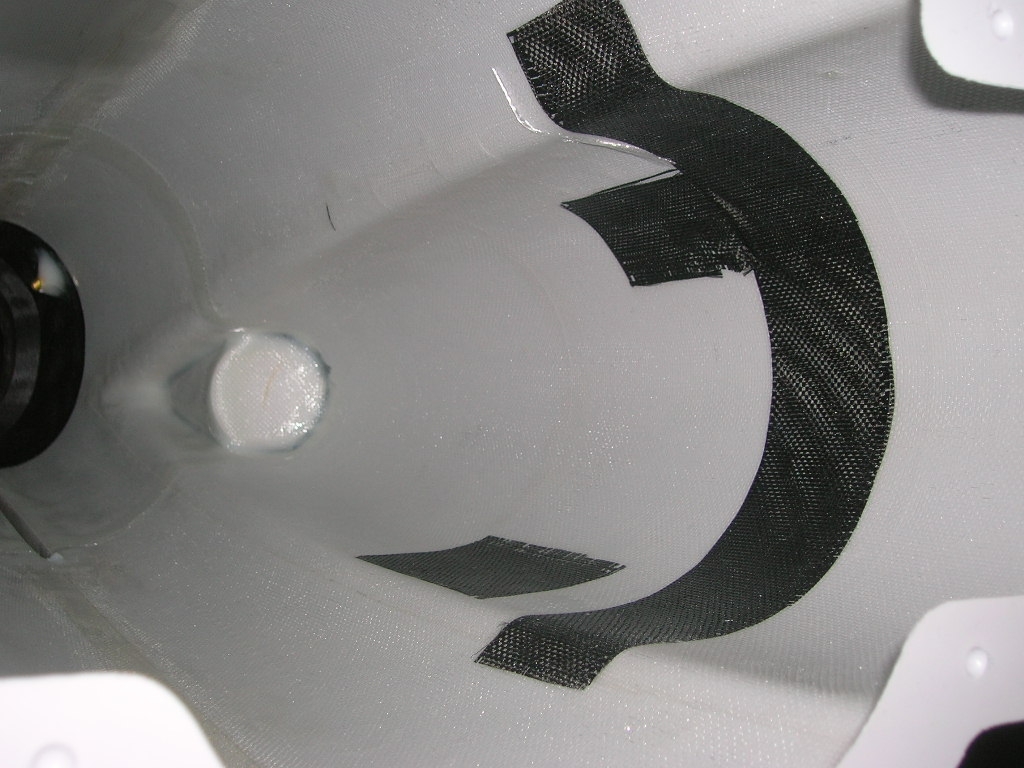
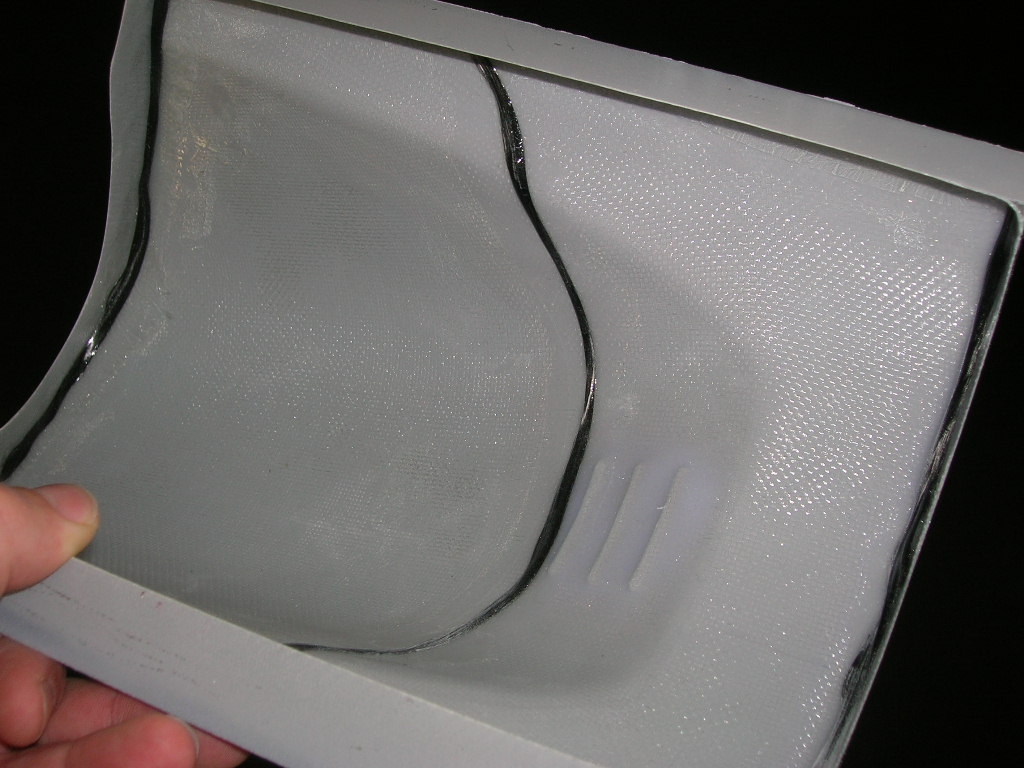
| Carbon reinforcements are strategically placed to combine strength with a minimum of weight. |
|
forward fuselage carbon tape reinforcements |
|
nose section carbon tape reinforcements |
|
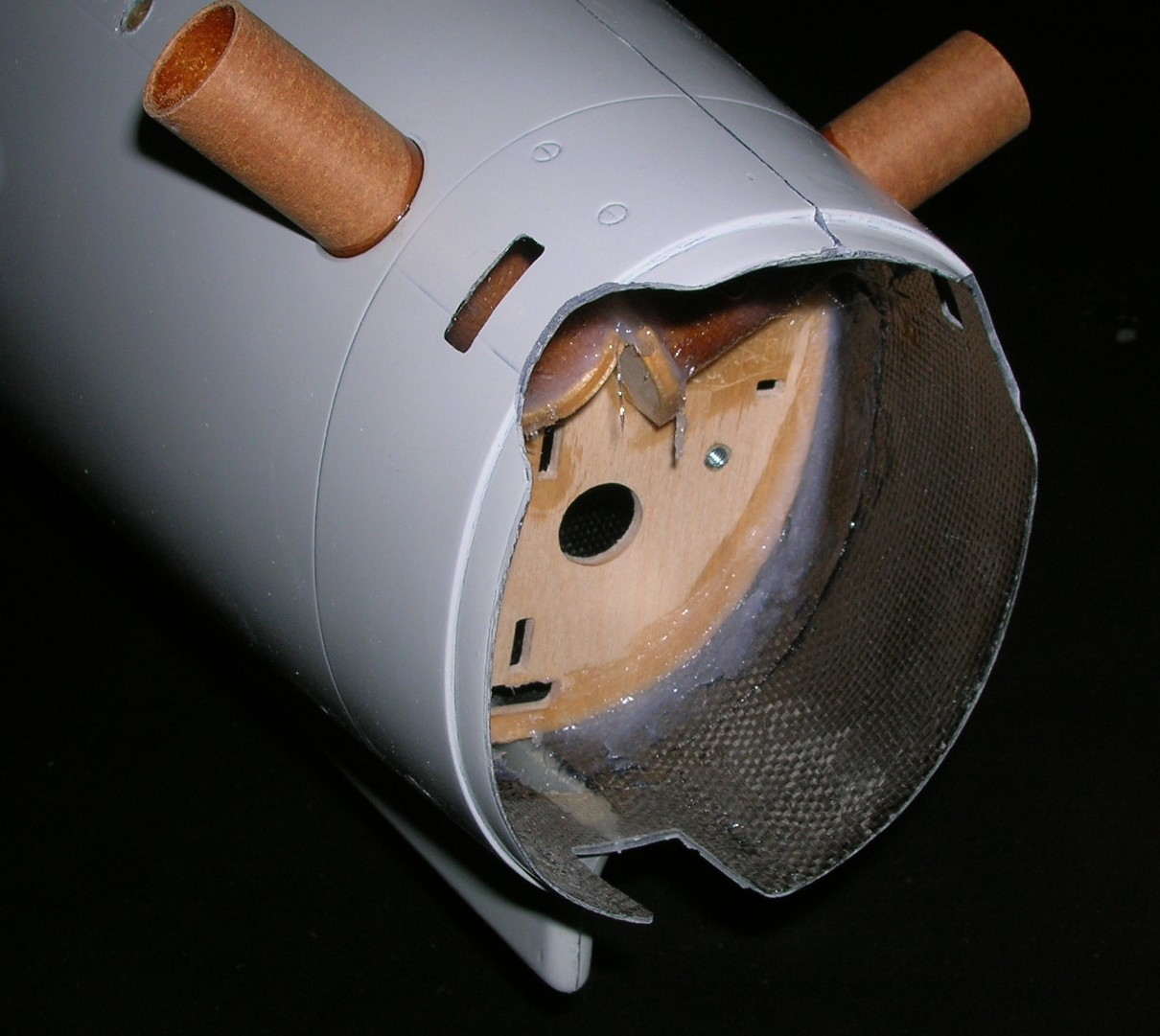
carbon cloth reinforcements are applied in the area of the scale vent holes and air scoop holes (to avoid weakening of the fuselage structure when cut out) |
|
carbon cloth reinforcement in the area where the butterfly tail attaches to the tail section |
|
main hatch carbon roving reinforcements (similar reinforcements on nose hatch, forward canopy and aft canopy) |
|
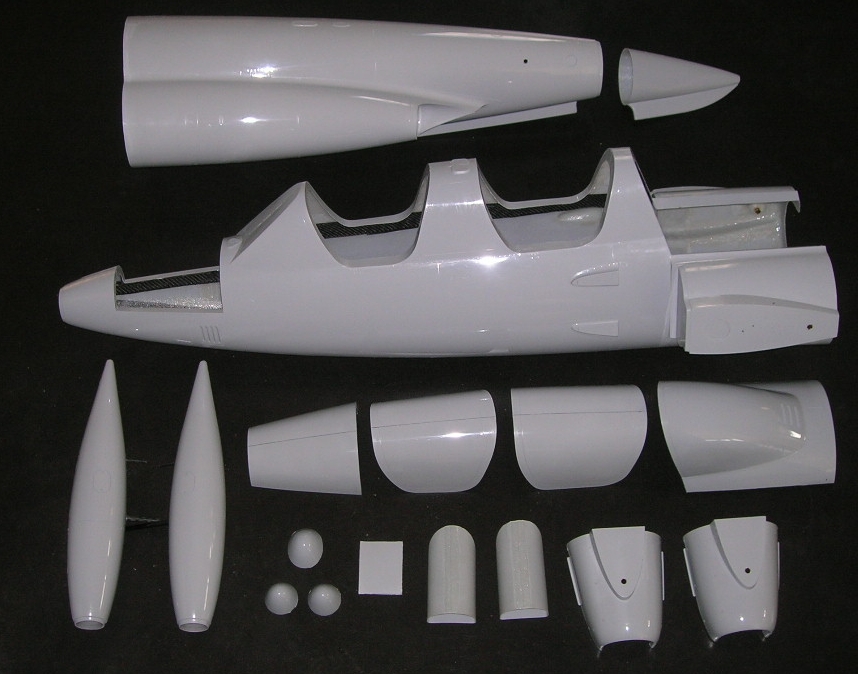
overview of all the gray gelcoated epoxy fibreglass parts in the kit |
|
|
|
Surface detailing on epoxy fibreglass components |
|
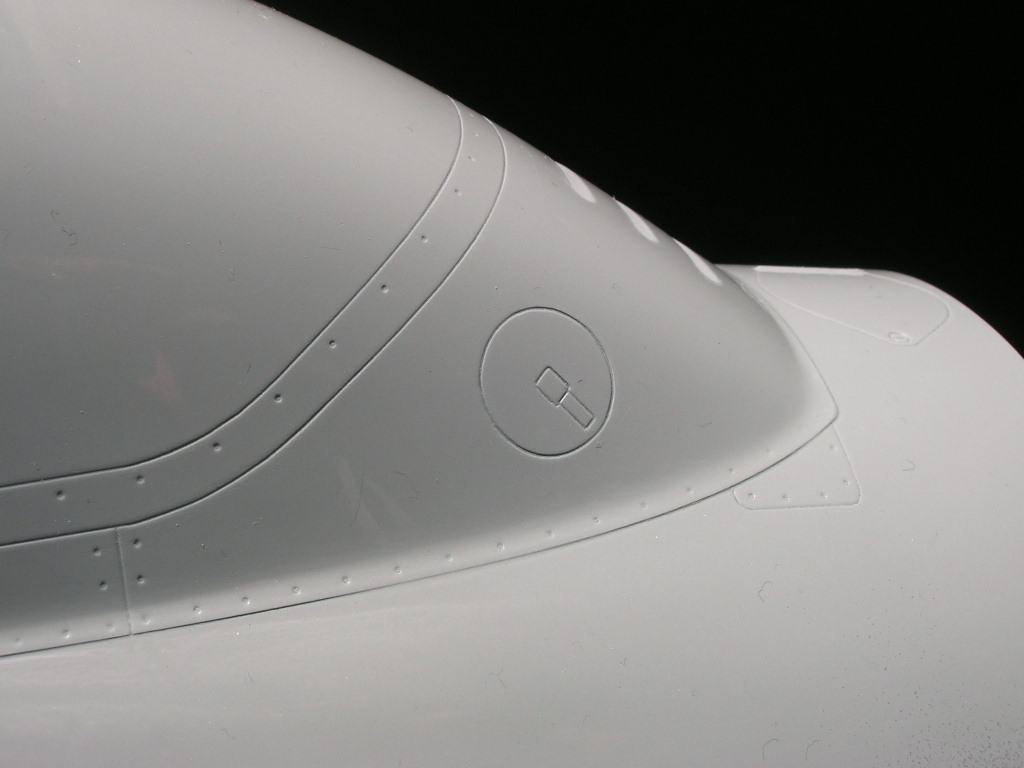
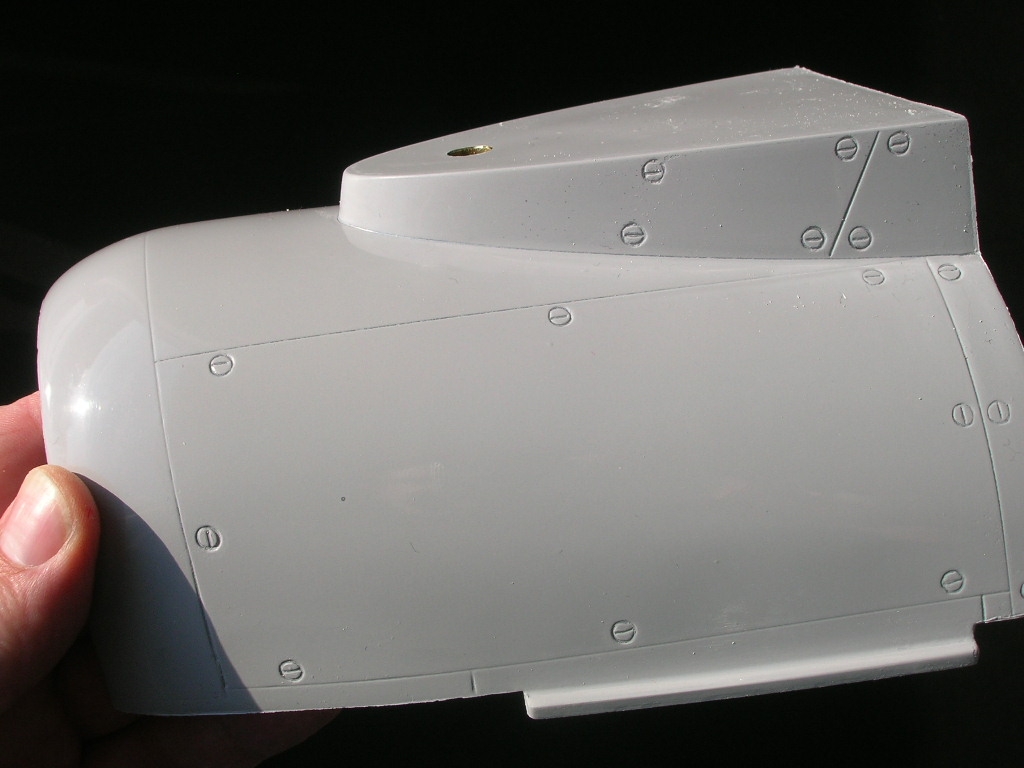
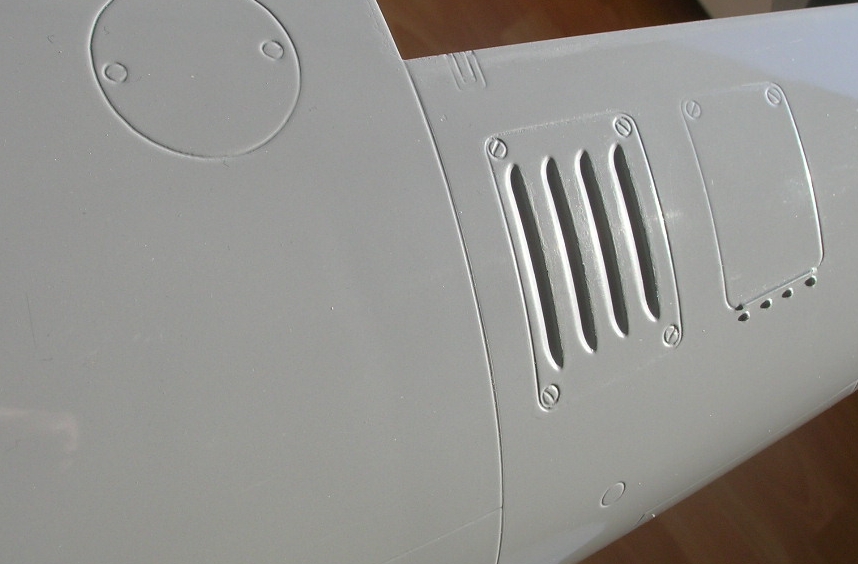
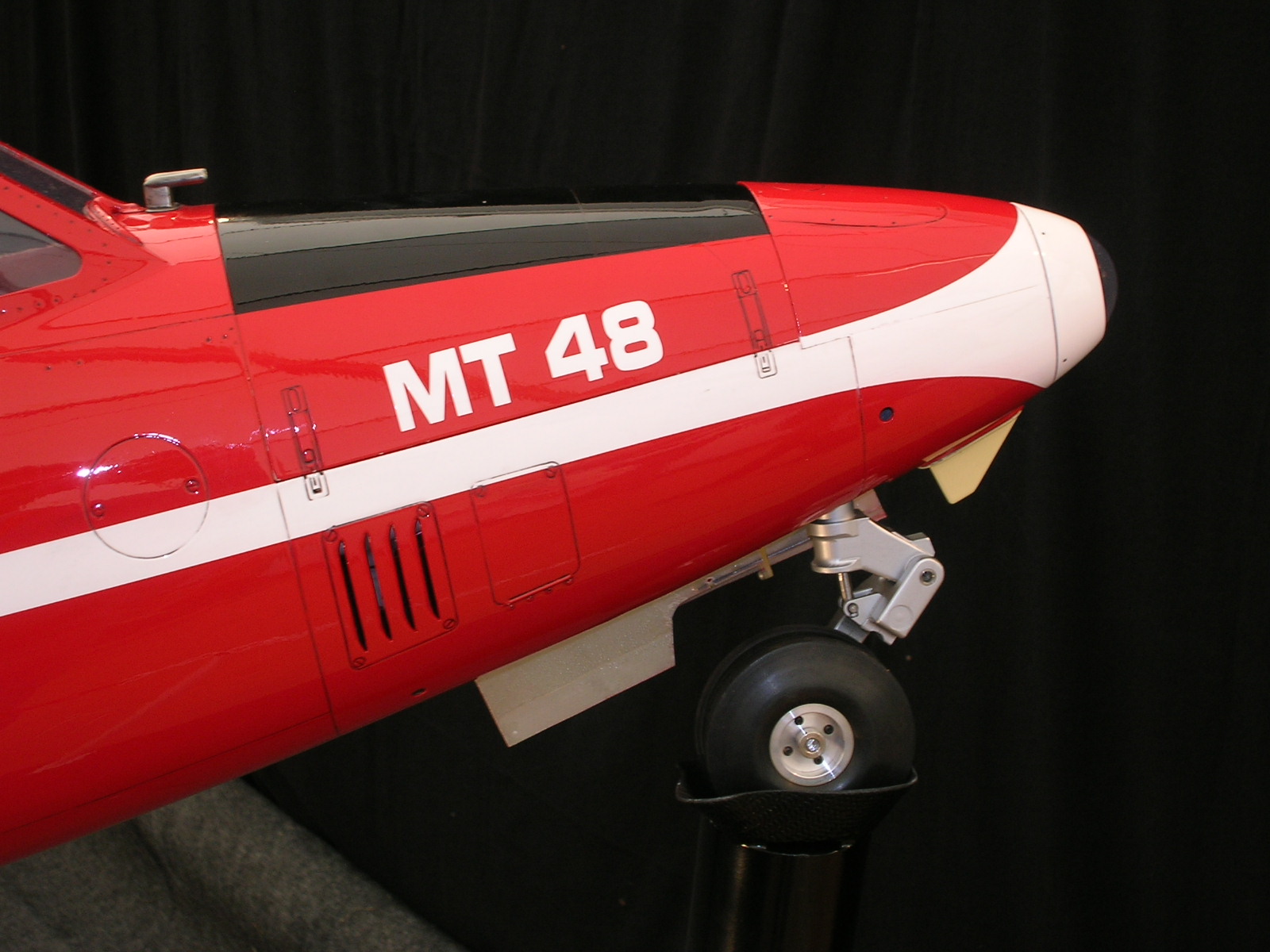
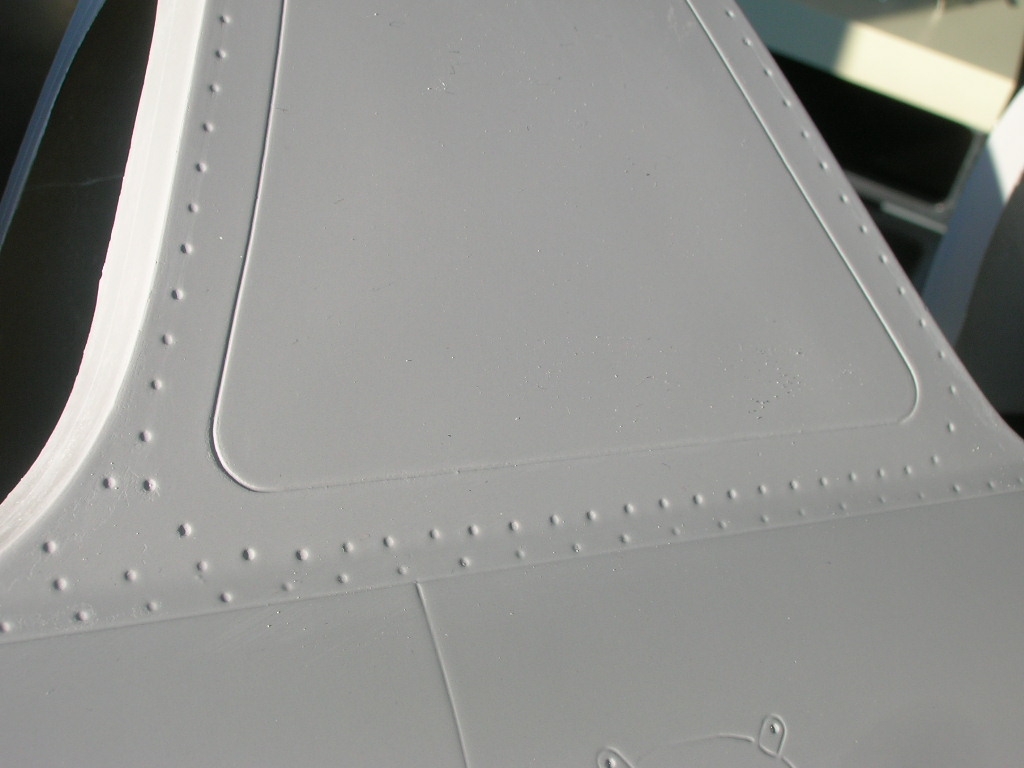
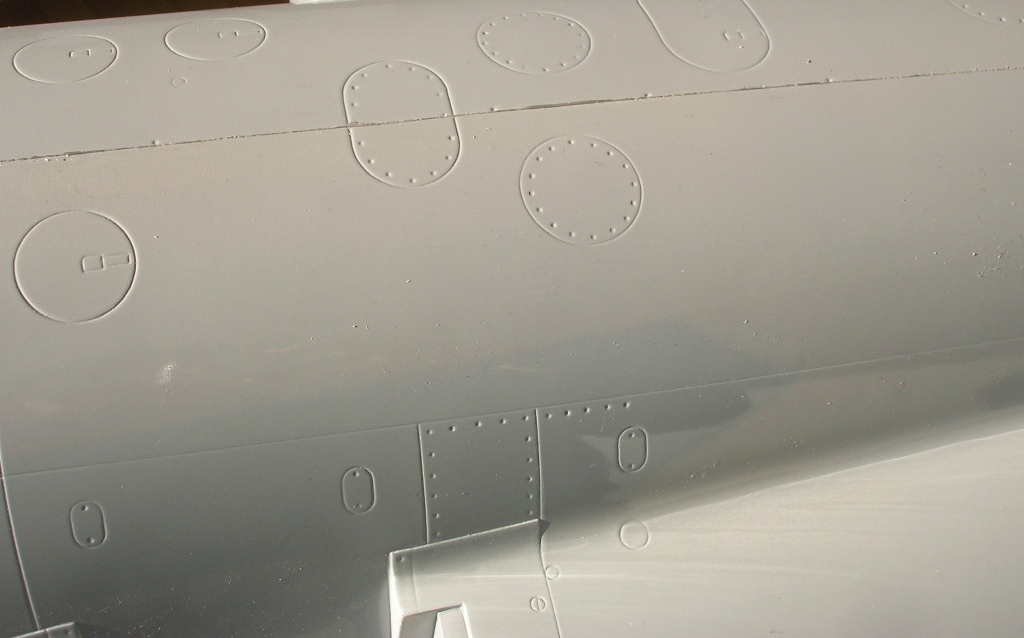
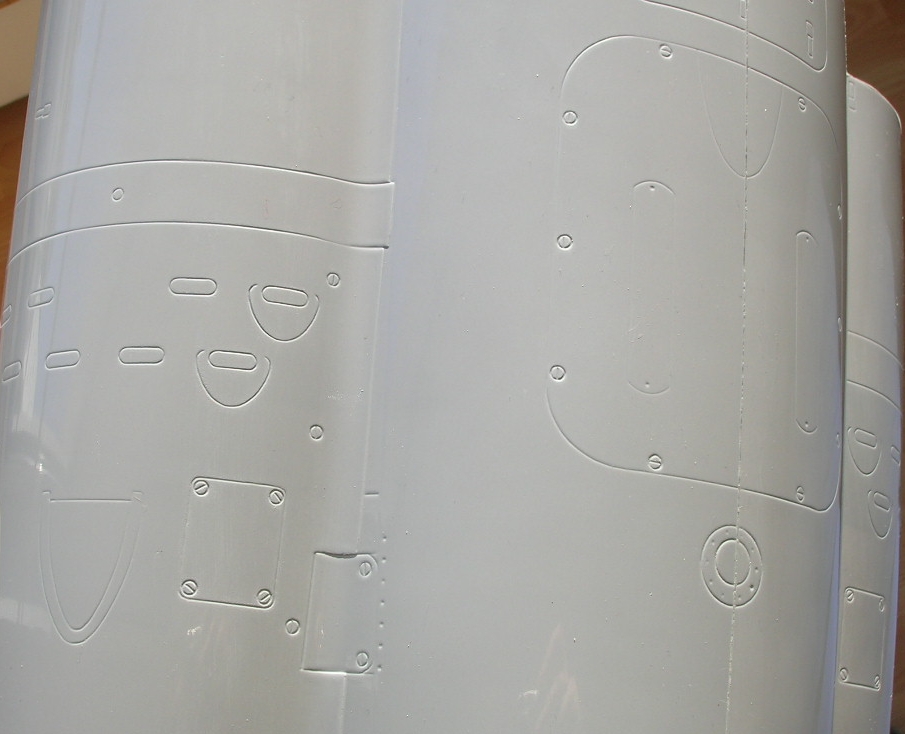
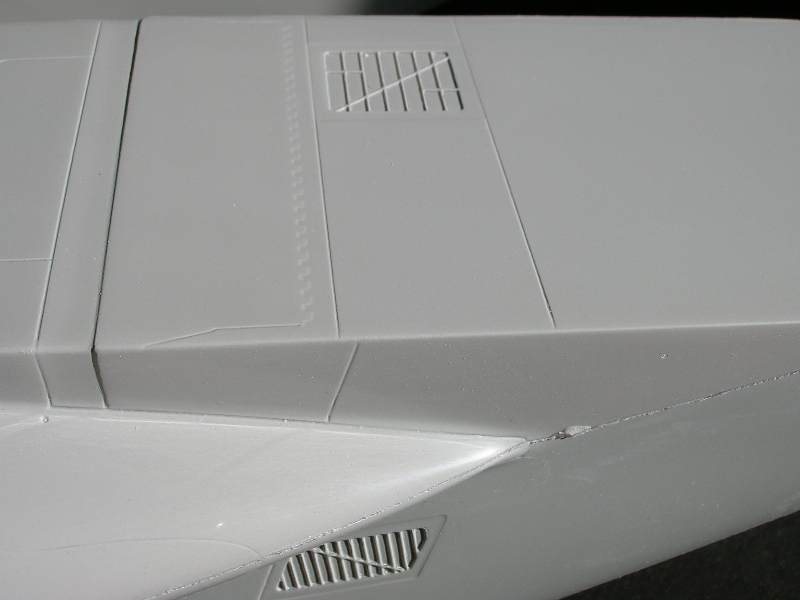
All panel lines, grilles and the the most prominent rivets and fasteners are integrally moulded in the surface of the epoxy fibreglass components. Every surface detail has been thoroughly researched and measured from the full size. On the model, they are the correct scale size and have been placed in the correct scale location. This kind of precision is seldom seen in the model jet industry!
|
|
panel line and grille detail on the aft canopy section |
|
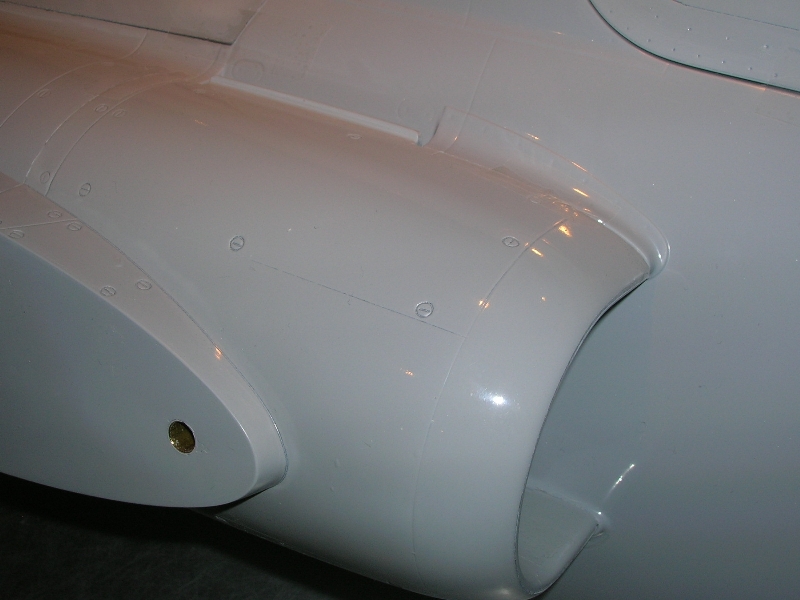
panel line and fastener detail on right hand intake section |
|
panel line, grille and fastener detail on nose |
|
panel line and rivet detail around canopy frames |
|
panel line and rivet detail on fuselage bottom |
|
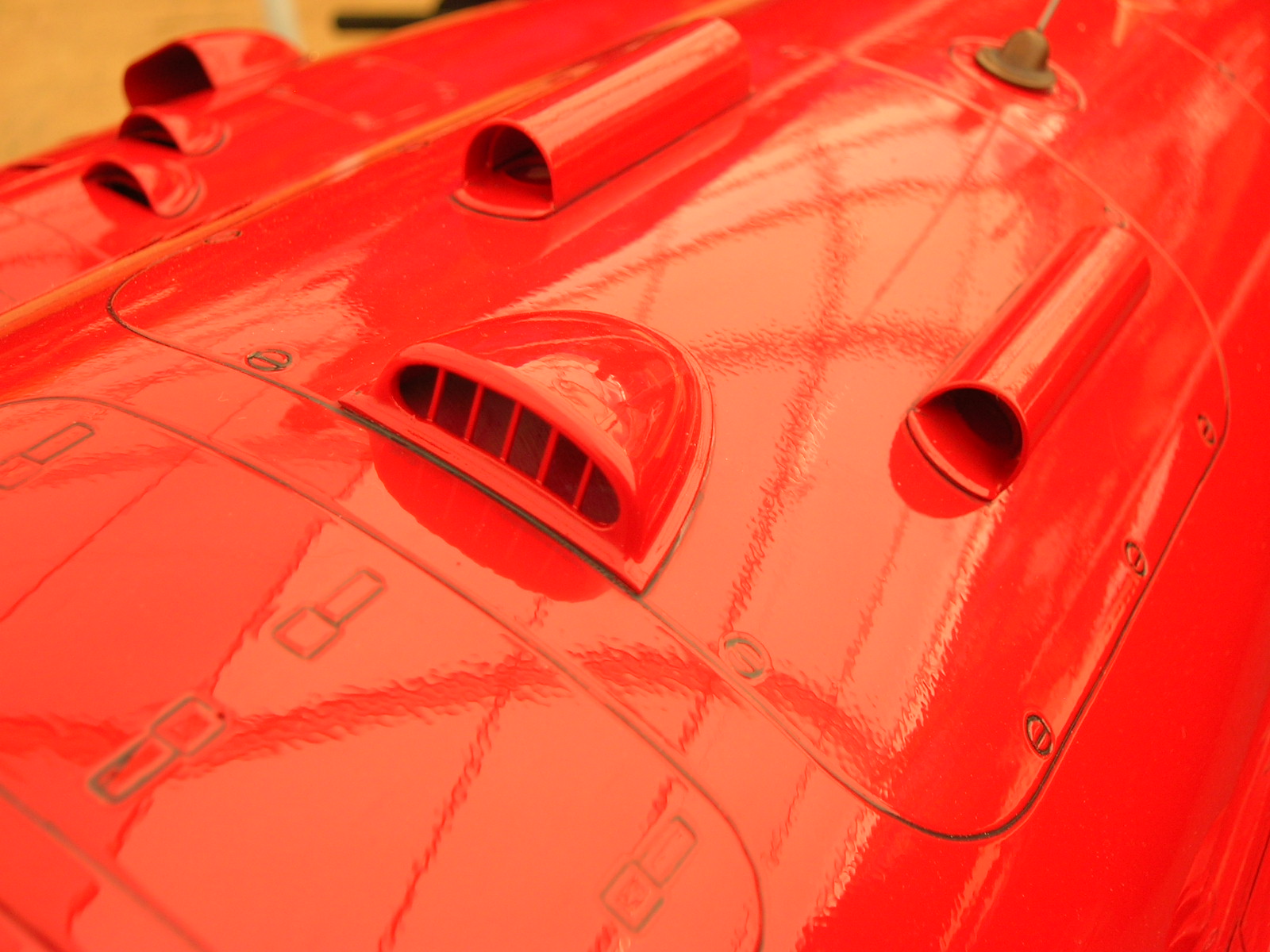
panel line, scale vent holes and fastener detail on aft fuselage |
|
|
|
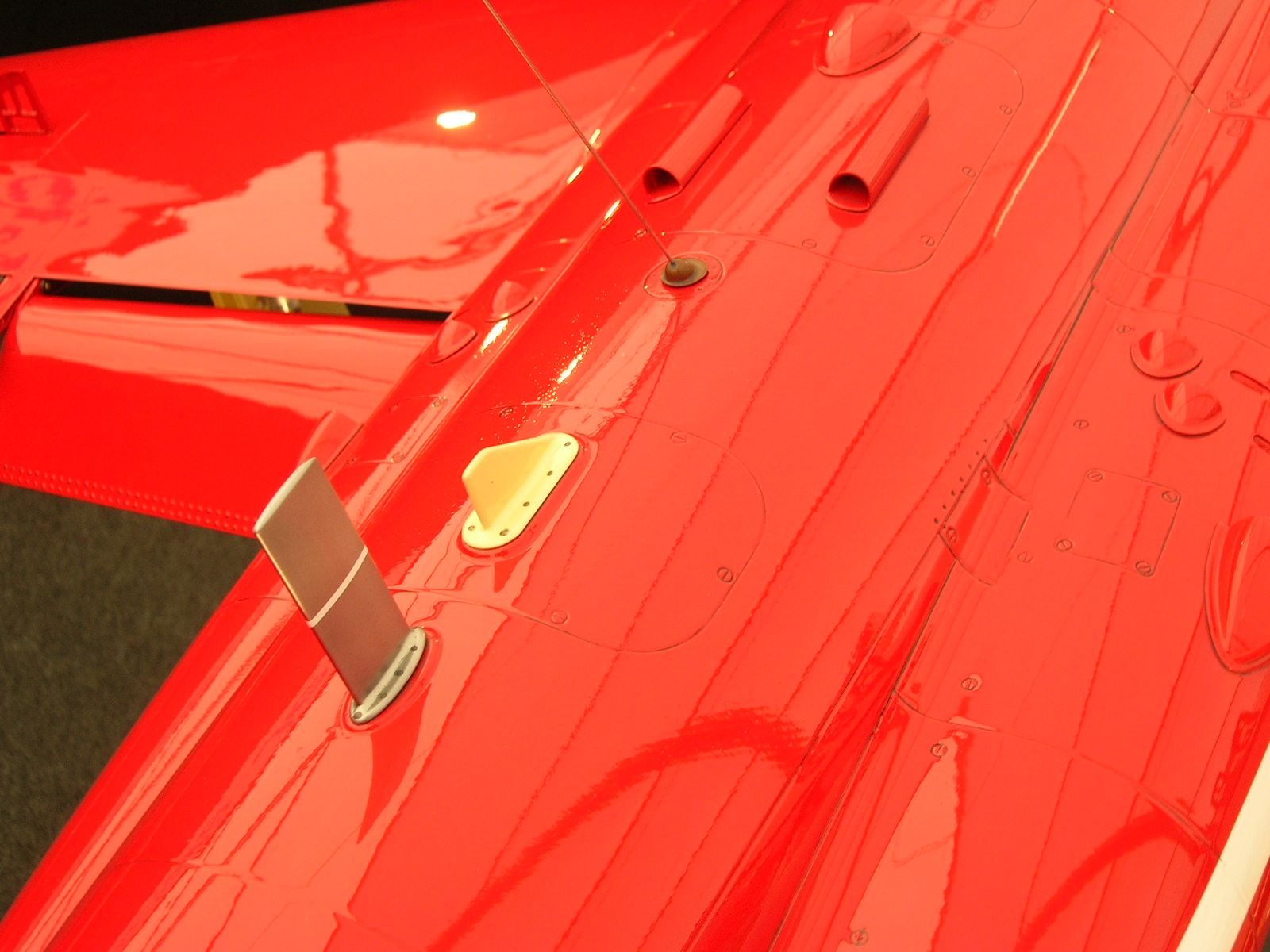
The kit contains an extensive set of vacformed scale details. Again, every detail has been thoroughly researched and measured from the full size. Other manufacturers will be happy with providing lookalike details. Our detail set is fully authentic in shape and size! |
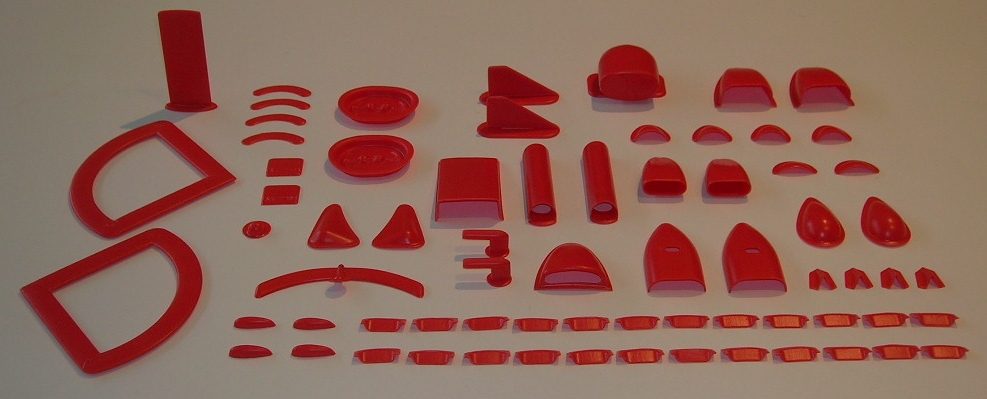 overview of all the vacformed parts included with the kit (shown here already cut and assembled) |
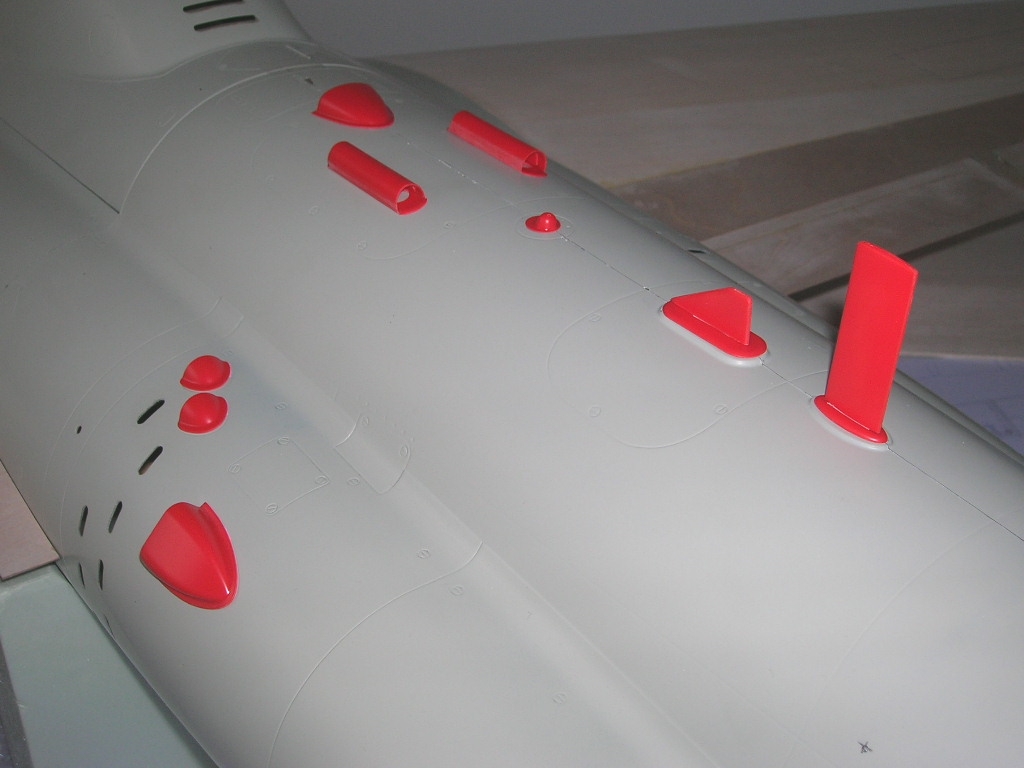 vacformed details on top of aft fuselage trial fit...
... and finished installation |
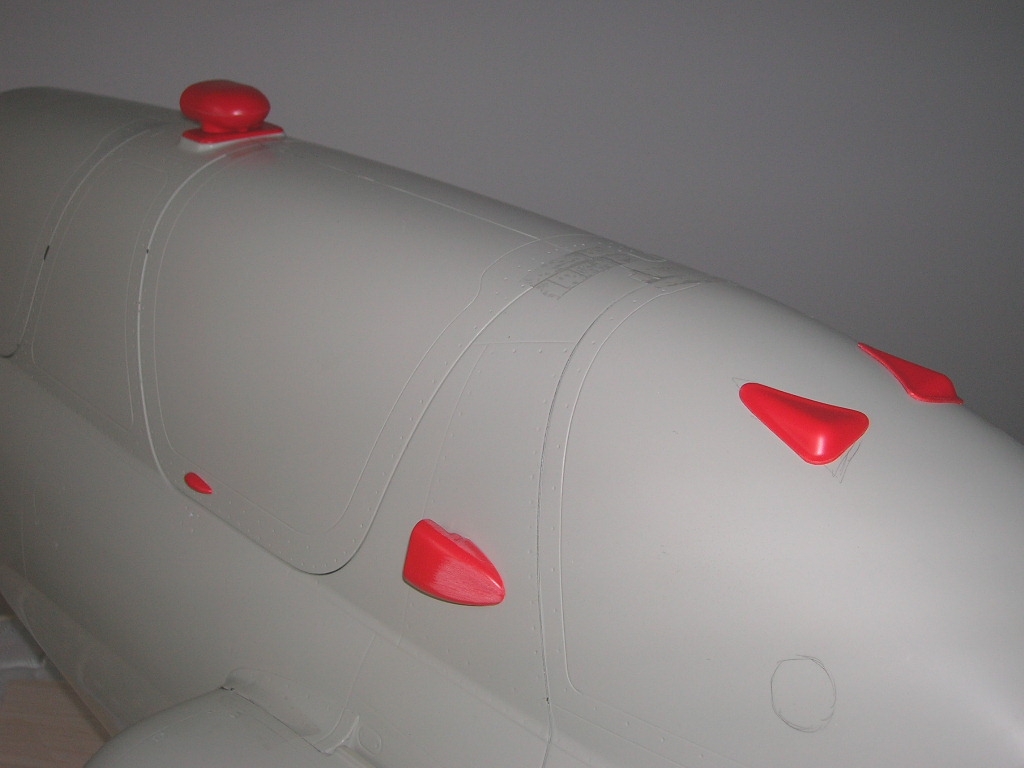 vacformed details on top of forward fuselage trial fit...
... and finished installation |
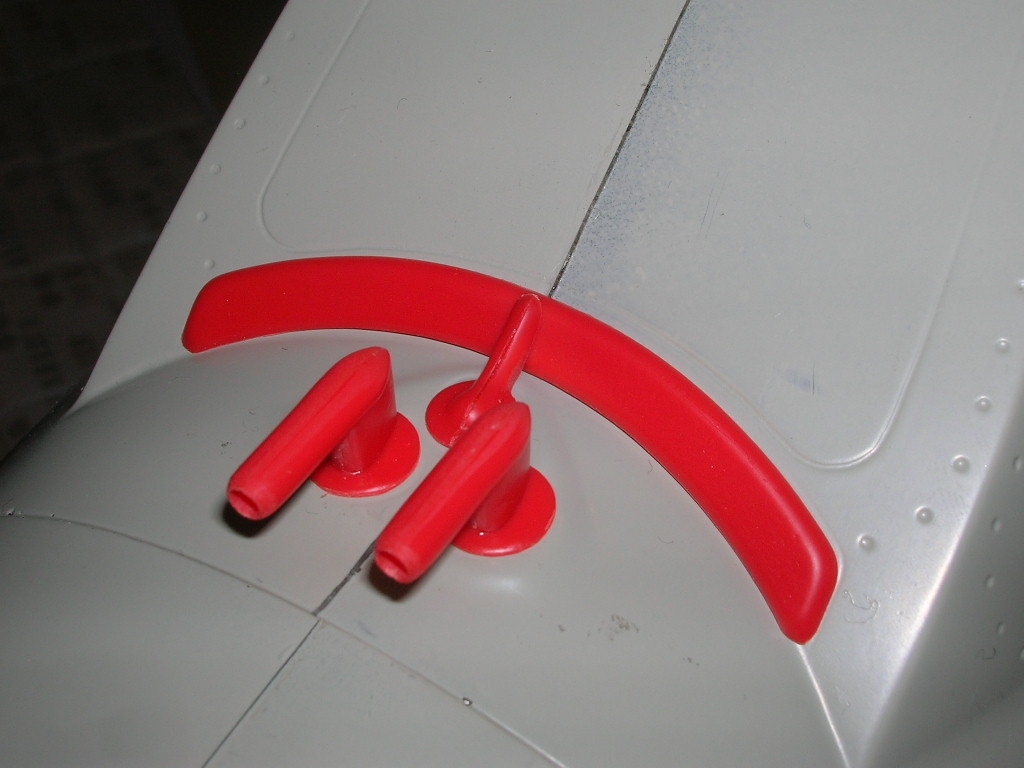 pitot and windshield de-icer details trial fit...
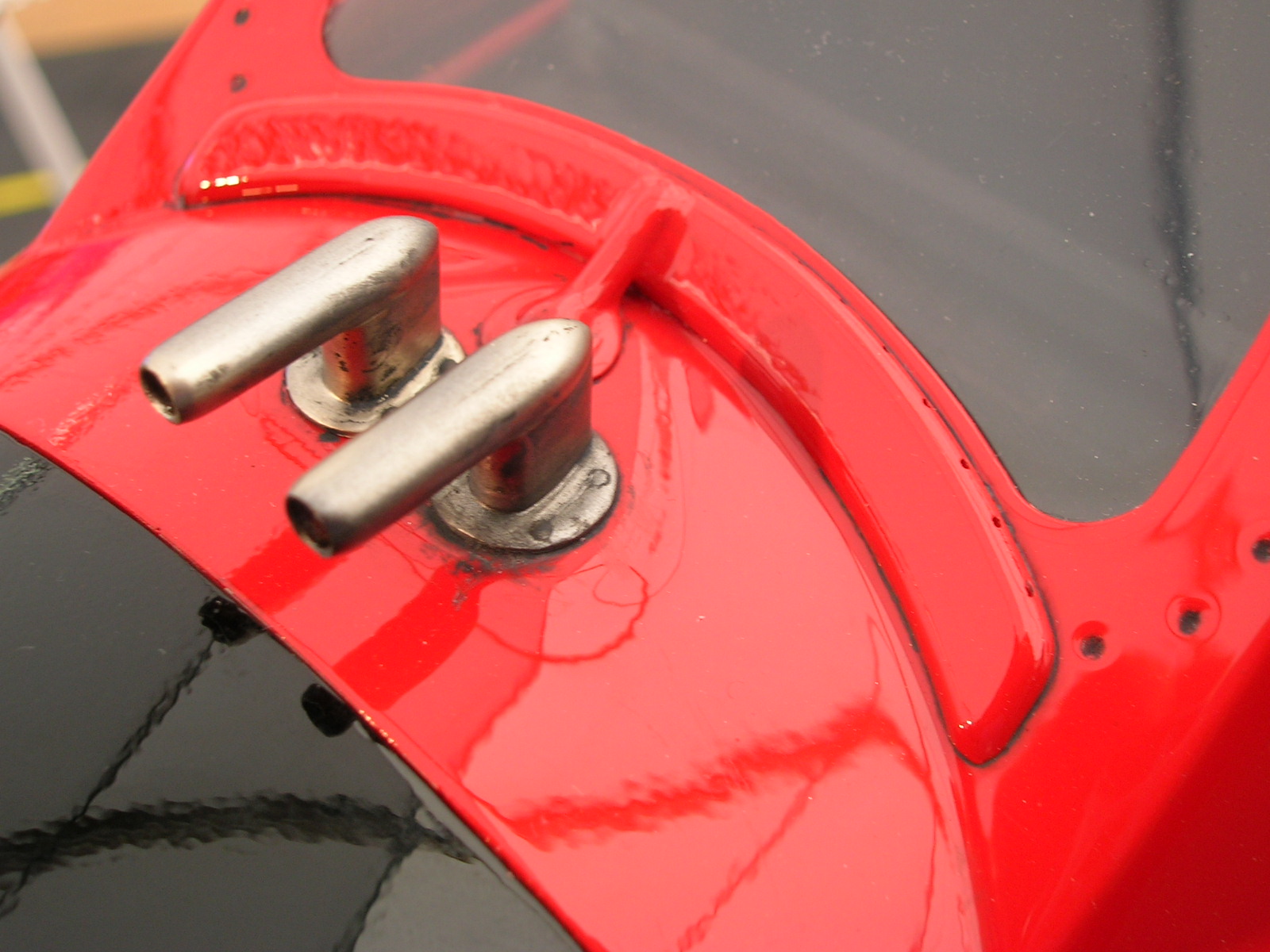
... and finished installation of pitot and windshield de-icer details |
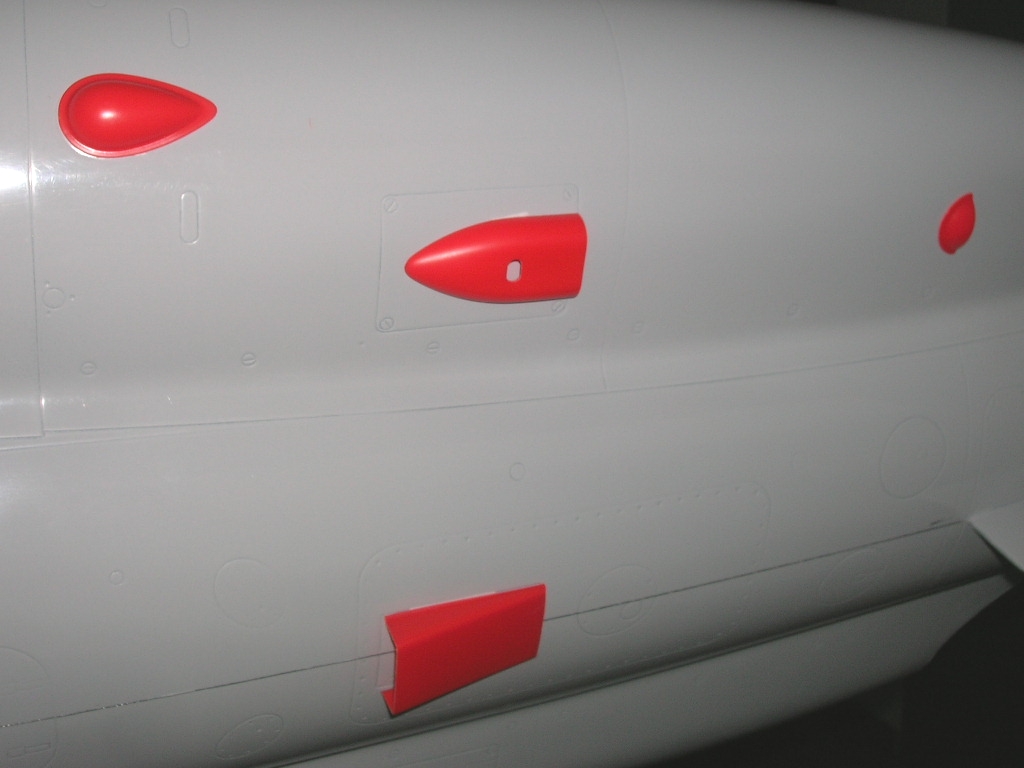 vacformed details on bottom of aft fuselage |
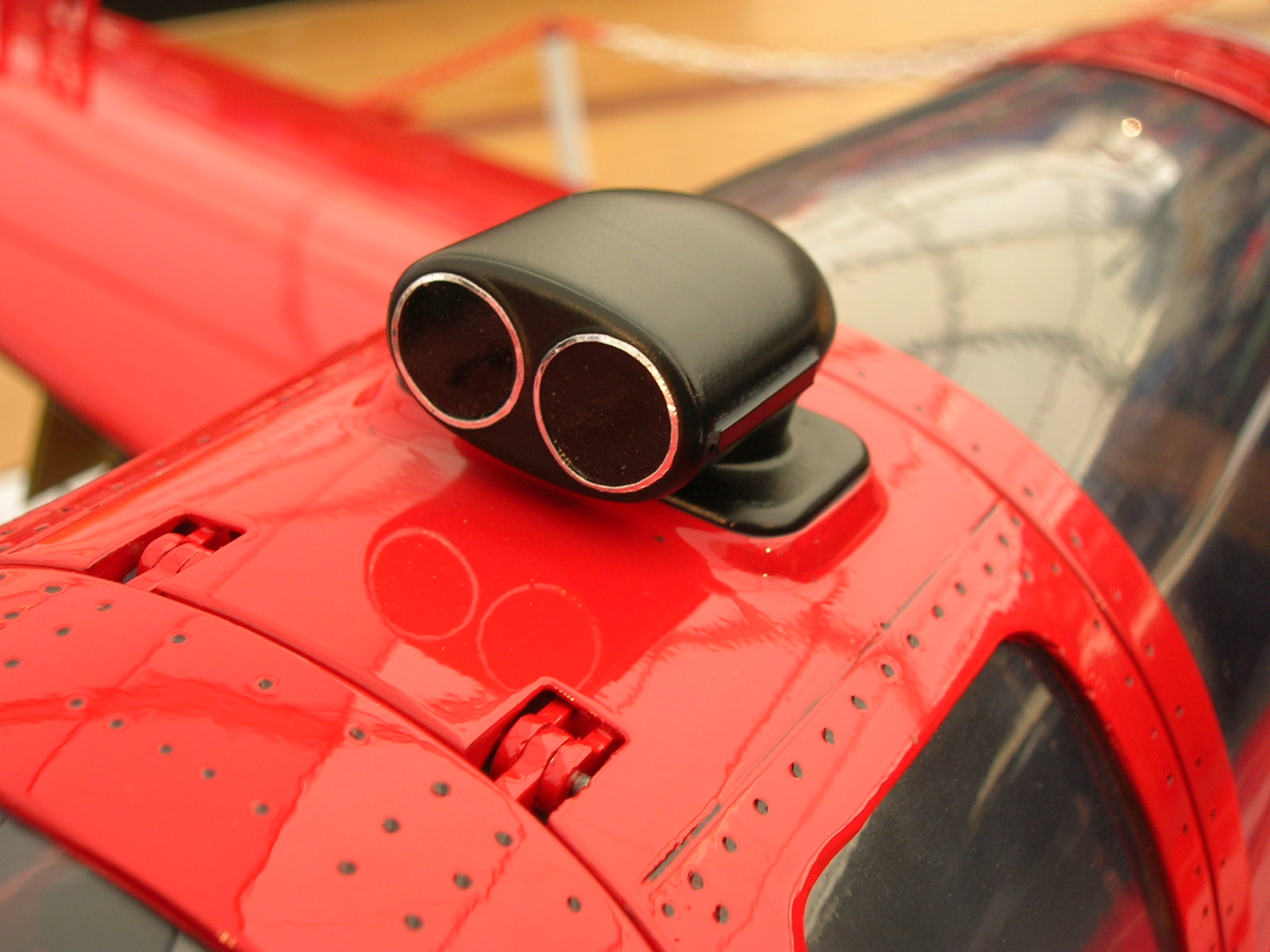
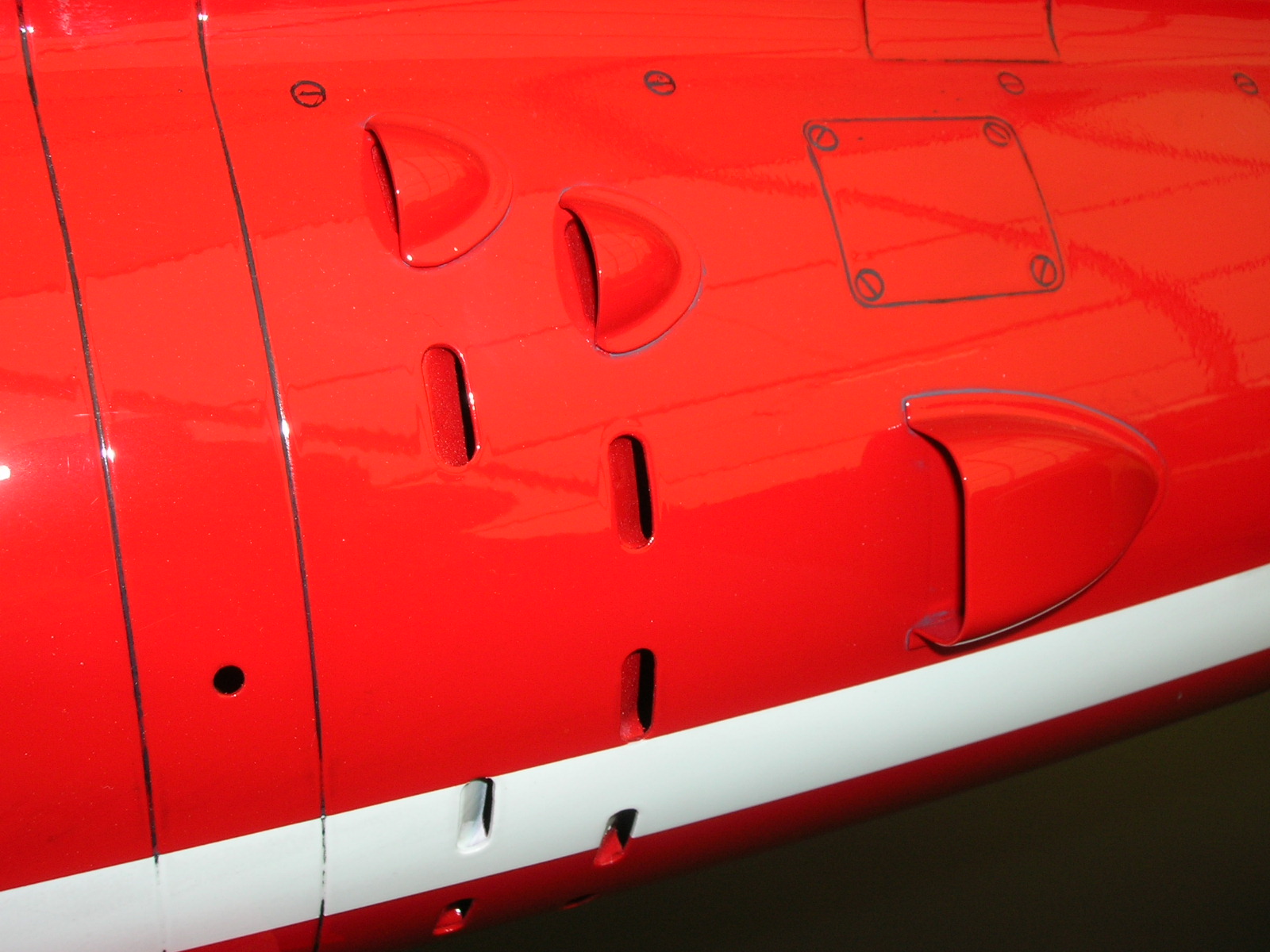 engine cooling scoops |
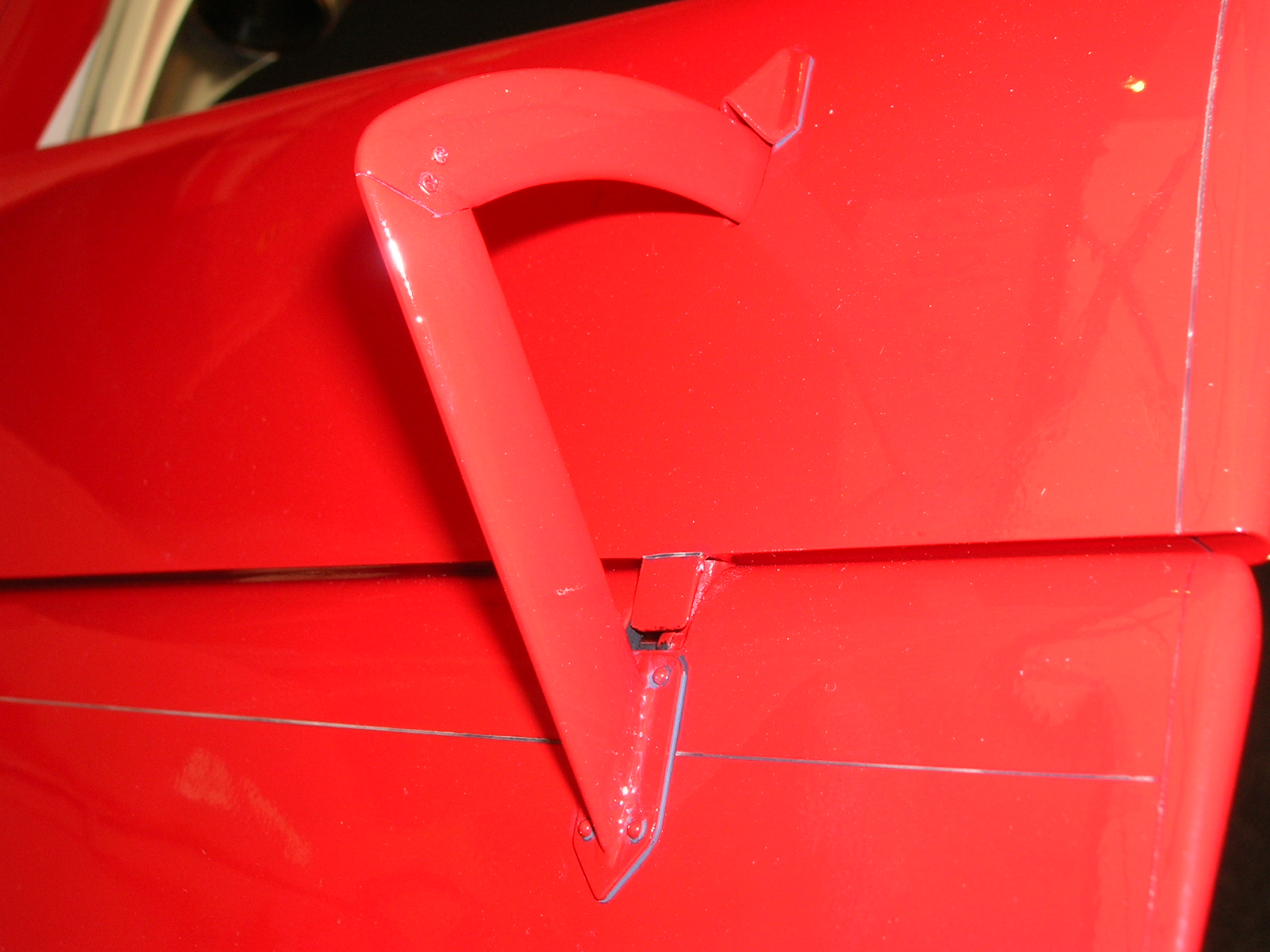 ruddervator counterbalances |
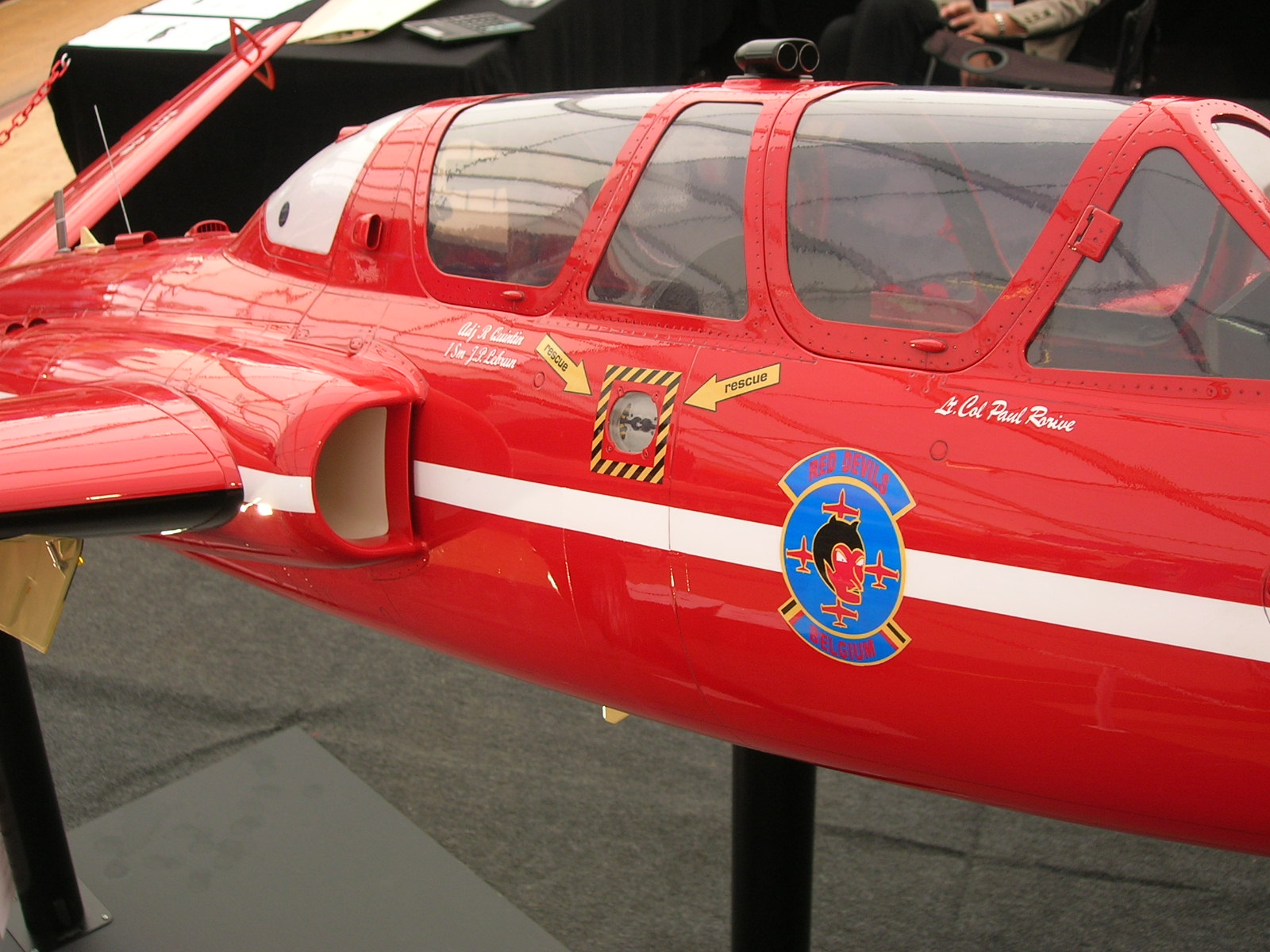
plenty of scale details! |
|
|
|
Air intakes true to scale |
|
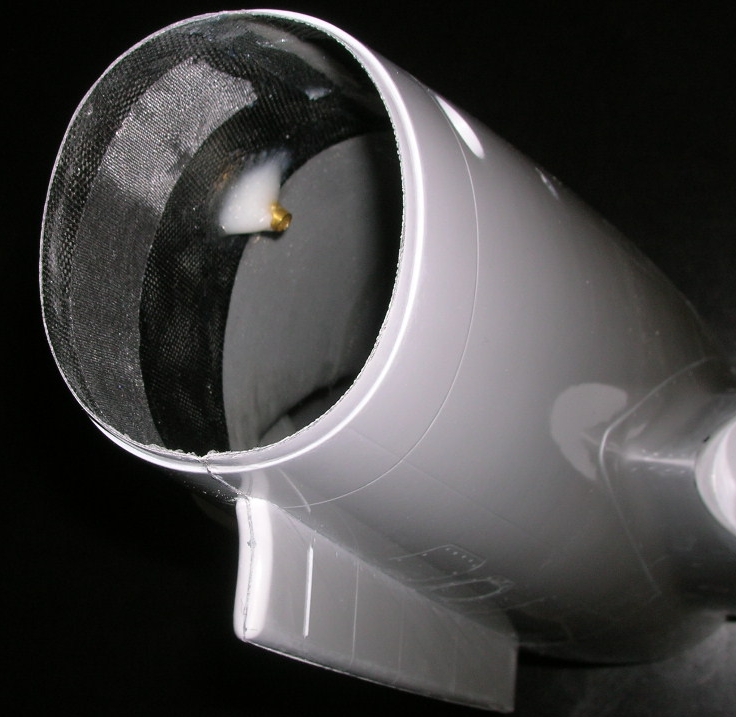
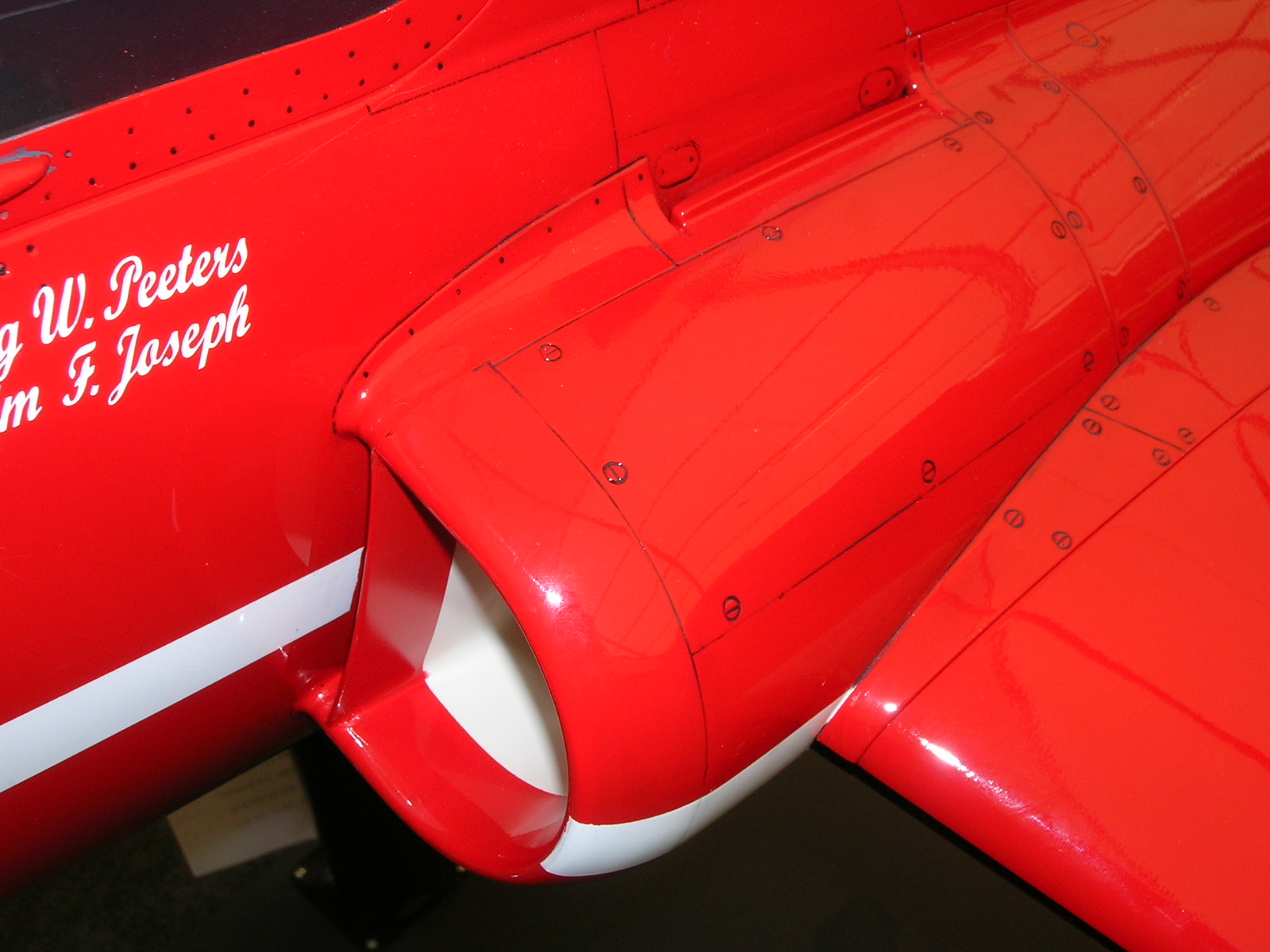
This is an area where others usually get it wrong. The air intakes should have a nice rounded edge, called intake lip and this is faithfully reproduced on our model. The full size Fouga has a splitter plate to capture the boundary layer air. This air is then vented through slots on the top and bottom of each air intake. These slots are also authentically reproduced. This kind of scale fidelity was only possible by moulding the air intakes separately. |
|
air intake on first production fuselage (splitter plate not yet installed) |
|
finished air intake on first prototype fuselage with splitter plate and intake liner installed |
|
|
|
During the design stages, it was decided to make this Fouga model easy to transport, so all flying surfaces are completely removable. The wings are one piece panels from fuselage to tiptank and use 35 mm dural tube plug in joiners. The tiptanks are removable as well. A couple of air line quick disconnects take care of the pneumatic connection issues associated with wing mounted retracts. The stabs (butterfly tail) are plug in using 16 mm dural tube joiners. The entire tail section of the fuselage including the tailpipe is removable for transport as well. Only six screws need loosening and two servo leads need disconnecting and the tail section comes off. |
|
|
| All the hardware is included for the opening canopies. They are manually opened, just as on the full size. The locking mechanism is a simple but secure system. |
|
Fouga model with canopies in the open position |
|
|
|
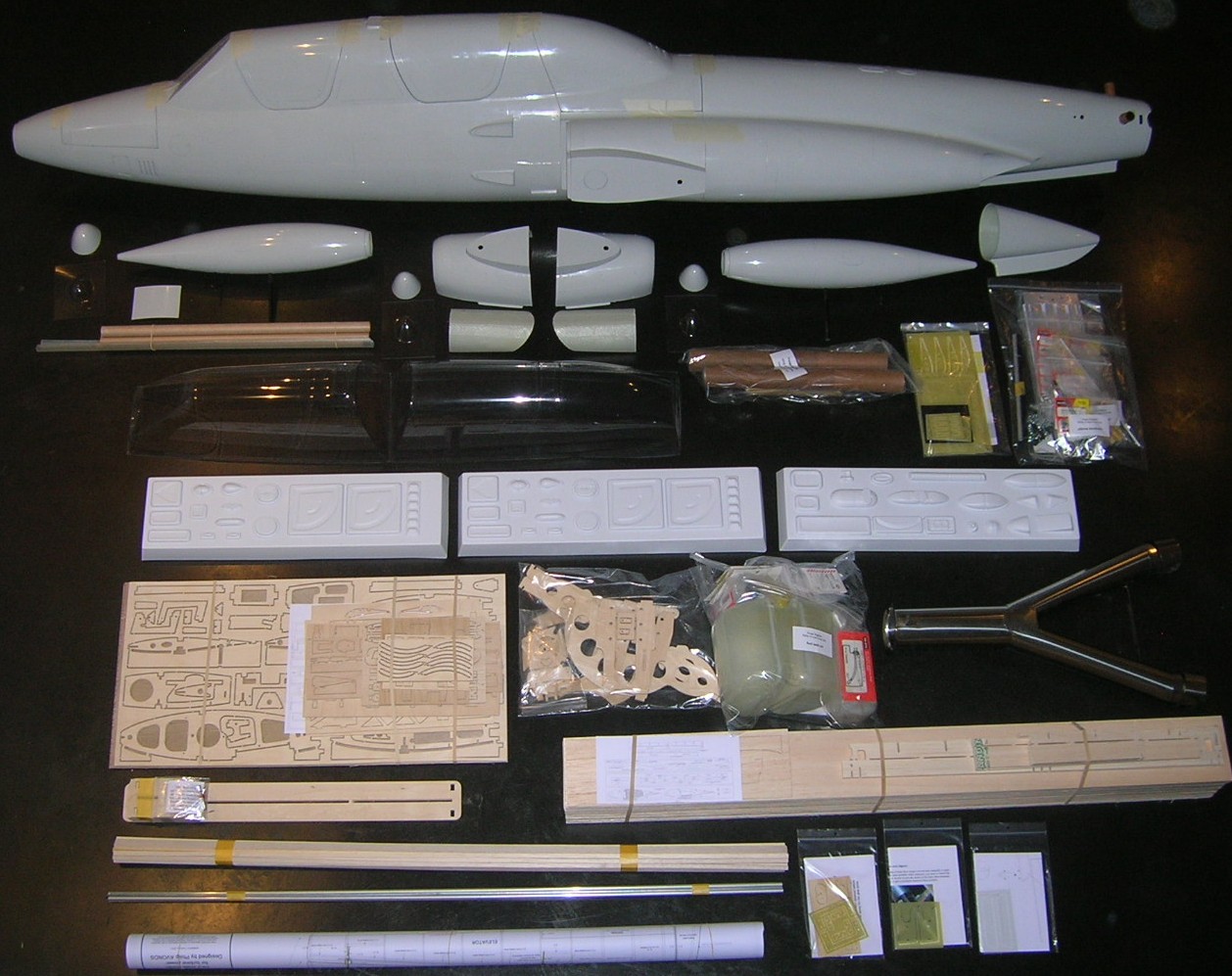
Below some pictures of the kit contents. You can go to
the full description here.
|
|
overview of complete Fouga Magister kit contents
CNC cut plywood parts pack
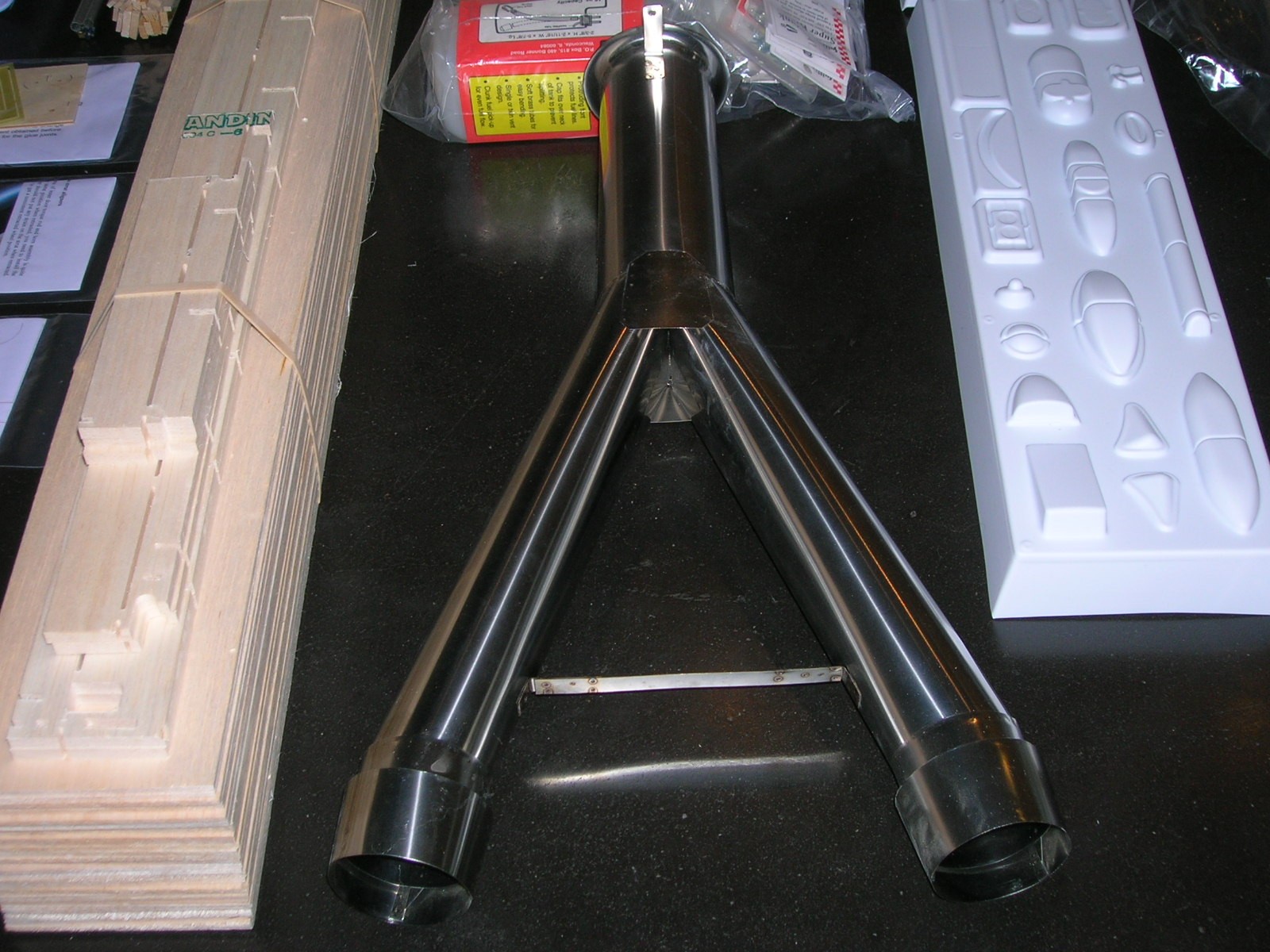
bifurcated stainless steel tailpipe
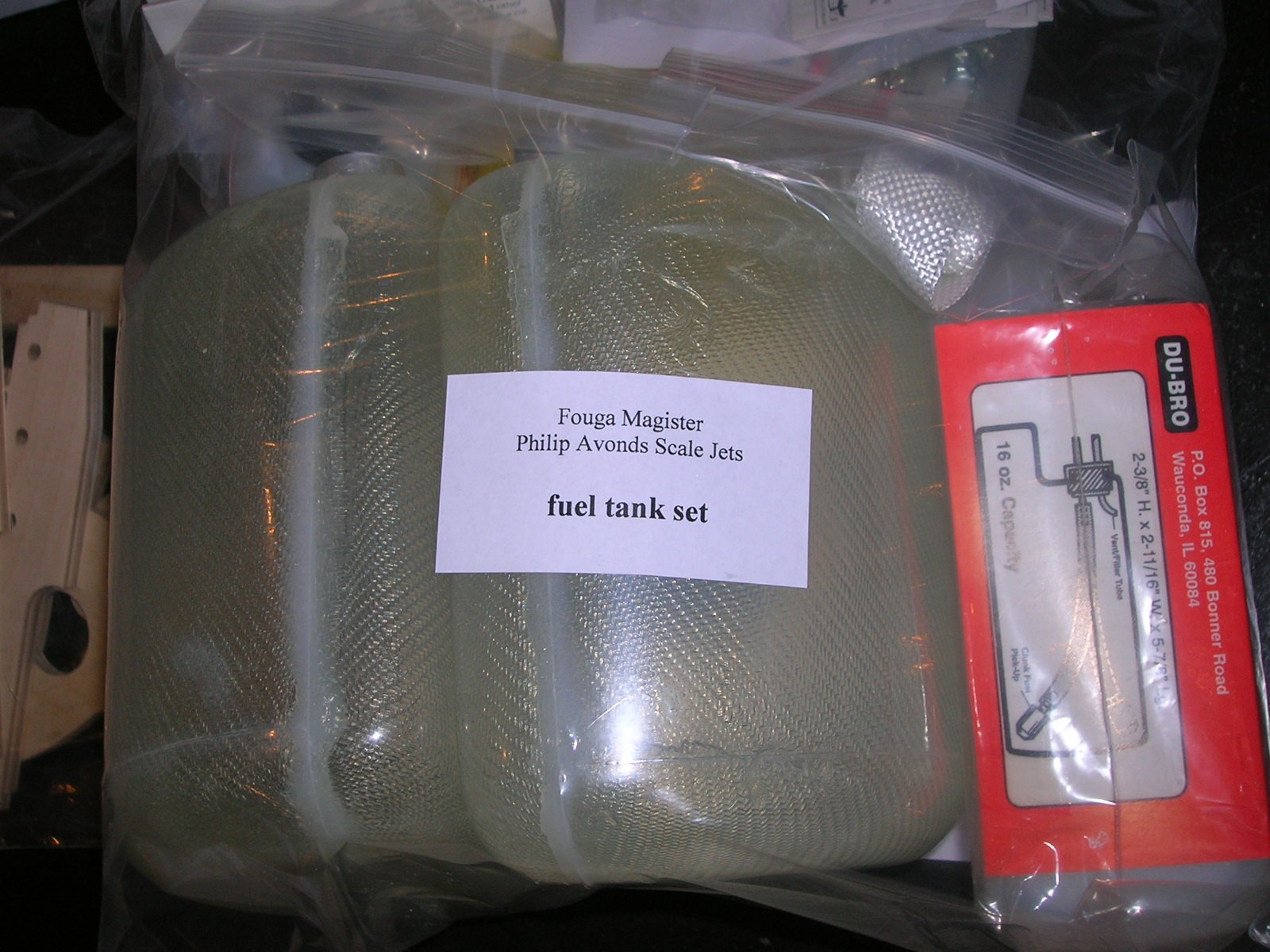
complete fuel tank set
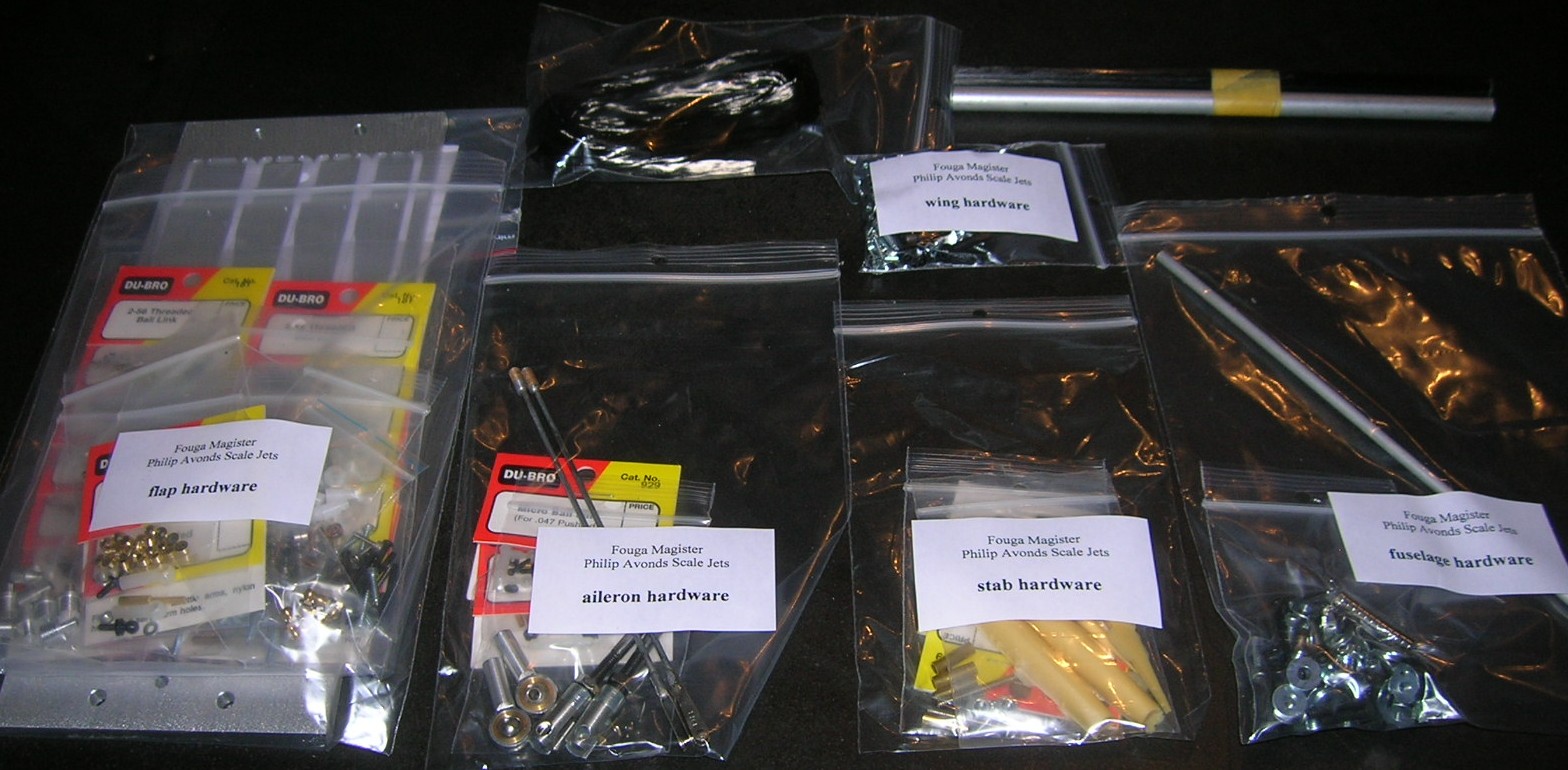
hardware pack
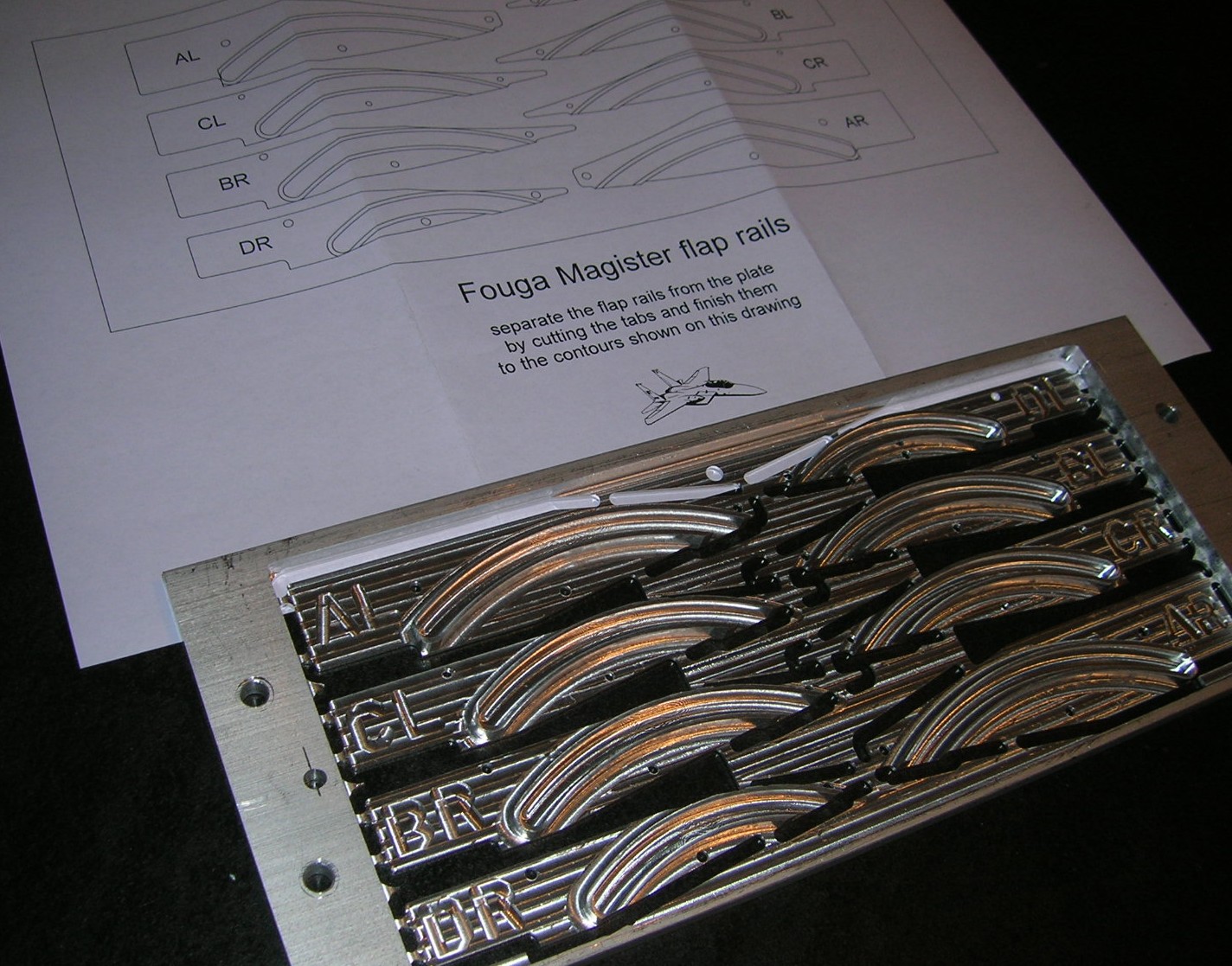
flap rails CNC machined from aluminium
aft former with female stab phenolic tubes factory installed
|
| Full description of kit contents: |
| Epoxy fibreglass fuselage parts (gray gelcoat primer finish): |
|
| CNC cut plywood & balsa parts: |
|
| CNC cut fibreglass board (FGB) and carbon sheet |
|
| Tailpipe: |
|
| Vacformed parts: |
|
| Fuel system hardware: |
|
| Other hardware: |
|
| Manuals and plans: |
|
|
|
|
Fouga Magister landing gear |
|
For more details on the Fouga landing gear options, click here. |
|
|
|
|
Fouga Magister scale and other accessories |
|
For more details on the Fouga scale options, click here. |
|
Specifications |
||
|
Scale: |
1/4.5 | |
| Length: | 2235 mm (88 inches) | |
| Wingspan: | 2698 mm (106 1/4 inches) | |
| Weight: | 11 to 13 kg (25 to 30 lbs) | |
| Suitable Thrust Class: | 80 to 100 N (18 to 22 lbs) | |
|
Philip Avonds |
| Doornhofstraat 6 |
| B-8670 Koksijde |
| Belgium |
| e-mail: info@avonds.com |