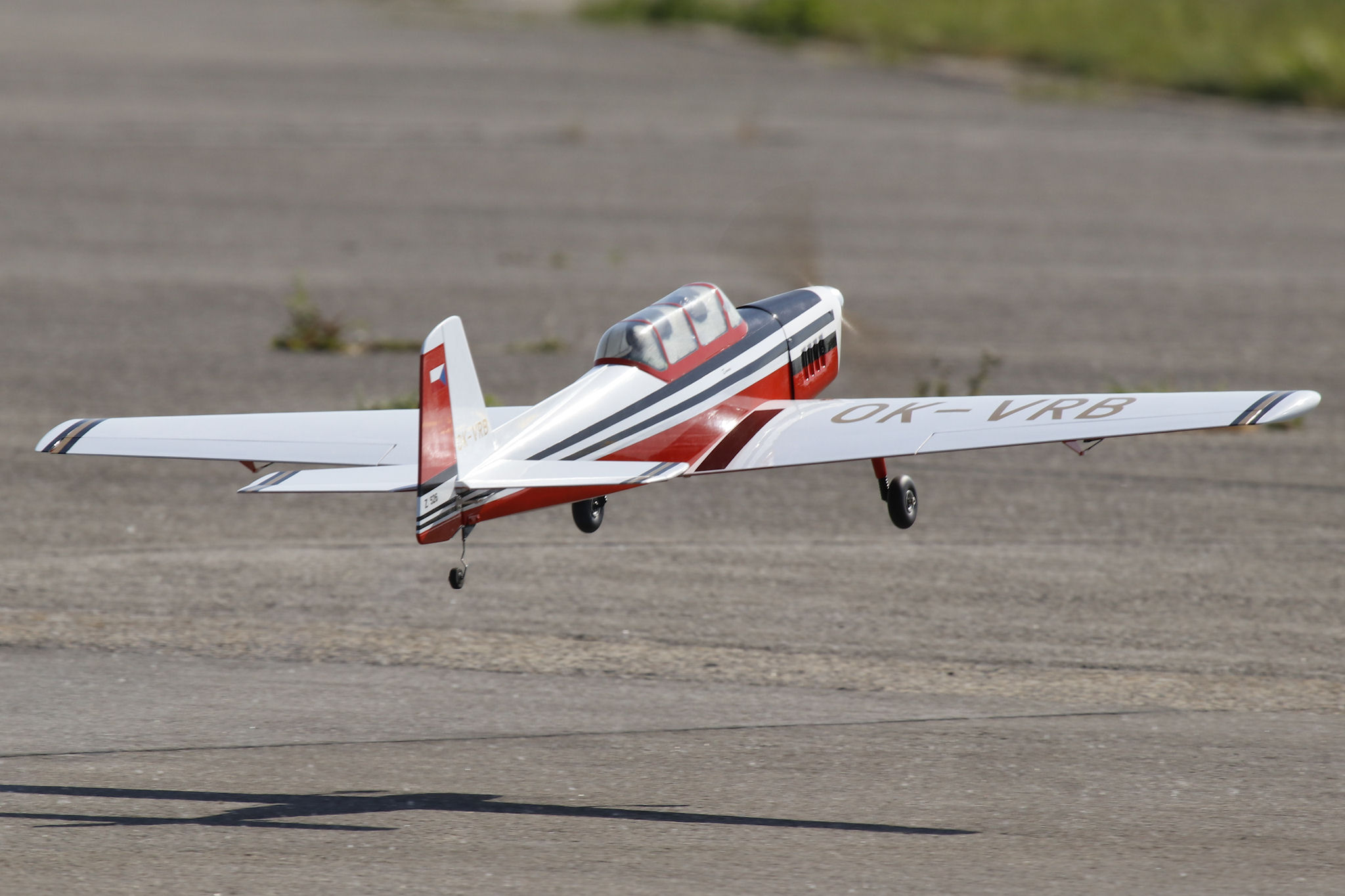
Zlin 526 (Robbe) |
|
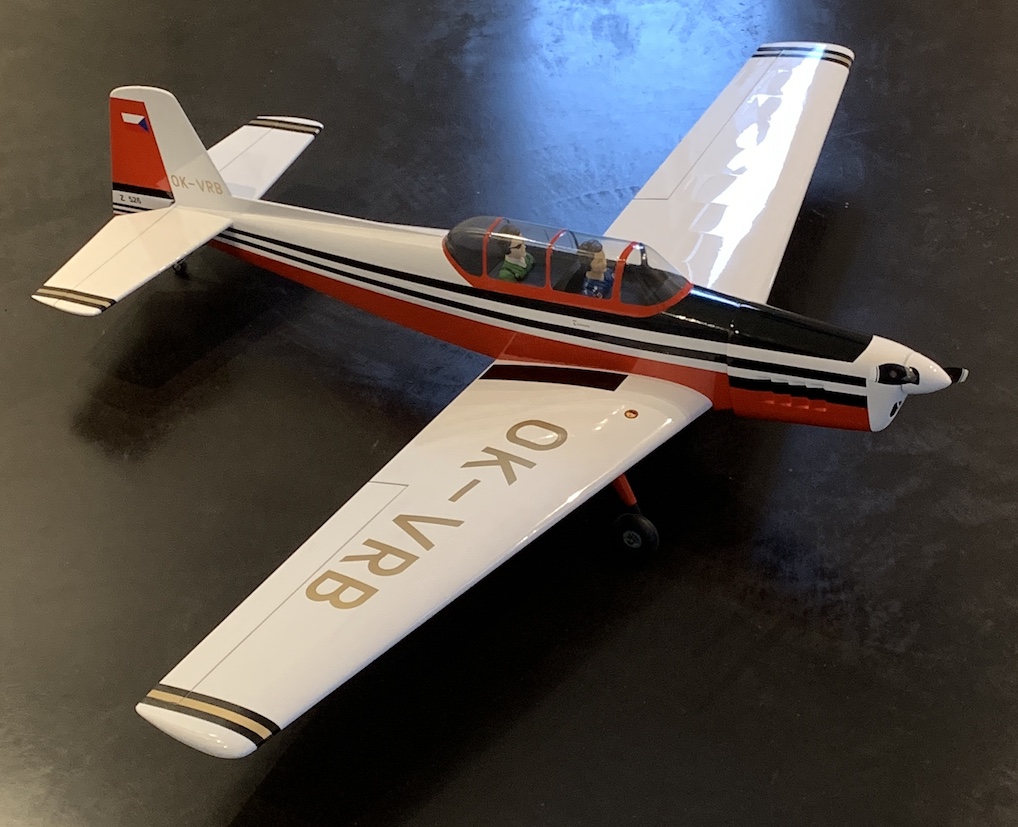
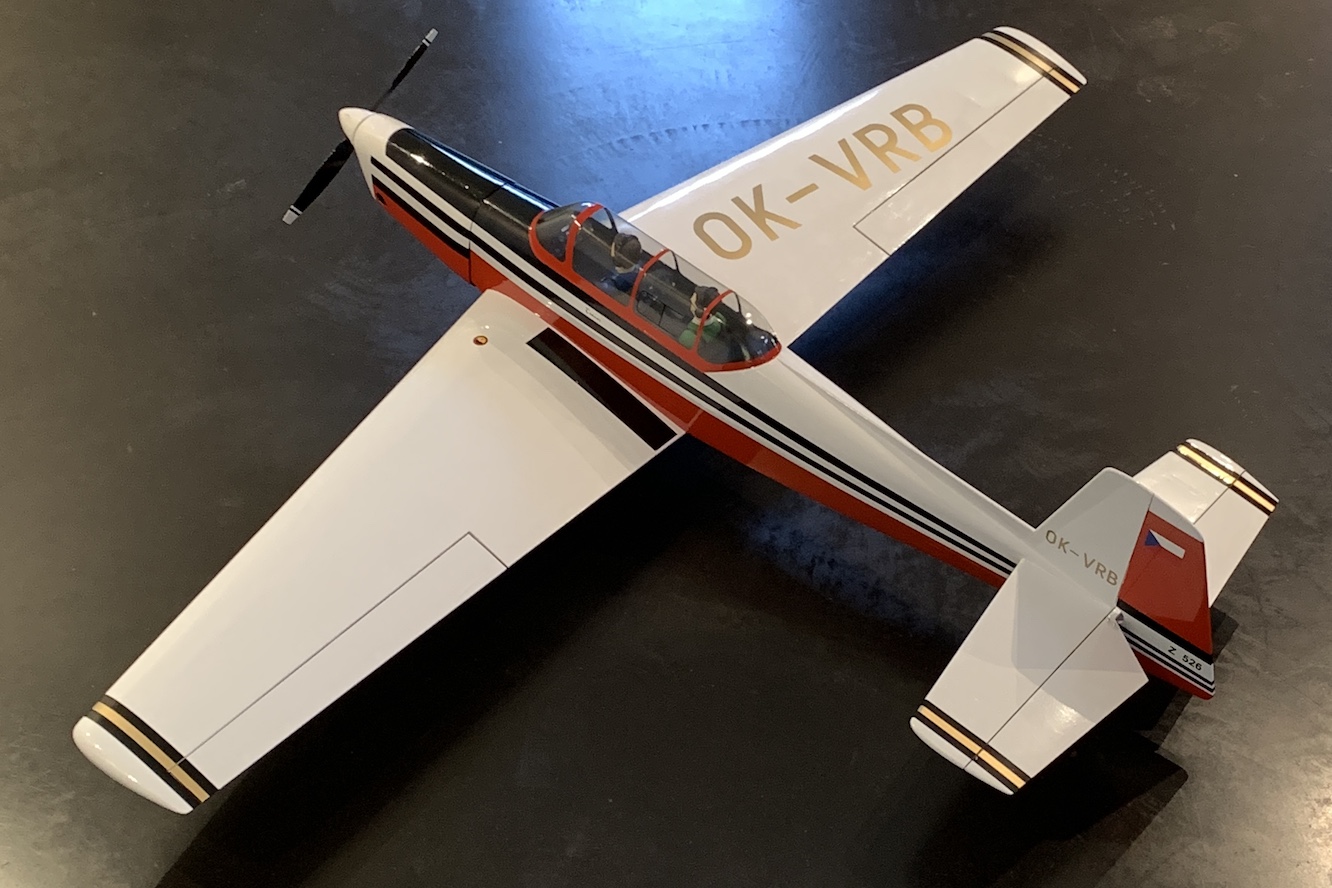
Photographs by Michel Avonds I completed this nostalgic build in January 2026. I had already built a similar model, but that was back in 1977, so almost 50 years ago (!). At that time, my experience at building and flying RC models was very limited. I remember that my uncle Jean had donated the kit to me in anticipation of my 18th birthday. His full name was Jean-Louis Lebeau while the French name "Jean" is the equivalent of the English name "John" and has nothing to do with the female English name "Jean". As such, it is pronounced more in the way of "John". My uncle Jean was the elder brother of my uncle Jack and happened to be my godfather. He was also an avid RC model flying enthousiast but was somewhat less productive than his brother in terms of building models.
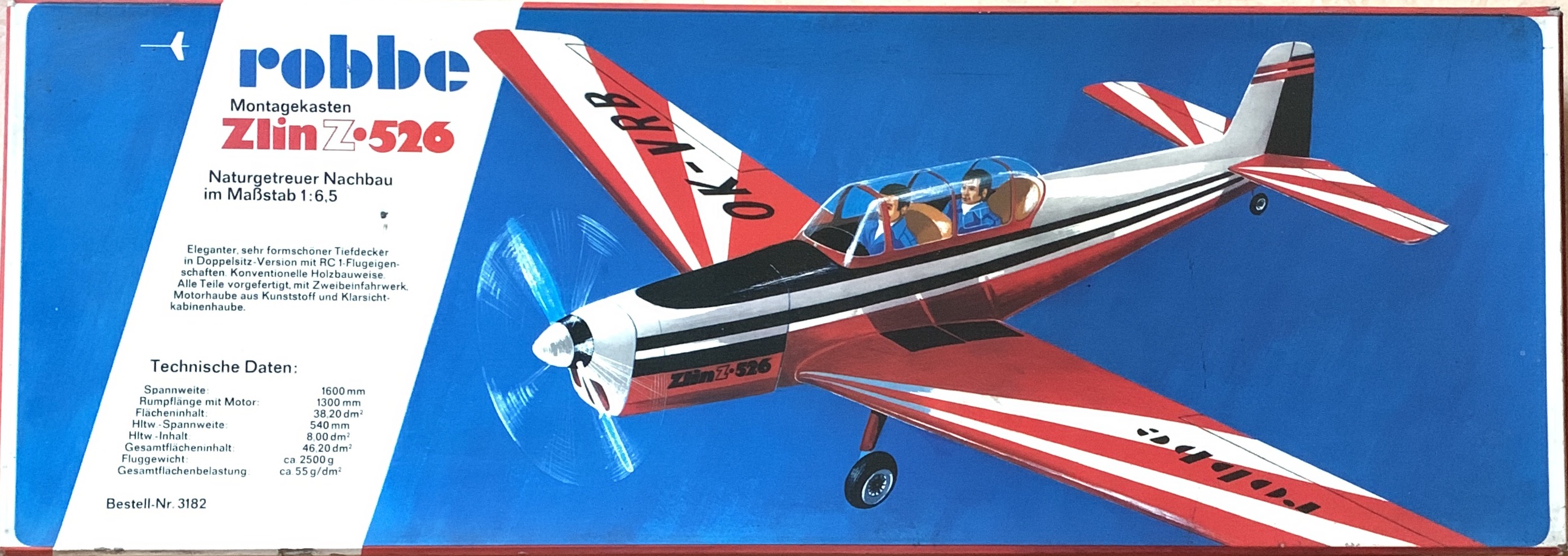
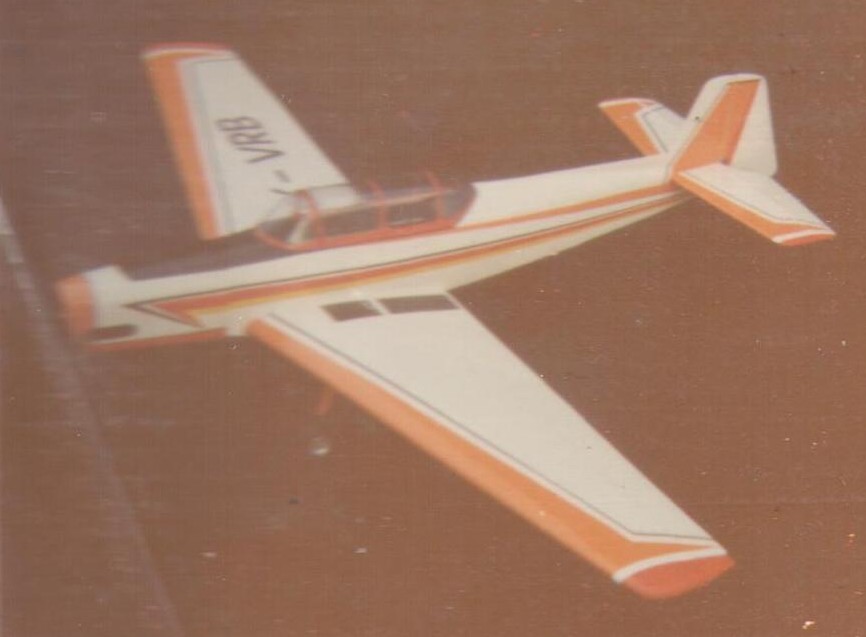
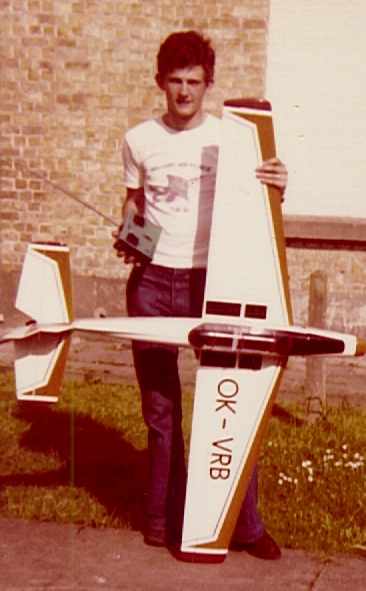
artist impression on the box cover of the Robbe Zlin 526 kit I managed to build that kit with the little tools I had at that time and I was quite pleased with the result. The paint scheme I chose for that first model was a bit more colo urful than the original, as I got inspired by a wonderful finished model of the Sig Zlin Z526AS Akrobat hanging in the Christiaensen toy and model shop in Knokke in the mid seventies. You can see the results of that first build on the photographs below.
three old pictures of my first Zlin 526 model from 1977 I had purchased an Enya 45 II engine in a Folkestone model shop on a day trip to England with the ferry from Ostend, to power the model. It was one of the recommended engines by Robbe. It took me some time to improve my flying skills before I finally made the first flight some time later (I think it was in the summer of 1979). It was my first low wing model and I remember it was quite a challenge in my relatively inexperienced hands. It certainly didn’t help that the wings were not built straight… So the model was short-lived. I can’t remember after how many flights the model was crashed beyond repair, but I think it was less than ten. I was determined to build a new one, once I had gained sufficient experience but I didn’t expect it would take almost 50 years before this became reality… The Robbe Zlin 526 appeared in the Robbe catalog in 1976 as one of its top models, but it didn't gain much popularity. It was sold for a short while only, hence it was difficult to find an untouched kit after such a long time.
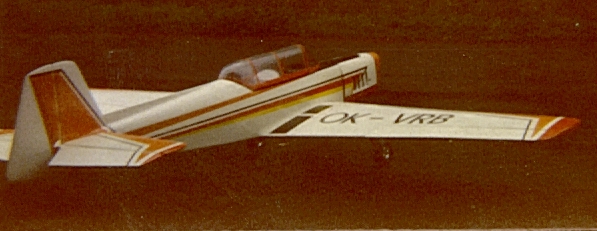
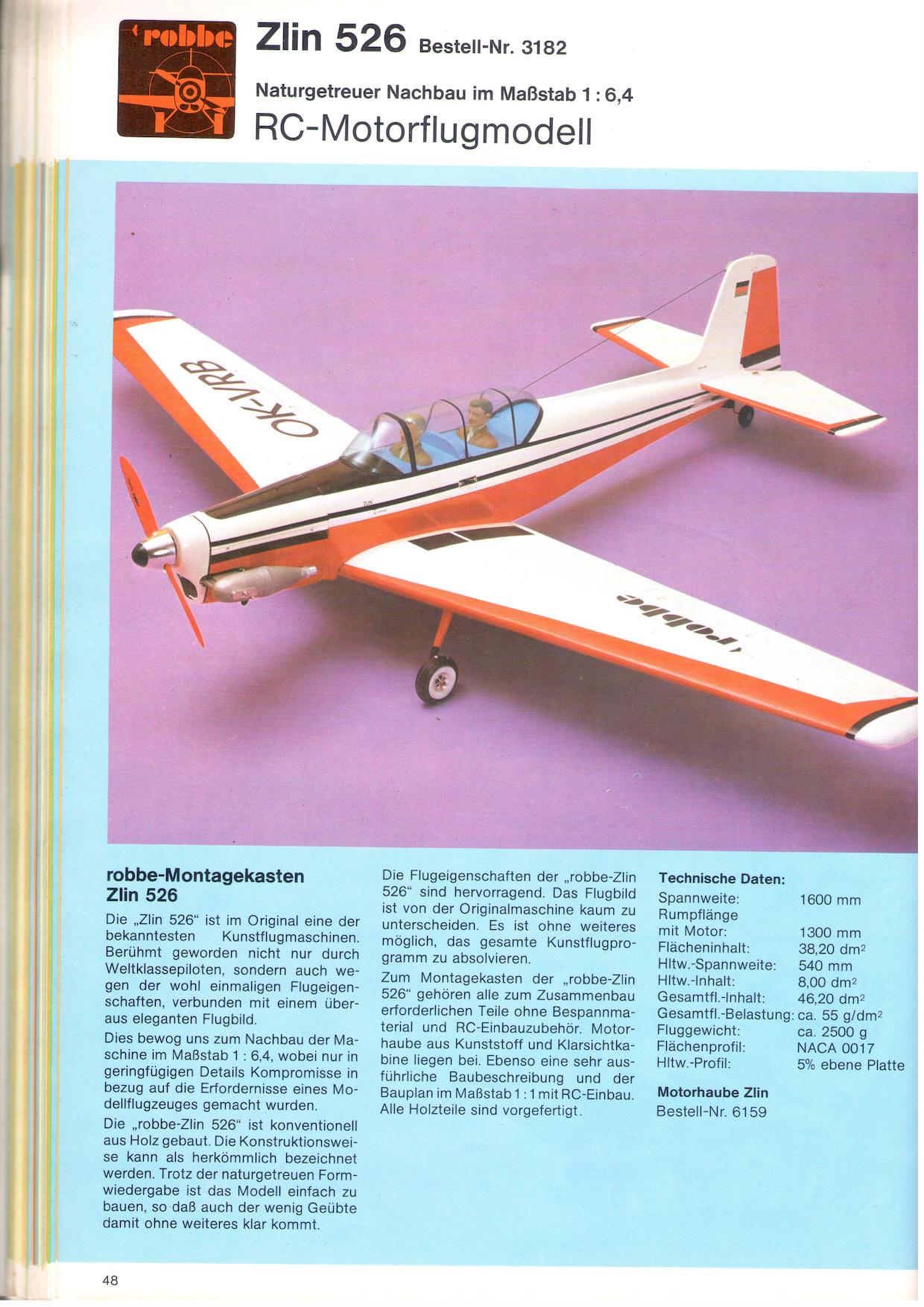
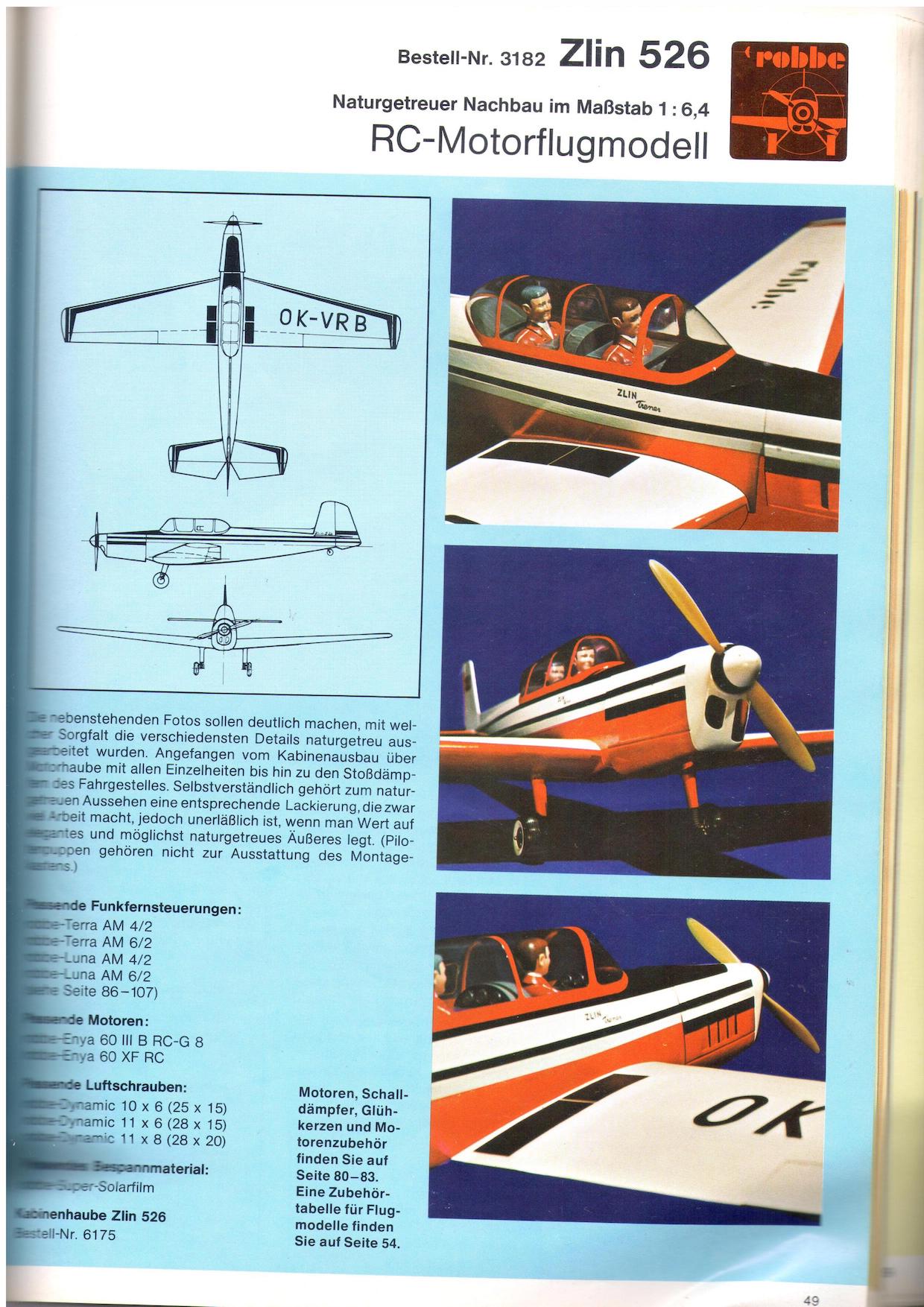
scans from the 1976 Robbe catalog clearly showing the semi scale nature of the model (fixed gear, modified airfoil, simple sheet surface tail surfaces, simple cockpit details etc.) I was searching for many years until recently, one popped up on a German second hand site but it was missing the instructions. Furthermore, it was not in a really good shape. I bought it anyway and a few weeks later, another one popped up on a Belgian second hand site. I bought that one as well as it was complete with instructions and in a far better shape.
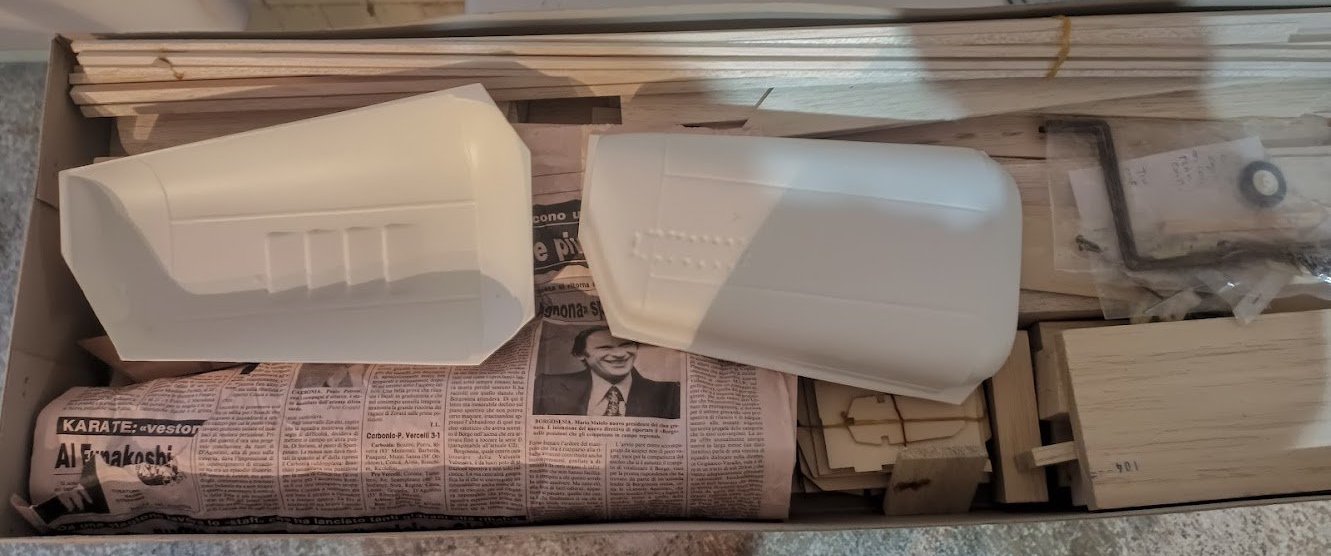
kit contents were still quite good after almost half a century My list of models to be built was quite long, but I bypassed the list and started the build right away. During the build, I couldn’t believe I had been able to accomplish the task as a youngster with little tools and little experience. It is quite a challenging build and that’s probably the reason why almost nothing can be found in terms of finished models from this kit. In all honesty, Robbe kits were not as well engineered as those from Graupner, that other famous German kit manufacturer. kit. Anyway, with the help of all the tools in my workshop and my accumulated building experience, building the model today was quite a bit easier. The airframe is now built and finished and has since performed quite a number of flights.
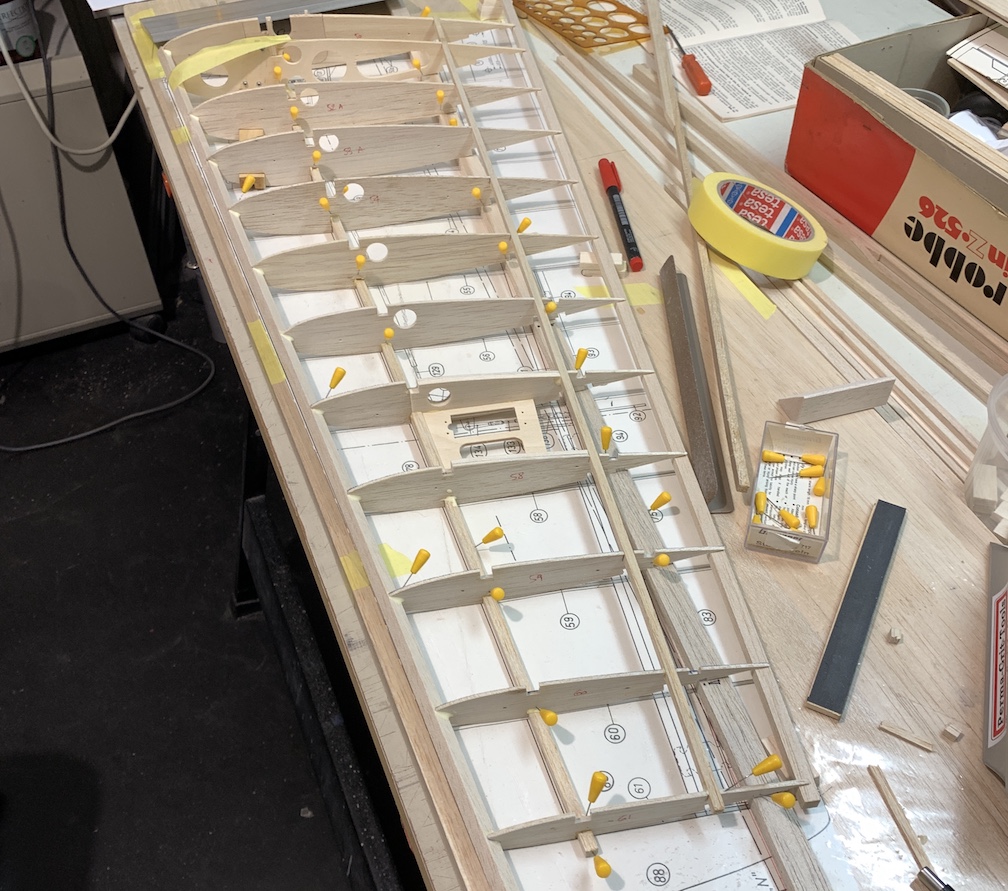
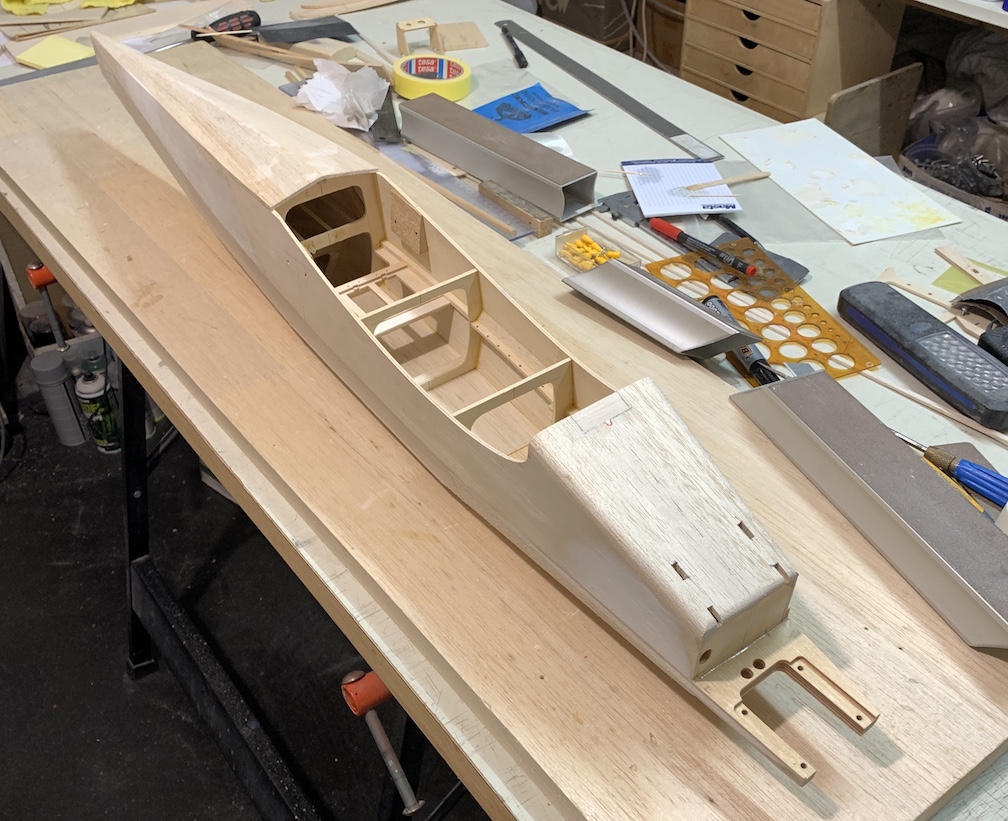
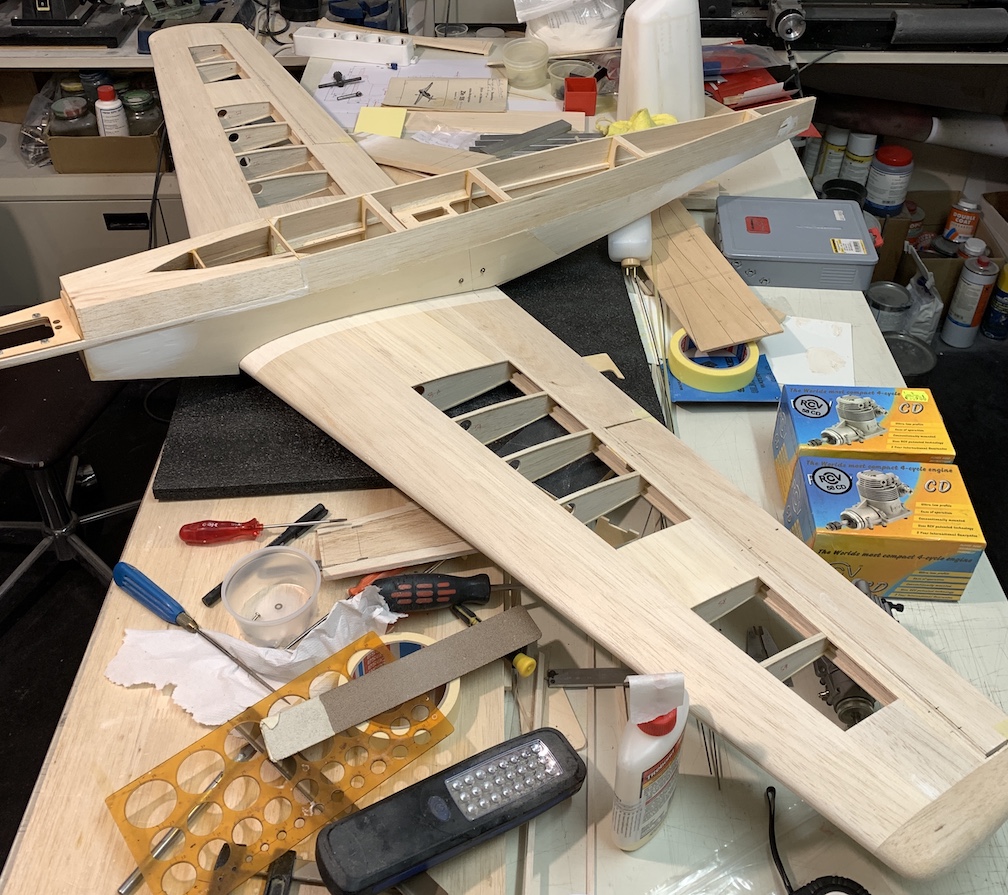
first stages of the build For power, I chose the rather unconventional RCV 58CD four stroke engine. I was very pleased with that engine in the Sig Citabria, my previous build, so I purchased another one on a Dutch second hand site. It was advertised as “brand new” but as it turned out, the engine was not complete, the mounting lugs had been drilled out, it had been mounted and it had certainly run. I was not pleased but decided to keep the engine as it fits the Zlin beautifully and the fuselage was already under construction including the new integrated motor mounts specifically made to accommodate the RCV 58CD.I made a few changes to reflect the use of modern RC equipment. Fifty years ago, servos were very expensive, so only one was used to drive both ailerons through 90 degree bell cranks. It was only logical to install two aileron servos now, avoiding the slop associated with the original configuration. By the way, this is a modification I do on all retro builds. I wanted to keep the retro feel and build the model as it was designed, so with the modified airfoil (NACA 0017), the flat stab and fin and the fixed landing gear. I did however incorporate two degrees of washout as the wing tapers considerably and is prone to tip stalling as experienced with my first Zlin 526 (the many flights have proven the washout is effective as the stall is very gentle now). I would highly recommend this modification to anyone building this model.
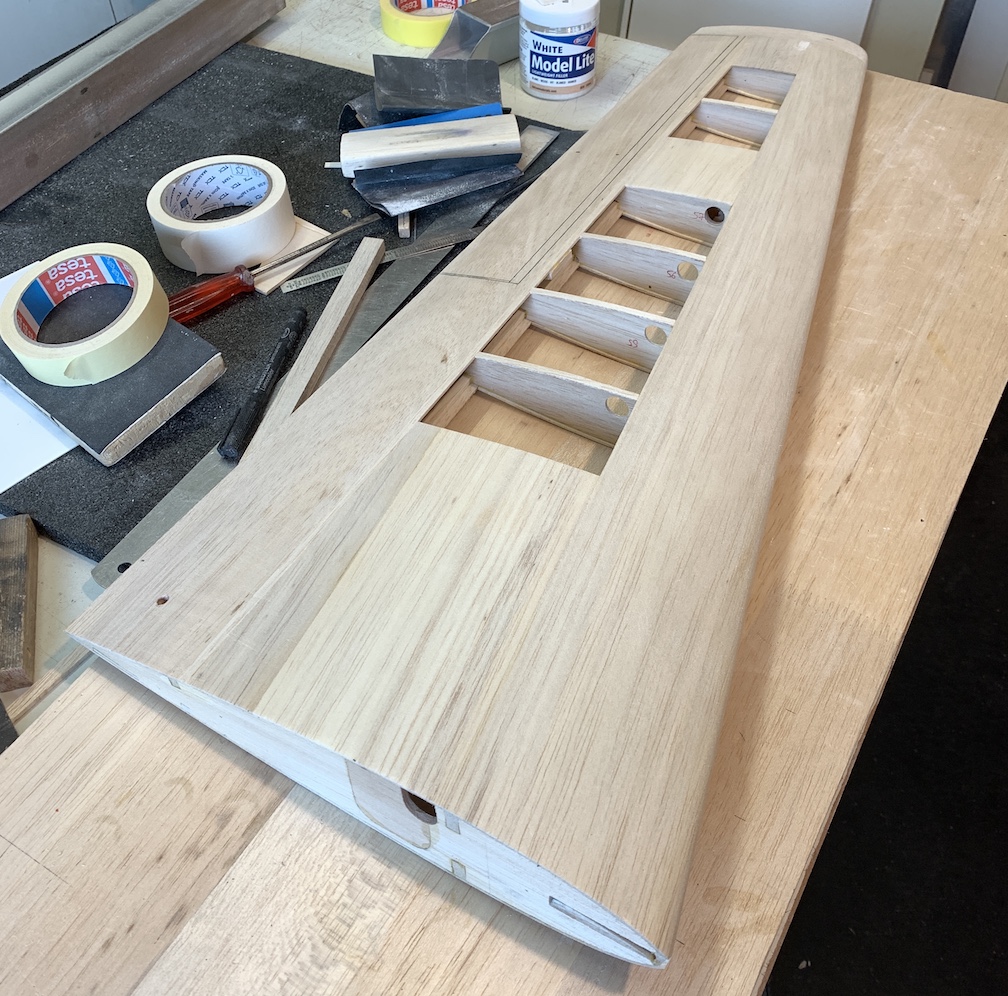
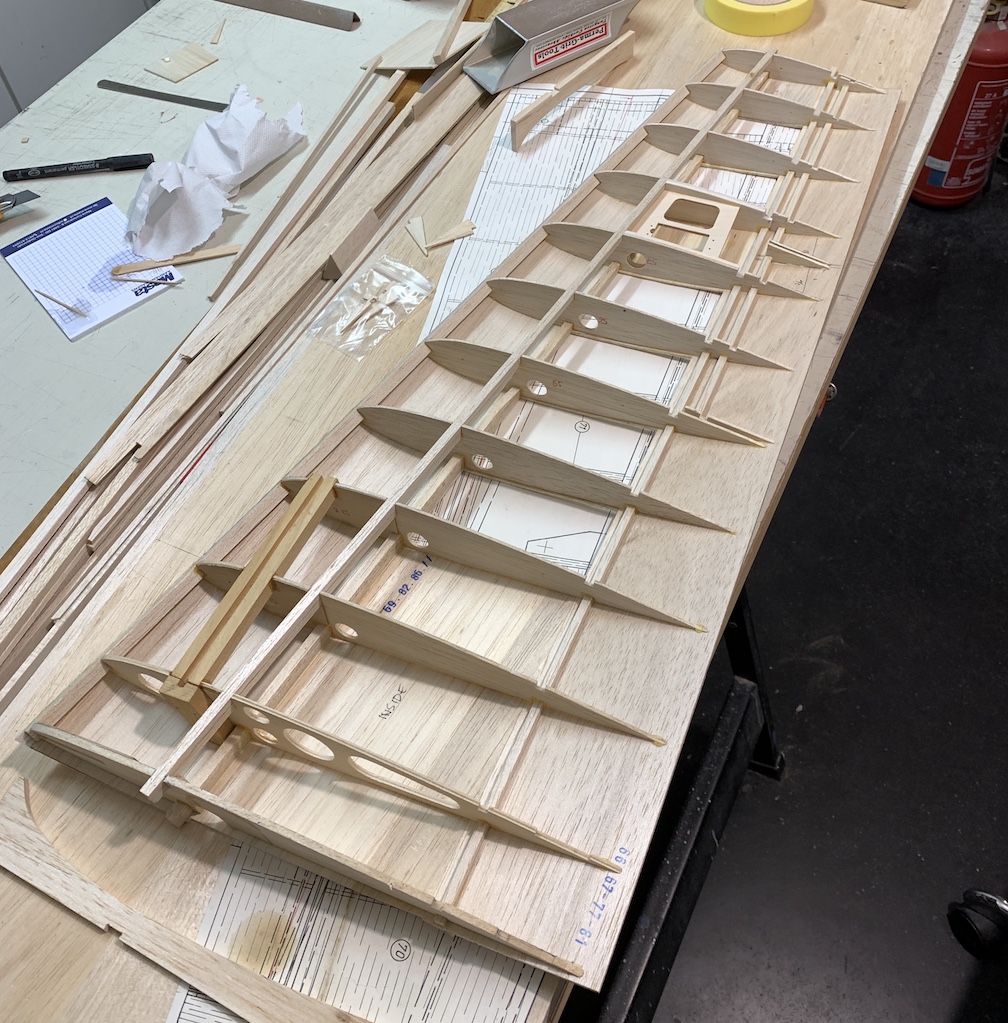
wing halves in different stages of the build
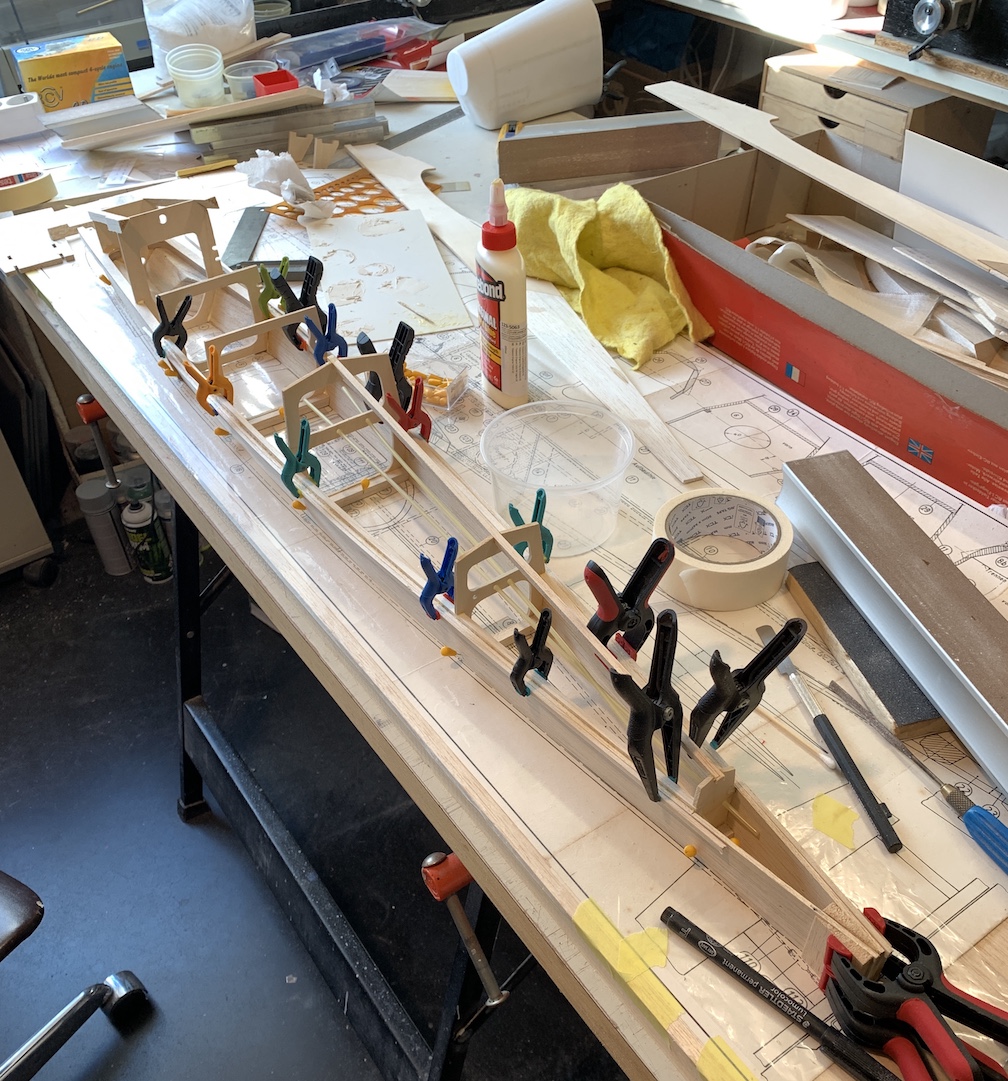
some more progress on fuselage
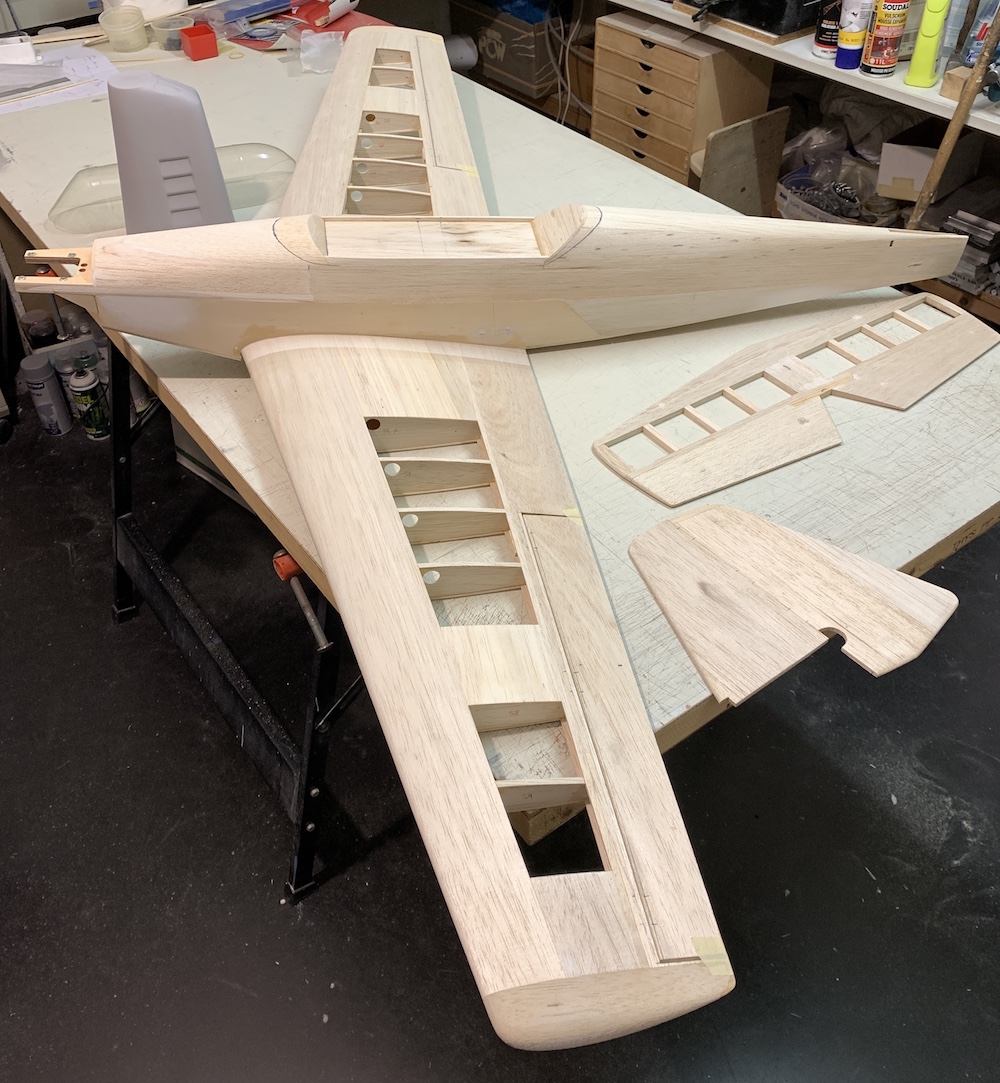
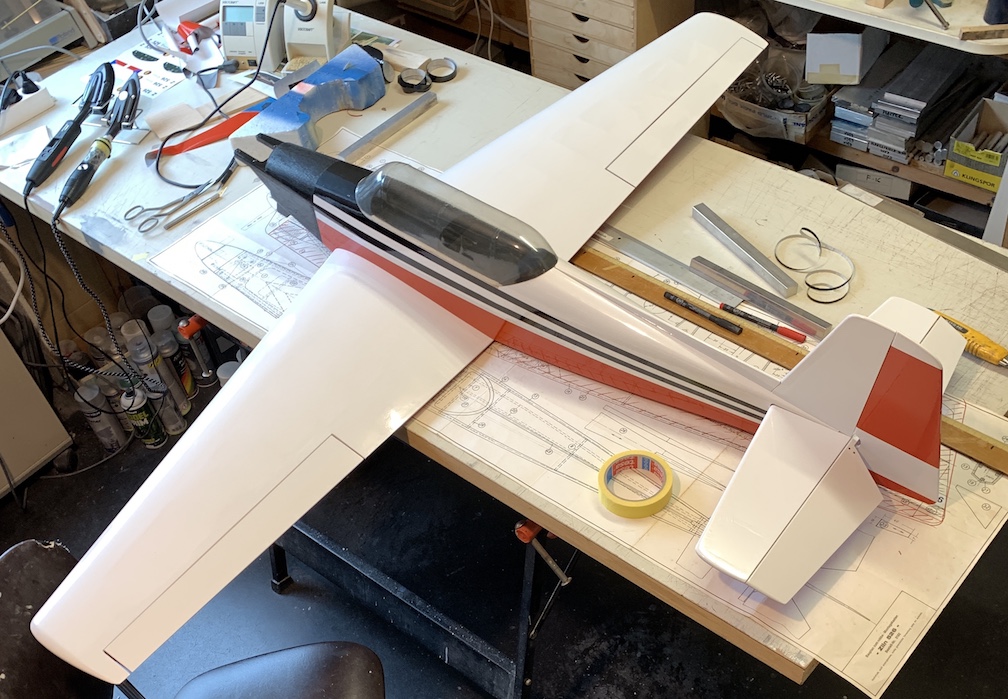
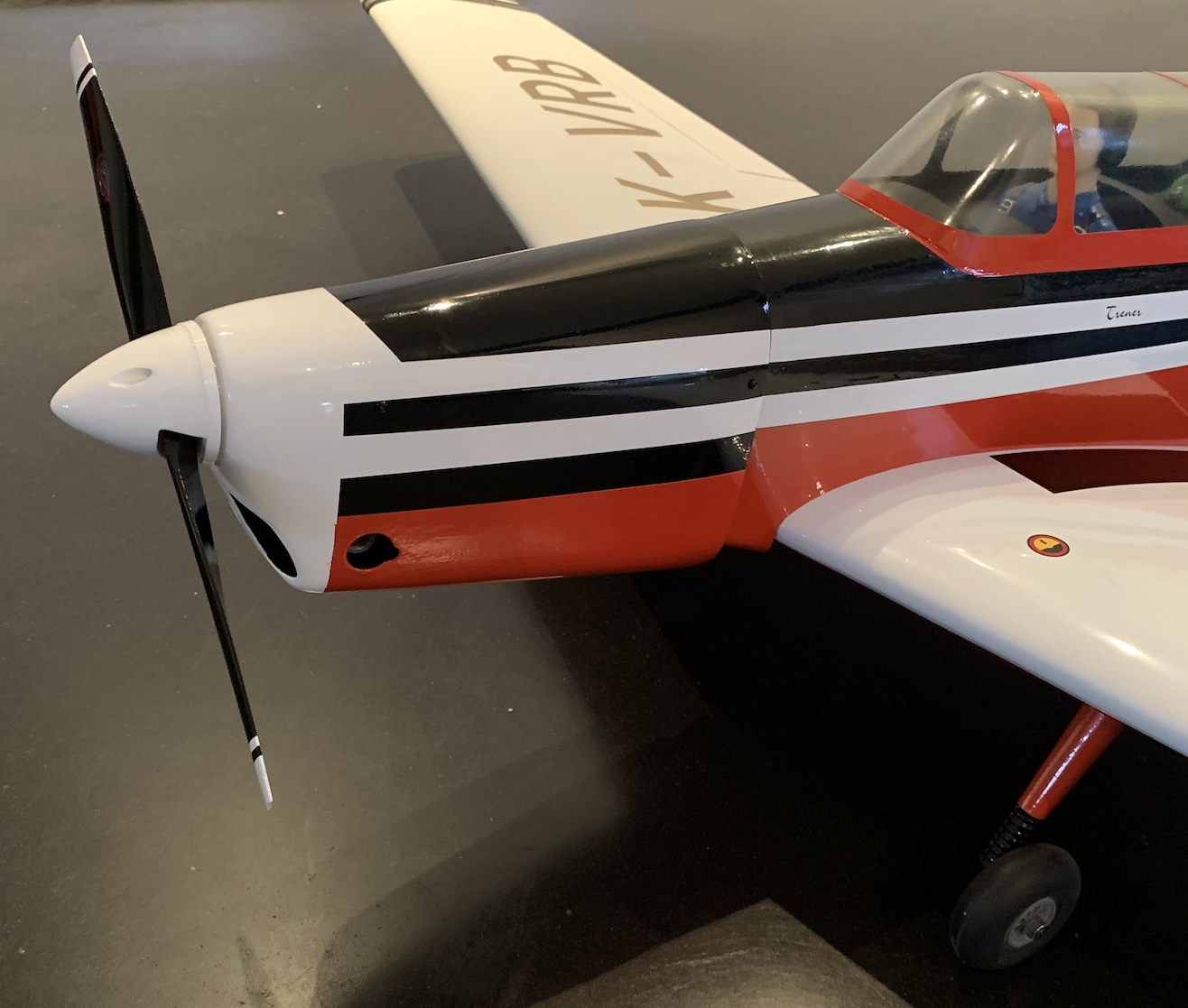
main components framed up The plastic of the engine cowl was still in remarkably good shape, but I didn’t like the exaggerated panel lines and the indentations showing the location of the hole for the silencer, so I decided to fill all of these and finish the cowl as a plug from which to make moulds for an epoxy fiberglass cowl.
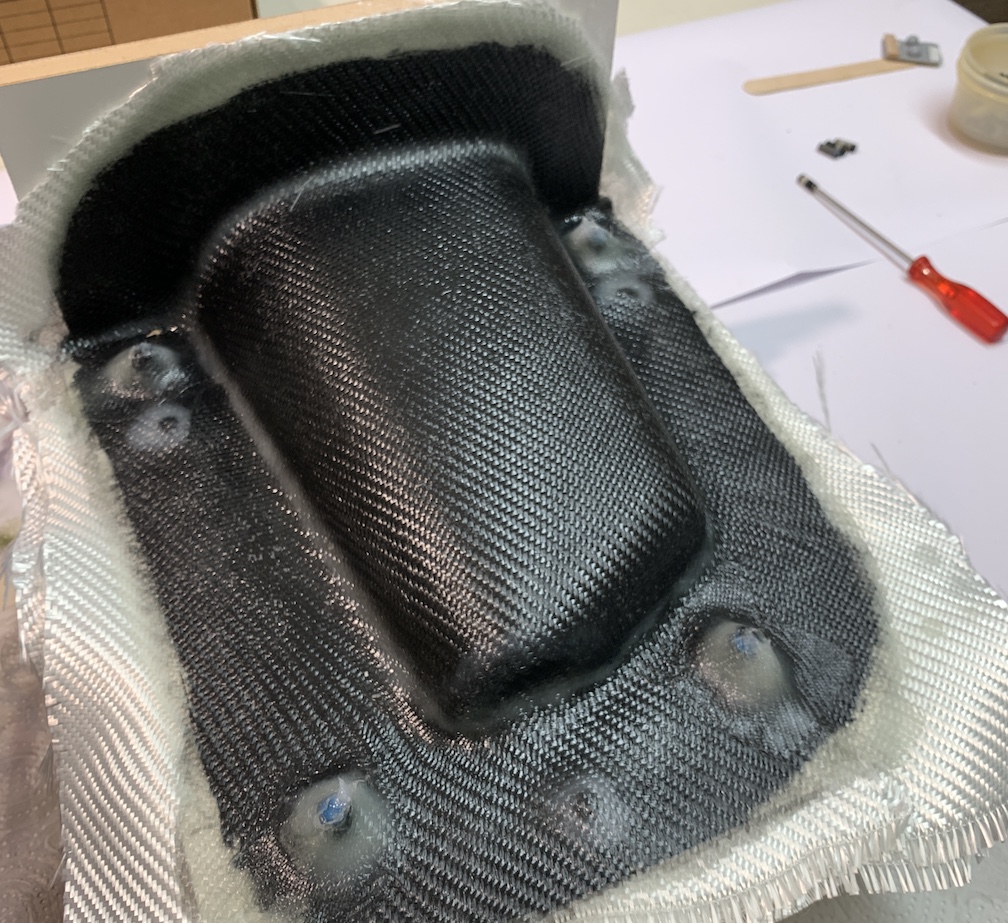
plastic engine cowl serving as a plug for a mould
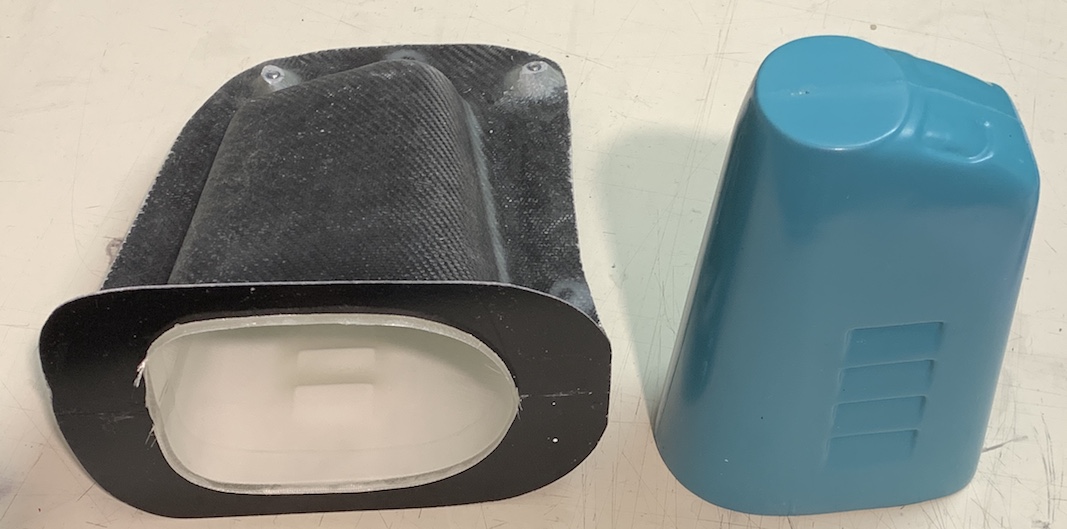
first fibreglass cowl laid up in mould next to original plastic cowl plug
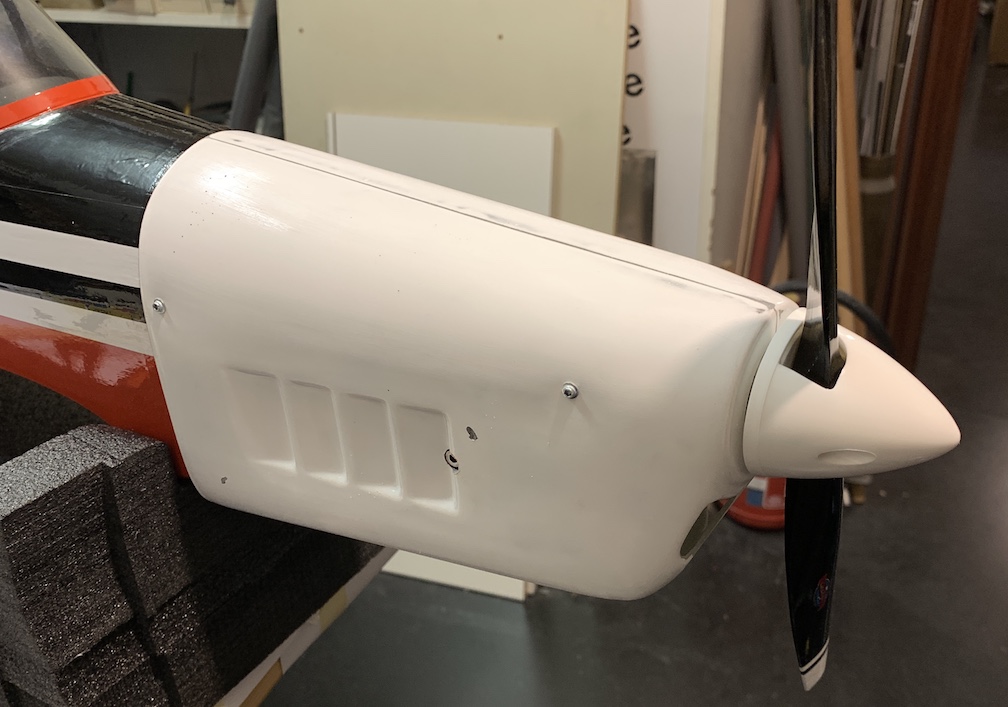
trial fitting the new epoxy fibreglass cowl
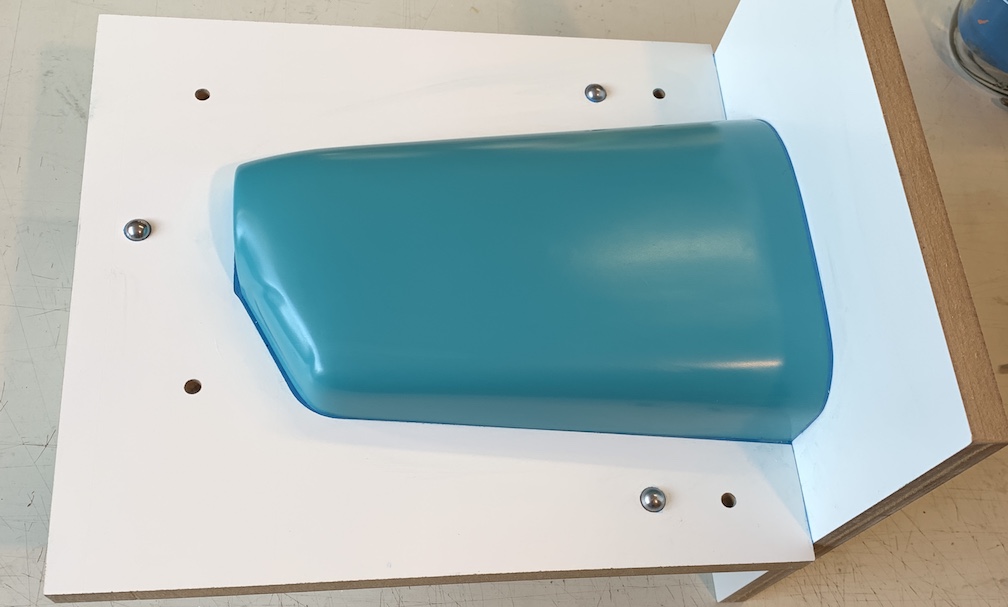
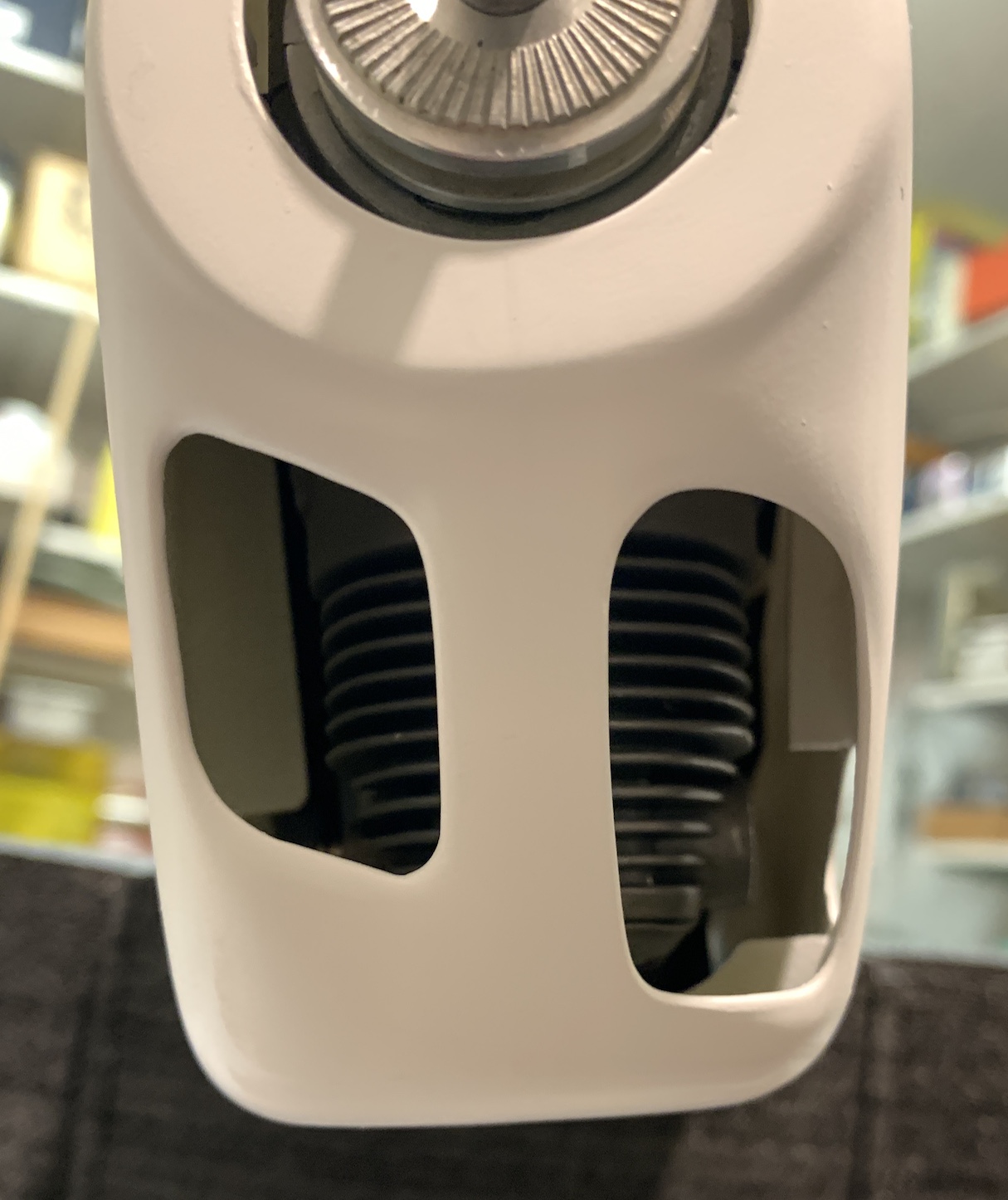
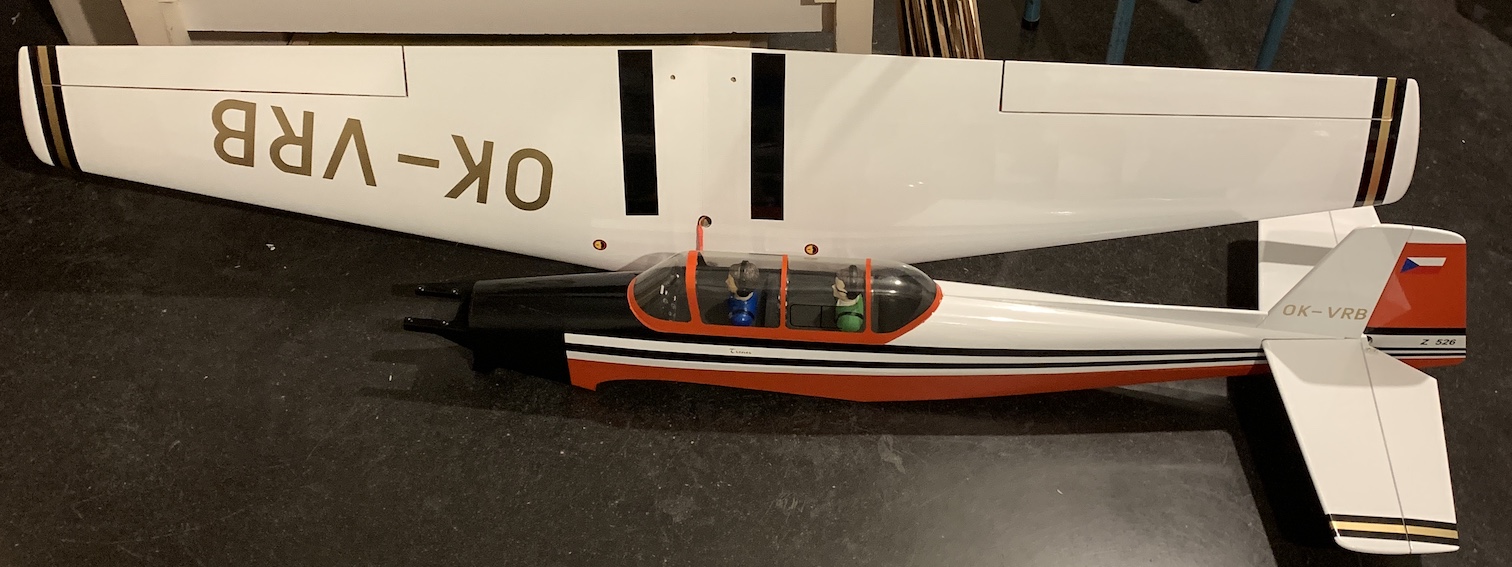
baffles inside cowl force all cooling air to go over engine I don’t know which clear plastic was used for the canopy but it is very brittle. Not from age, because as far as I recall, it cracked easily on my first build attempt so many years ago. So again this time, very careful cutting and trimming was needed. Cockpit interior detail is sparse as intended by the designer, so I didn’t want to change that to preserve the retro look from this semi scale model.
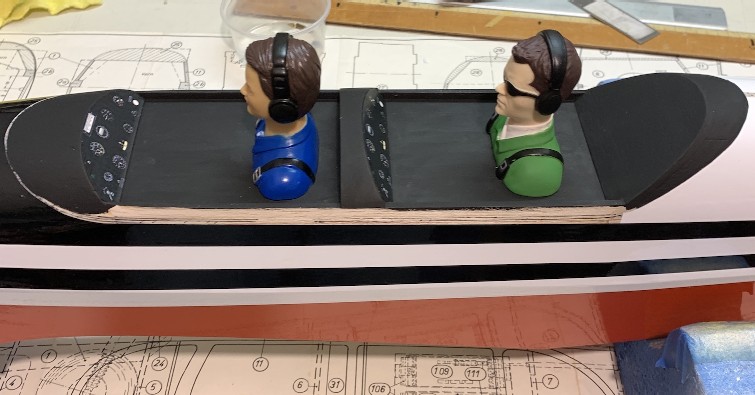
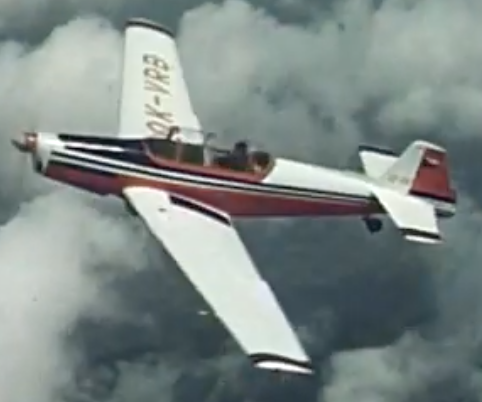
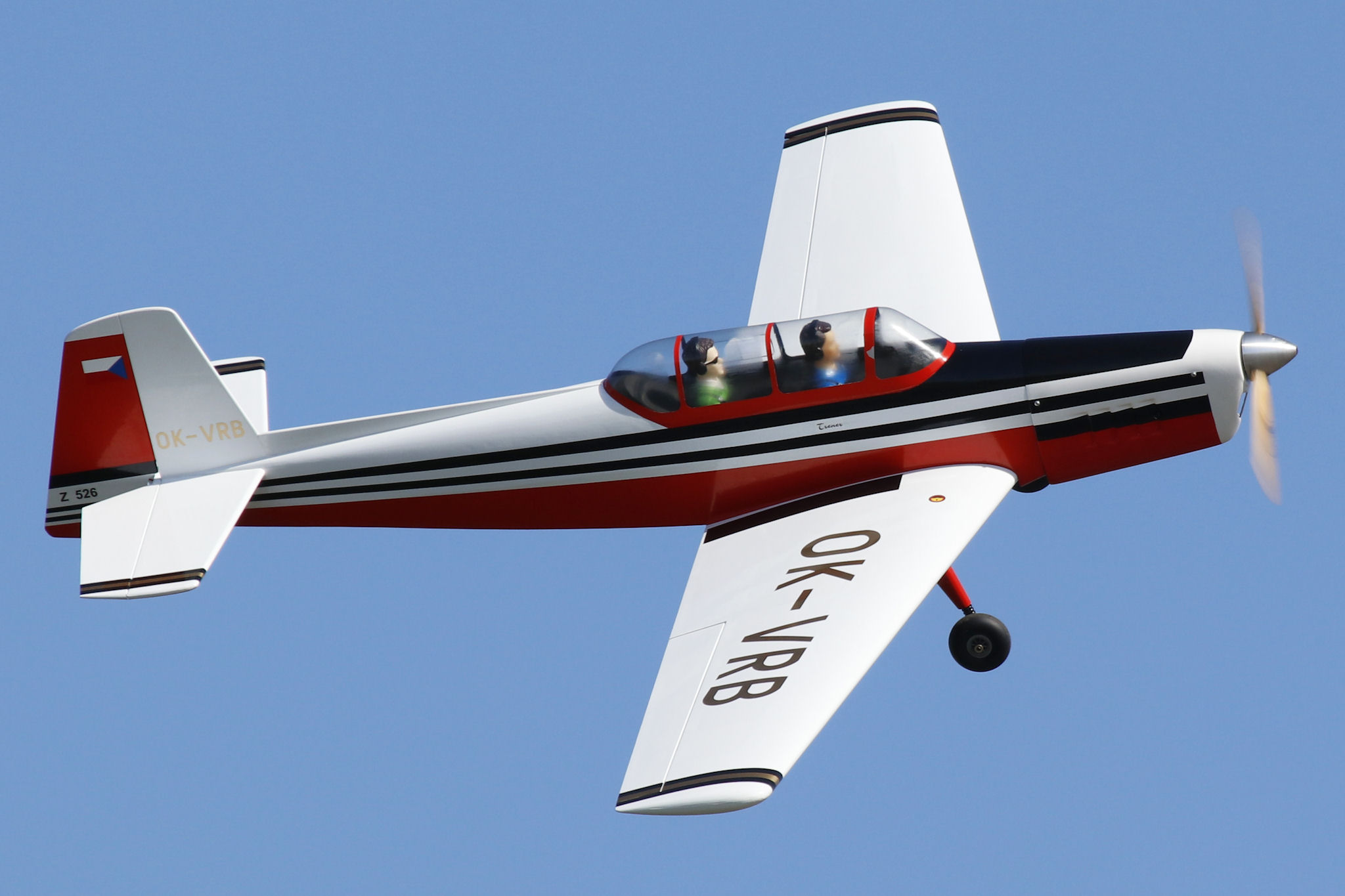
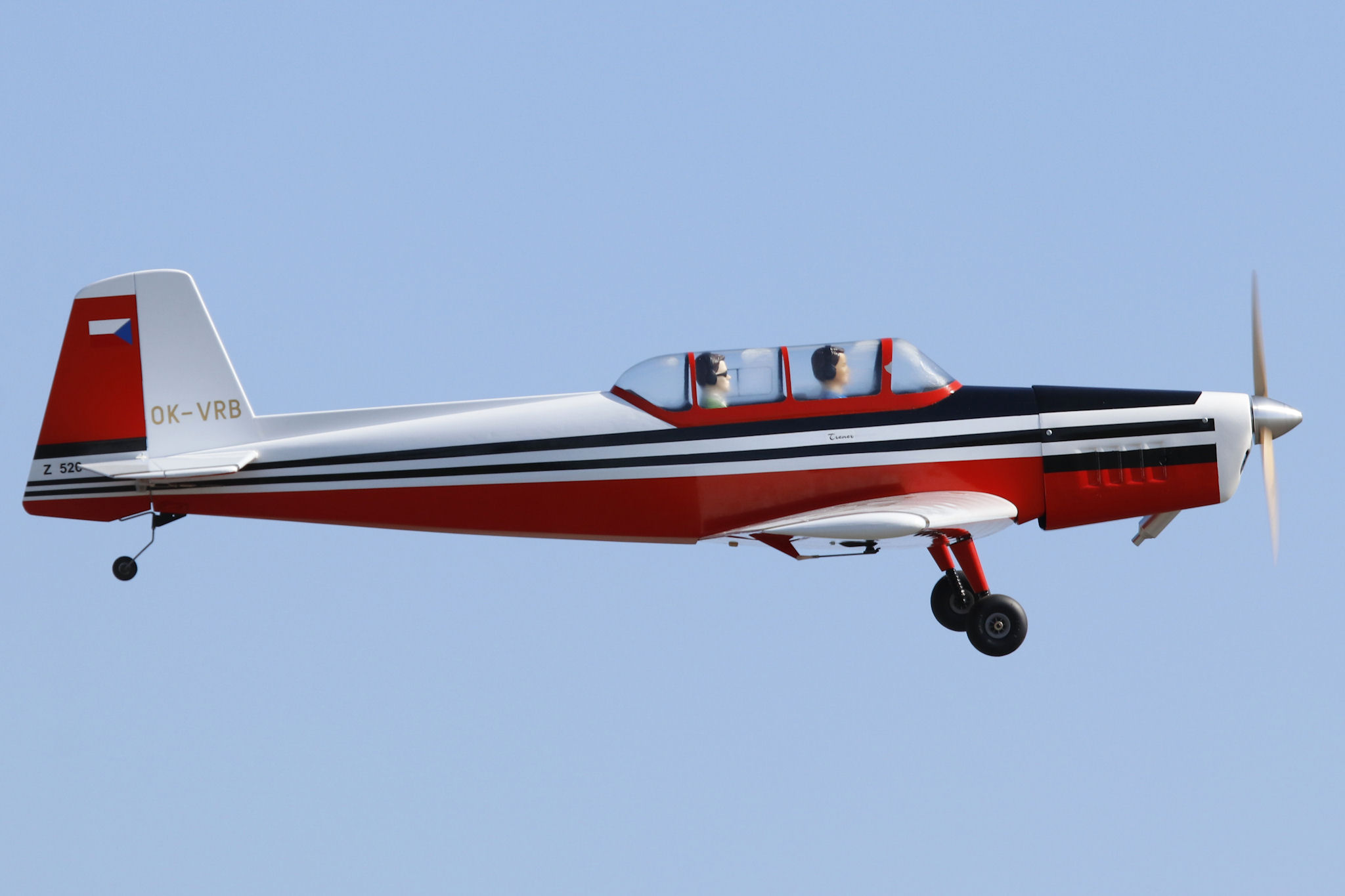
simple cockpit interior as intended by the kit manufacturer The box cover shows a fantasy impression of the full size OK-VRB, while the catalog photos show more authentic versions. I found very little on the full size but in this 1967 film “Skies for the Trener” (youtube link here), the original OK-VRB is featured in some flying scenes. A few screenshots allowed me to replicate the OK-VRB scheme in a decent manner although it was far from my intention to make a detailed scale model.
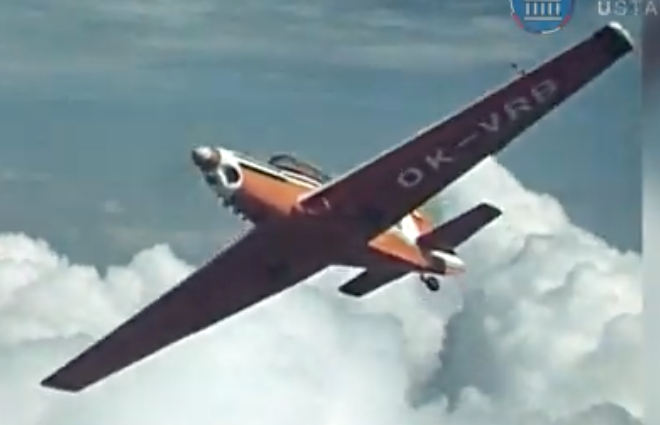
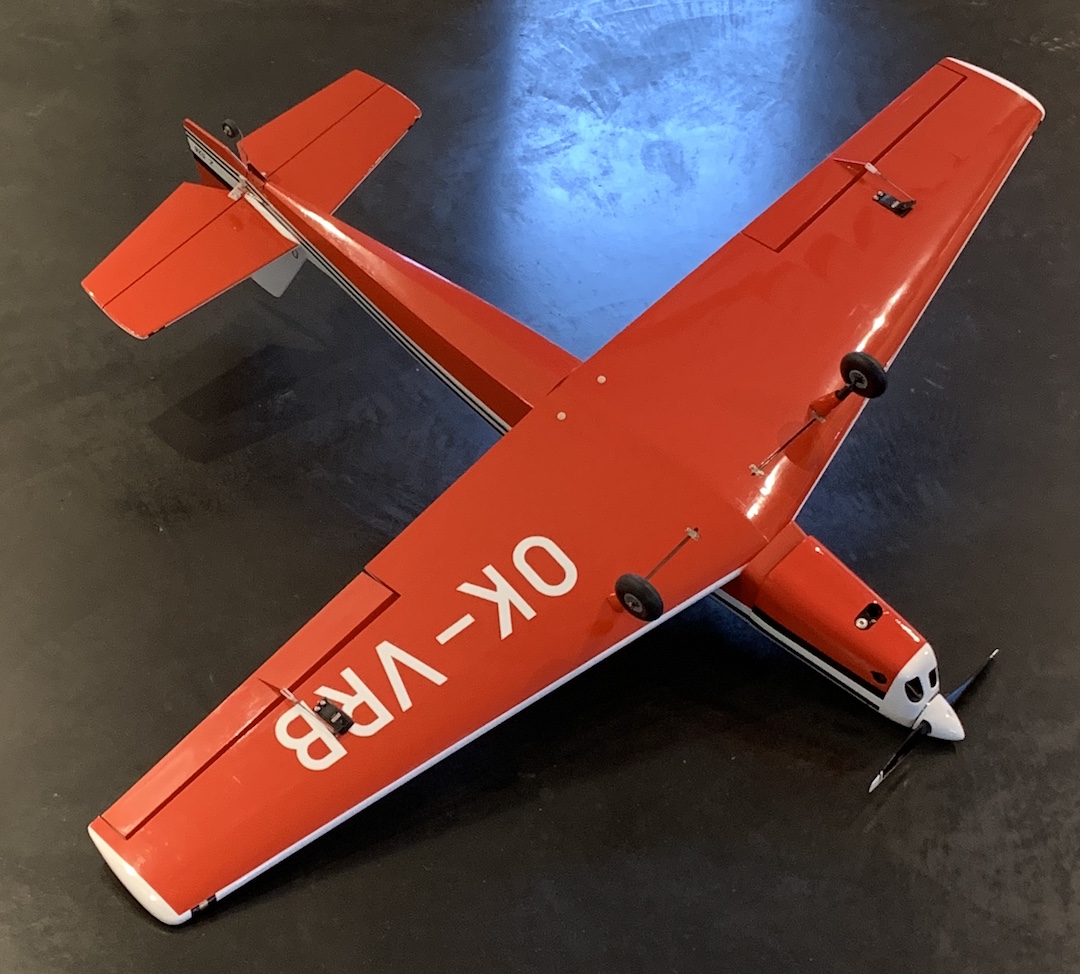
screenshots from film are the only photographs of the original OK-VRB airframe I found The model is almost exclusively finished in Oracover. Only the cowl and canopy frame are painted in matching Oracolor paints. Graphics are home made, either Oracover or Orastick cut on a Roland Stika or in decal form.
model covered in Oracover...
... and further finished with markings applied, awaiting final cowl installation
trial fit of cowl, exhaust system still to be fitted...
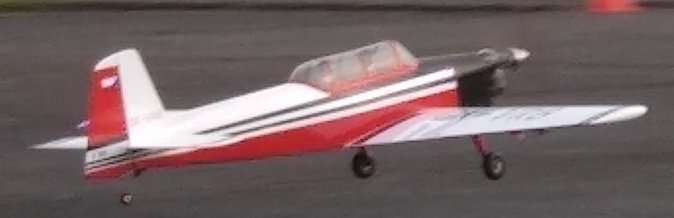
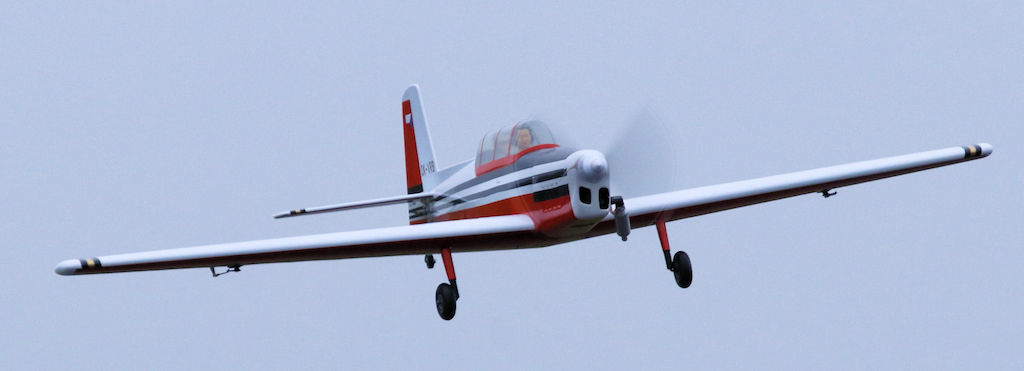
... and some photographs of the (nearly) finished model before the first flight The model is quite light: 2.6 kg. First flights were carried out on January 19th, 2026 without the cowl to avoid any cooling problems on this (nearly) new RCV 58 CD engine. The absence of the cowl also allowed easy access to the idle mixture screw which definitely needed adjustment. After 4 flights, the idle running characteristics had already well improved. The engine probably needs another dozen flights or so before it is completely run in. I didn't have good memories from my first Zlin 526, but the new model demonstrated quite gentle stall characteristics (thanks to the two degree washout). The model flies very well indeed and has ample power for the simple scale aerobatics it was designed for.
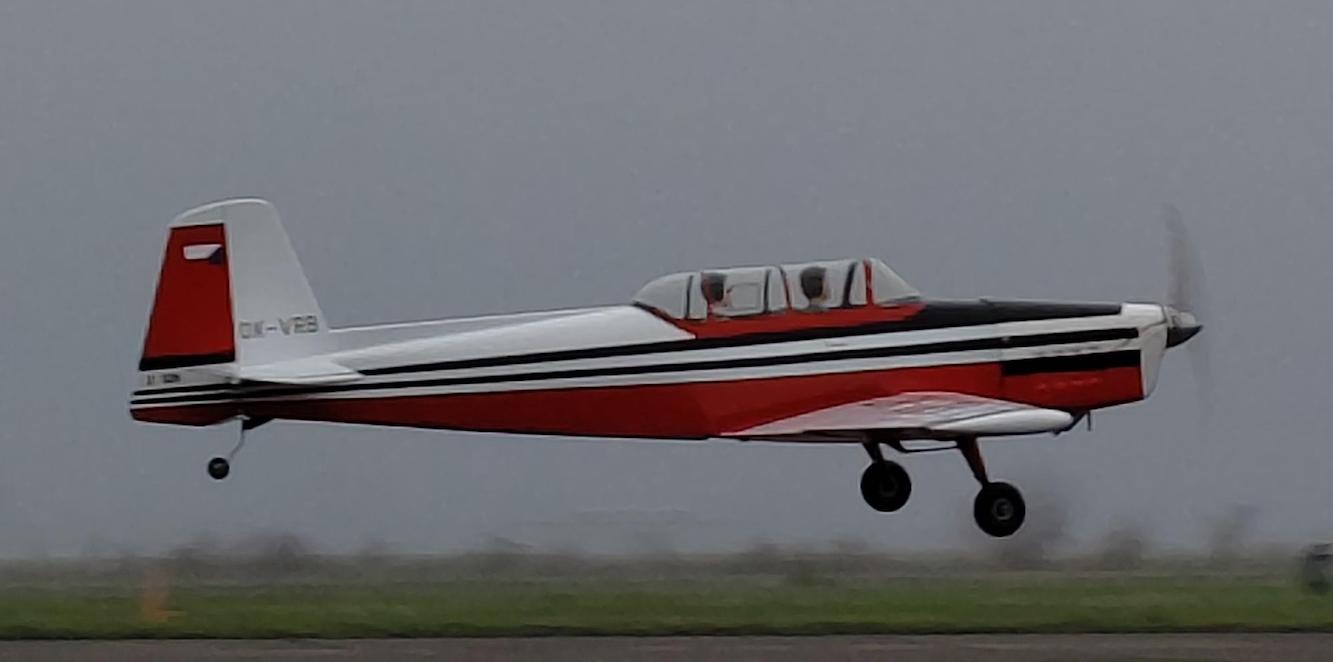
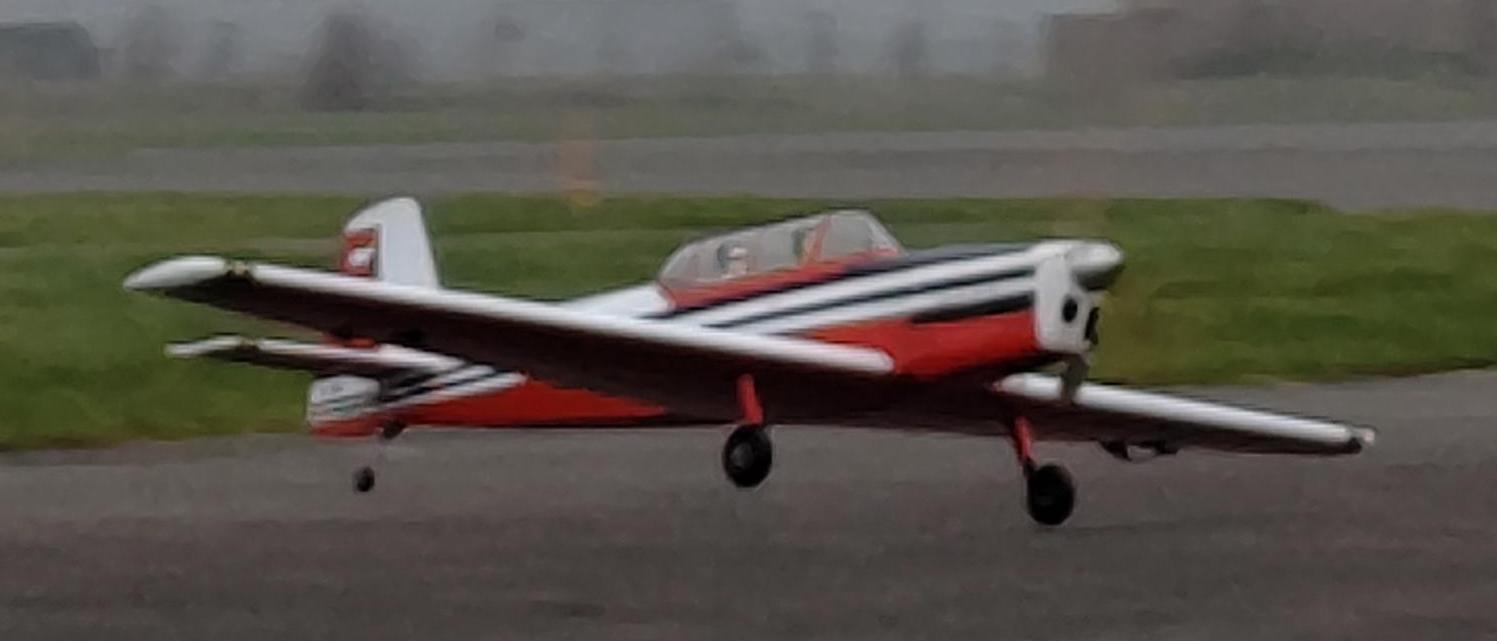
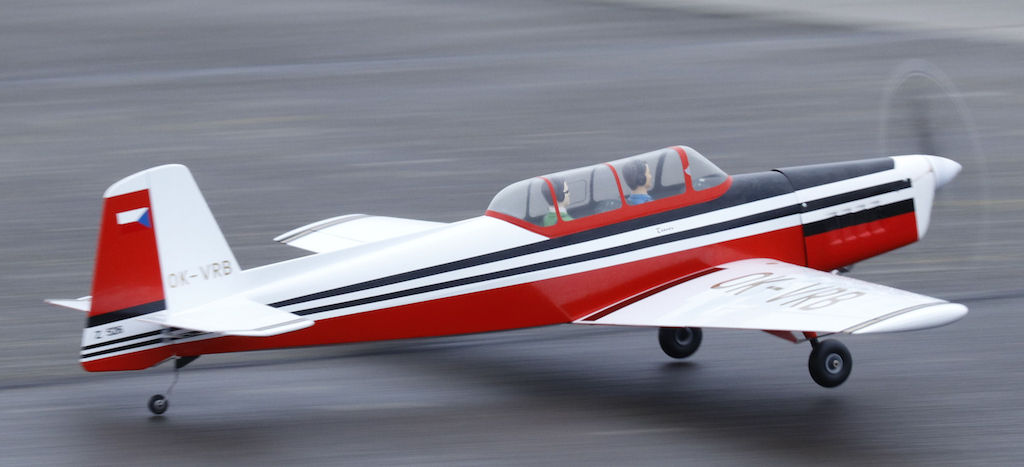
first flights without cowl (photographs by Nick Demeulenaere)... One week later, on January 25th, 2026, some more flights were carried out, this time with the cowl installed. Hazy conditions but good enough to further evaluate the flying characteristics of the Zlin. No cooling problems were encountered, the engine behaved very well. A lot of touch and go's were practised. Very satisfying!
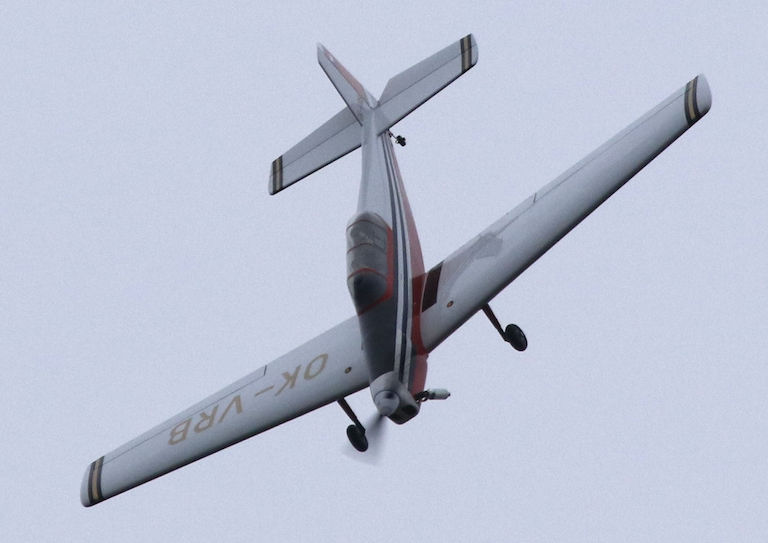
... and one week later with cowl (photographs by Nick Demeulenaere) And yet another week later, some more flights were done confirming the benign flying characteristics of the model. Still overcast conditions with very little light as can be seen from the photographs.
this series of photographs by Michel Avonds
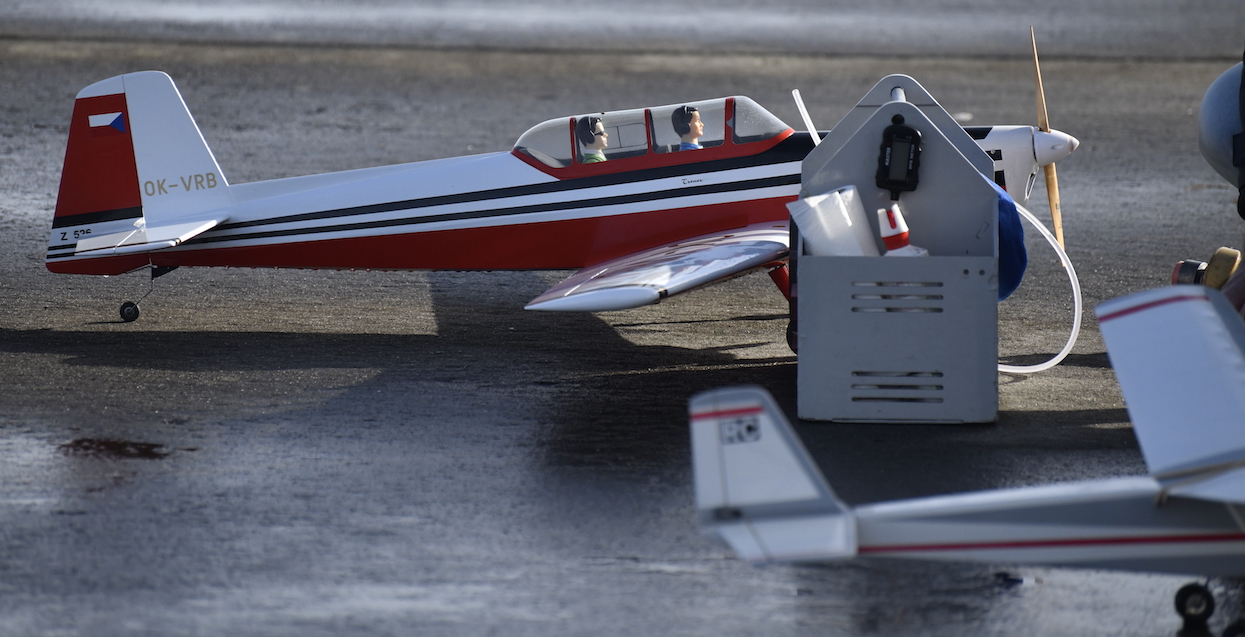
at the field with a Graupner Amateur in the foreground (Ron Steenacker photo)
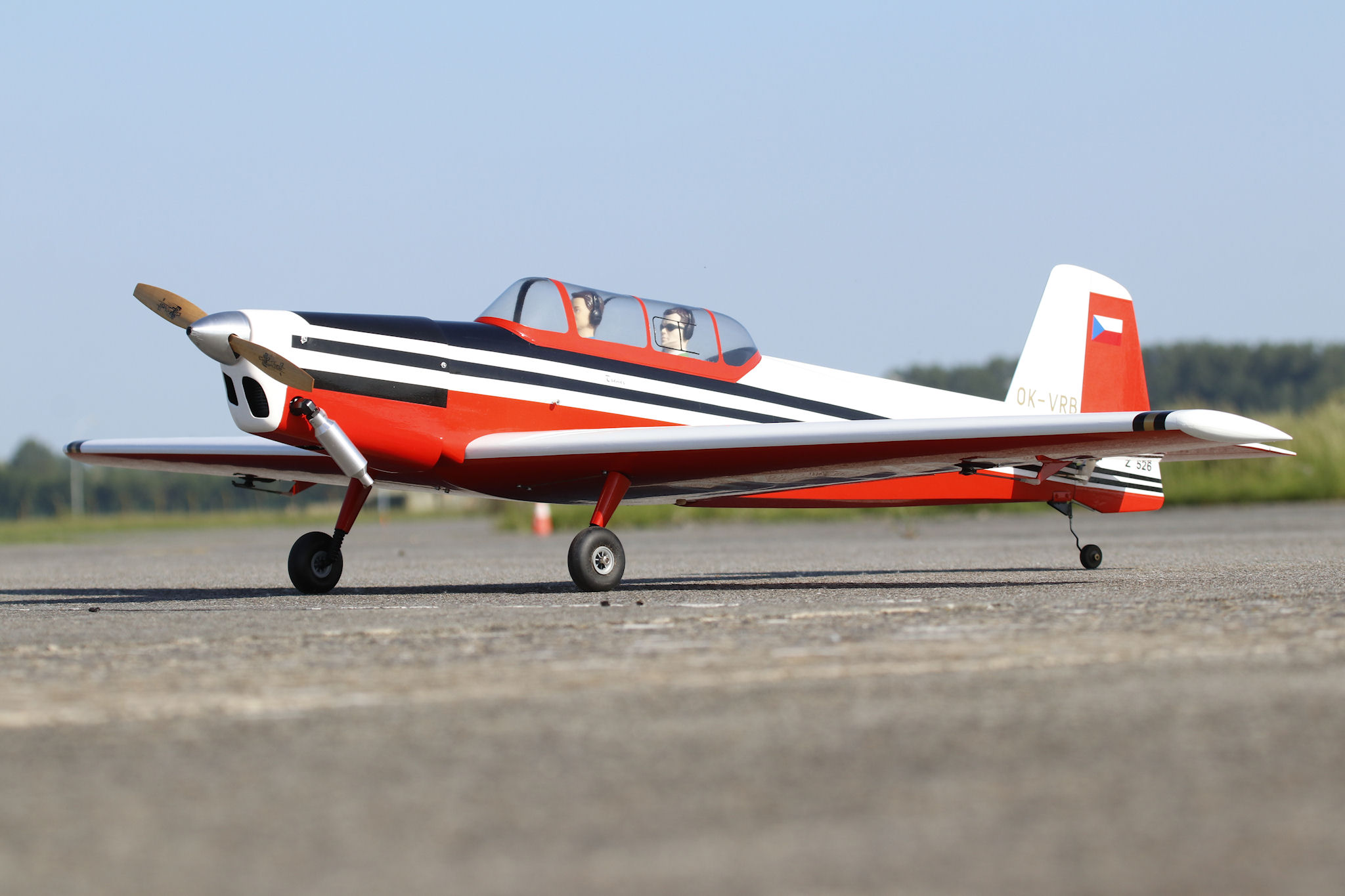
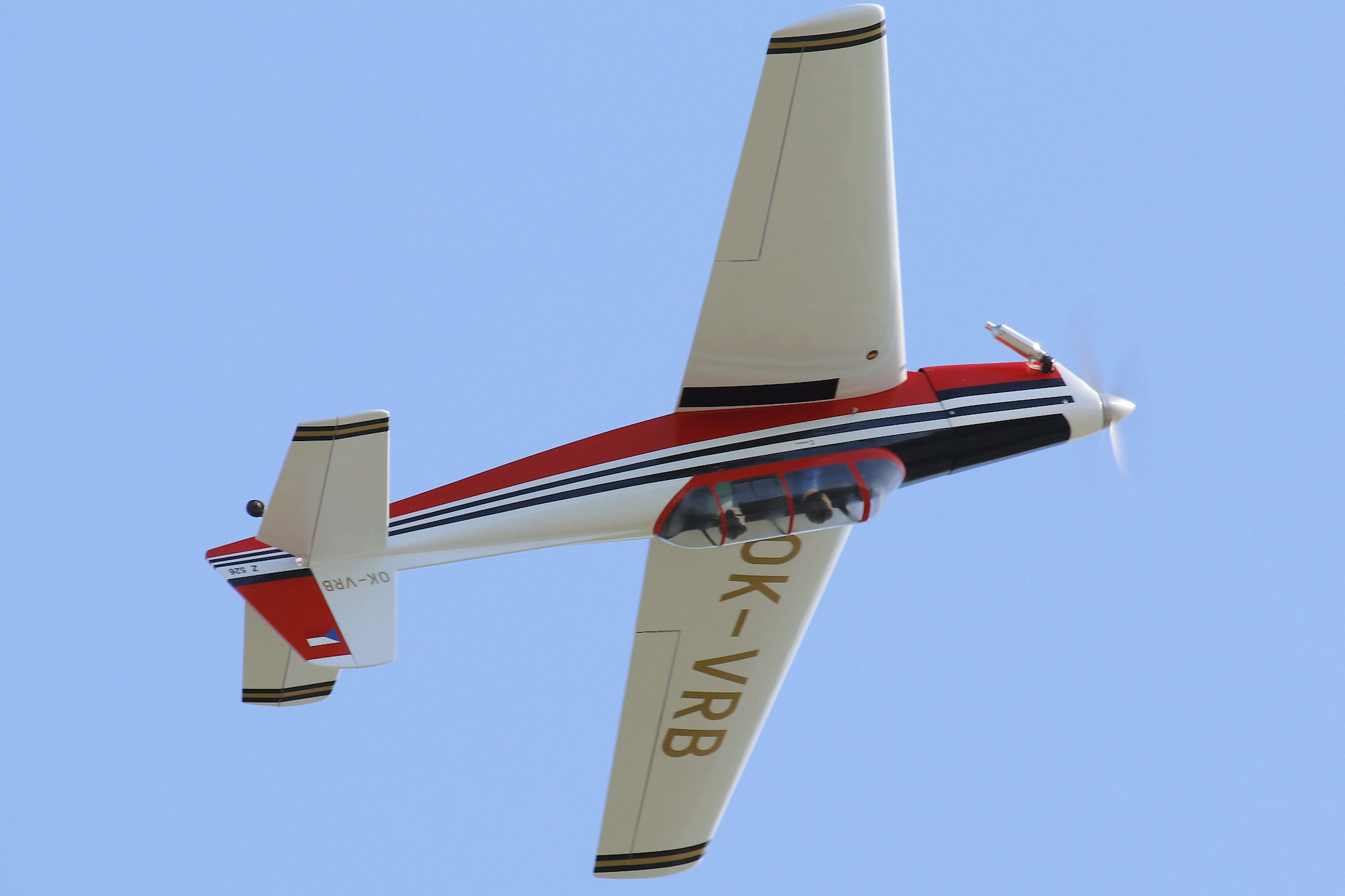
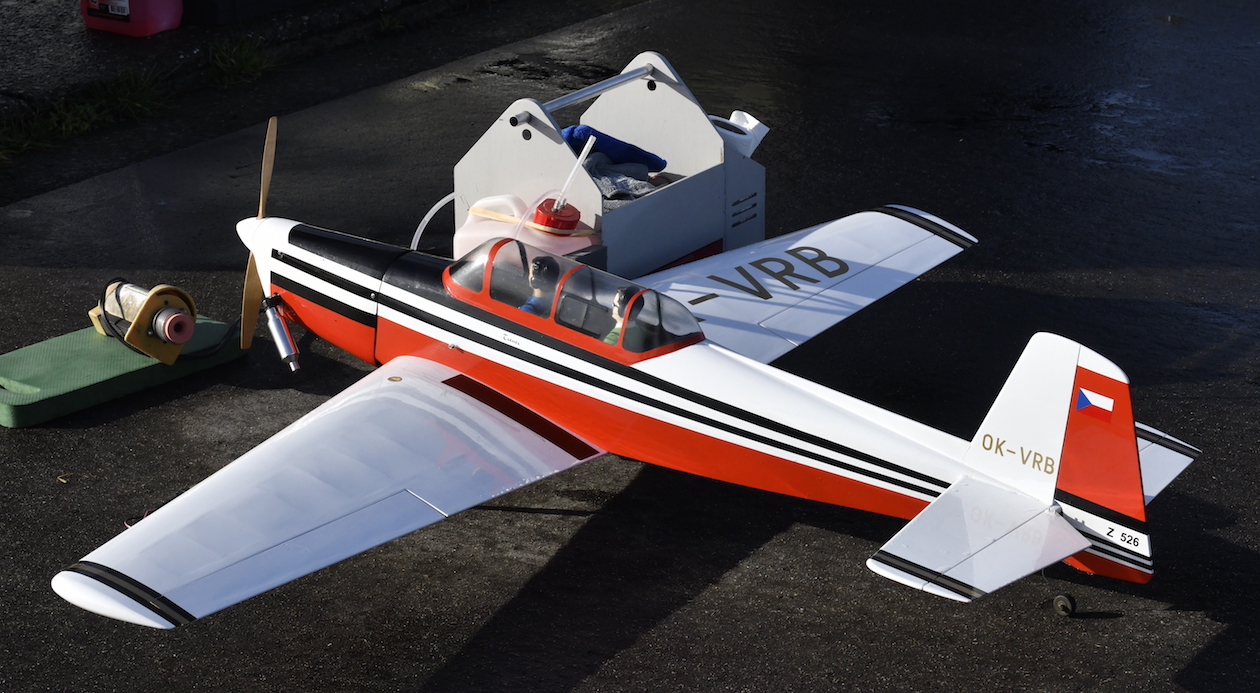
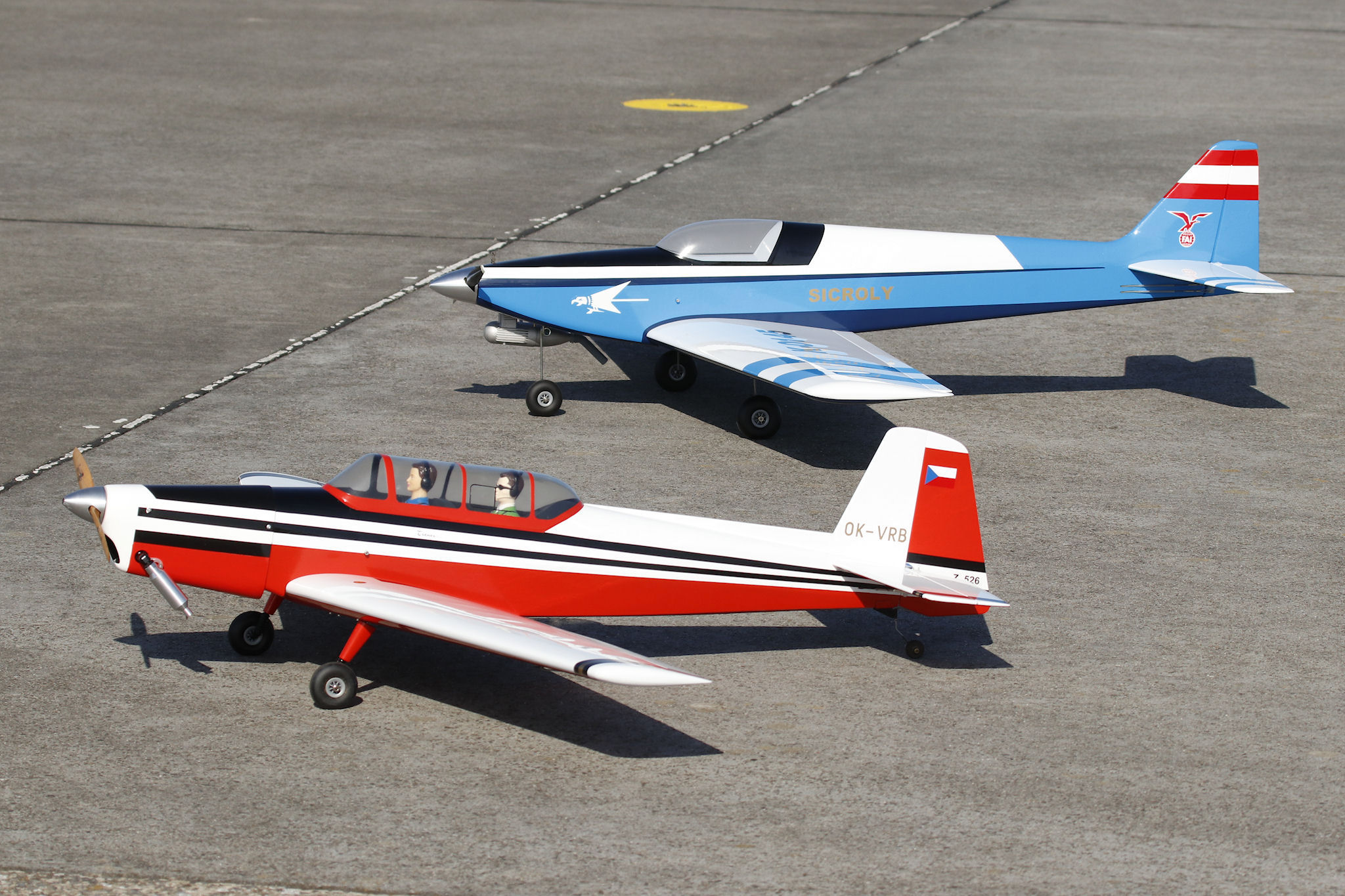
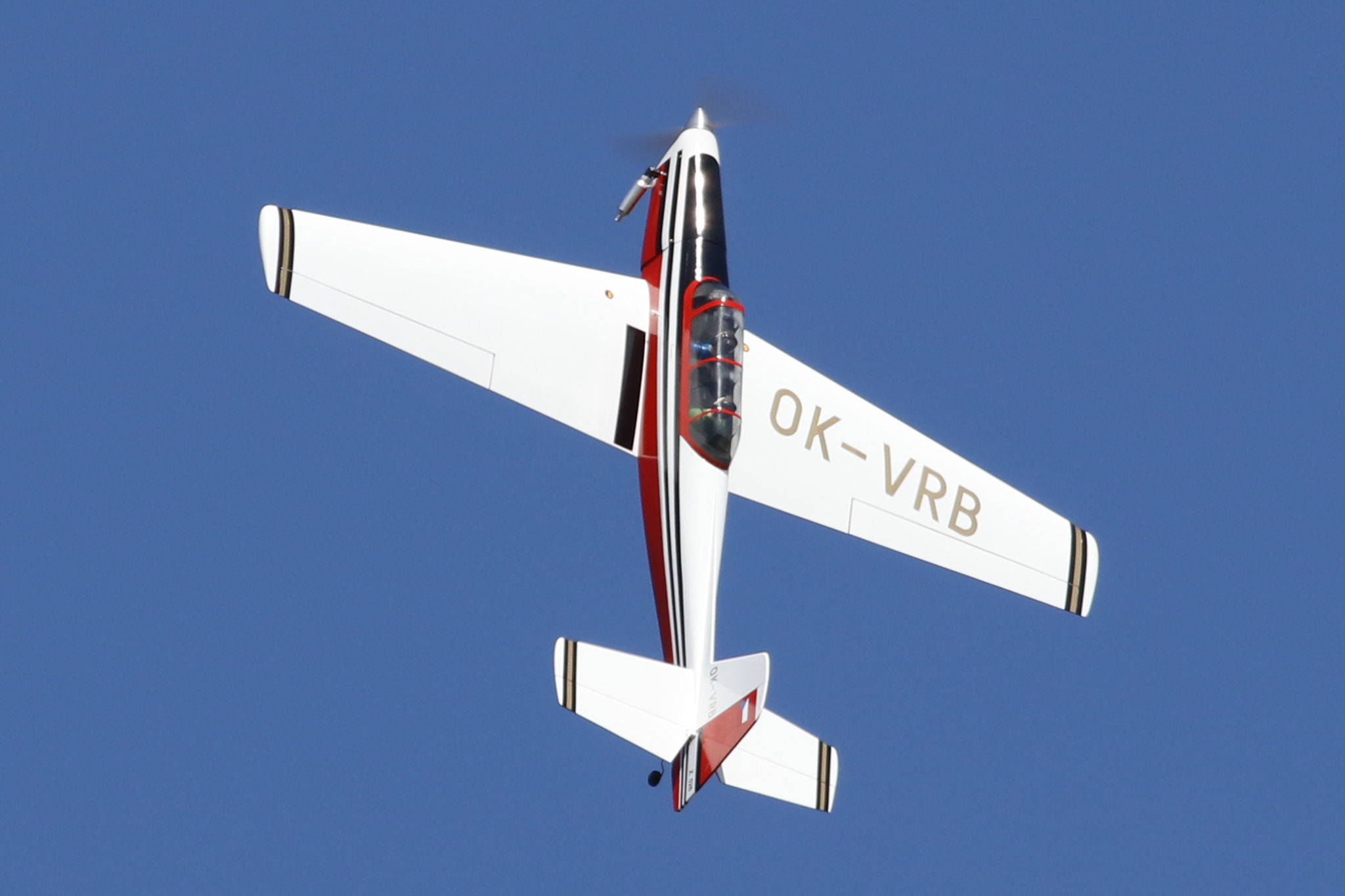
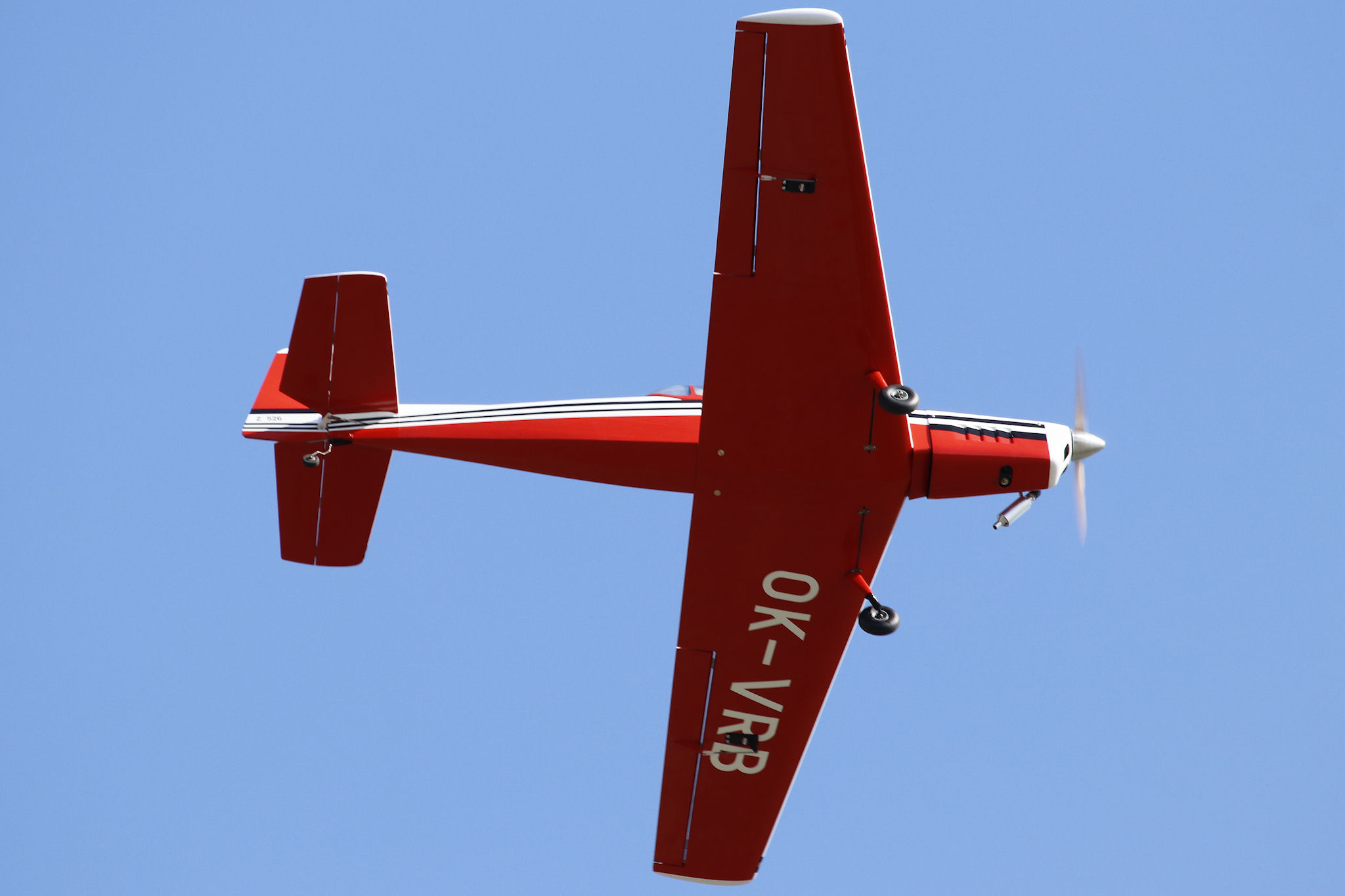
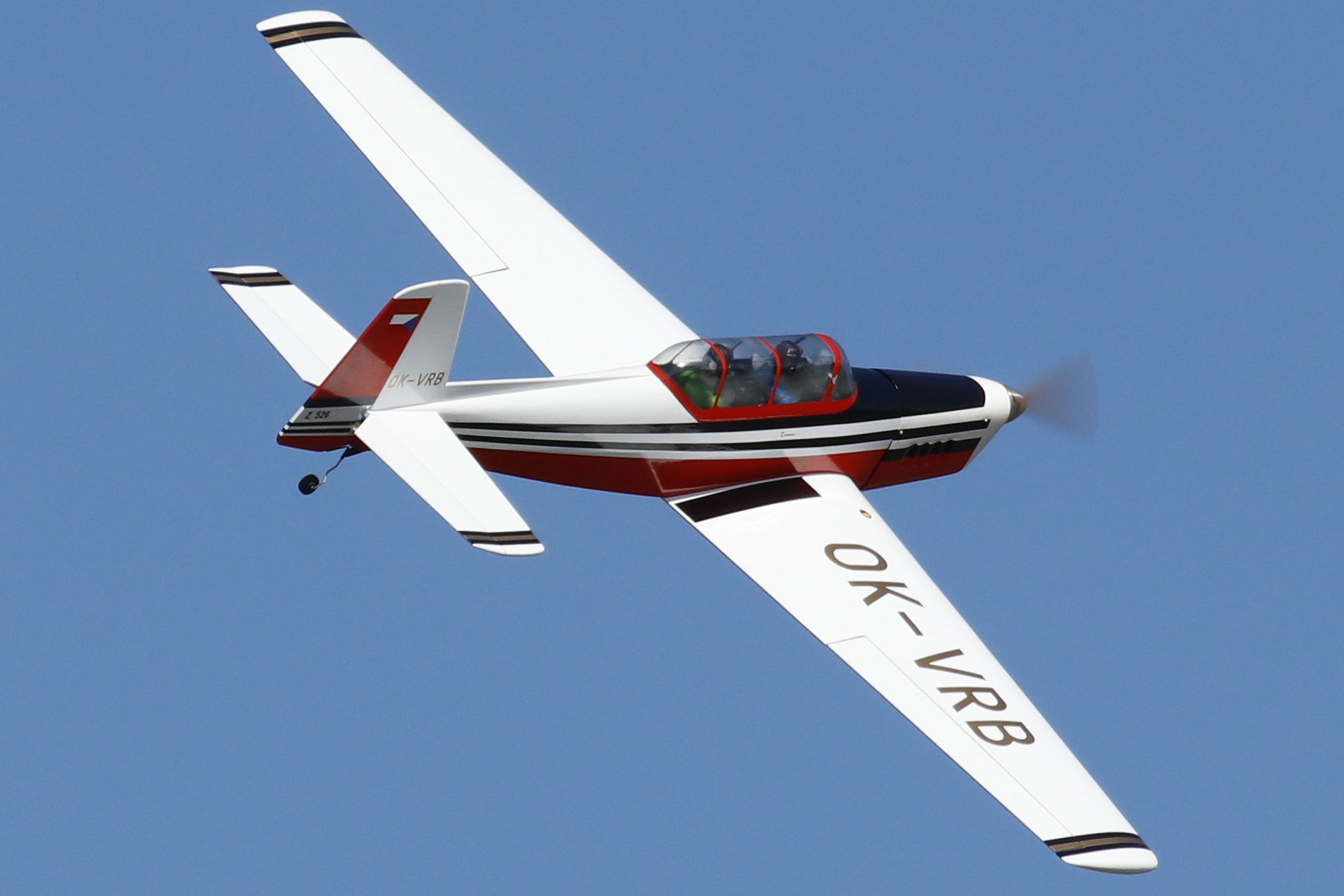
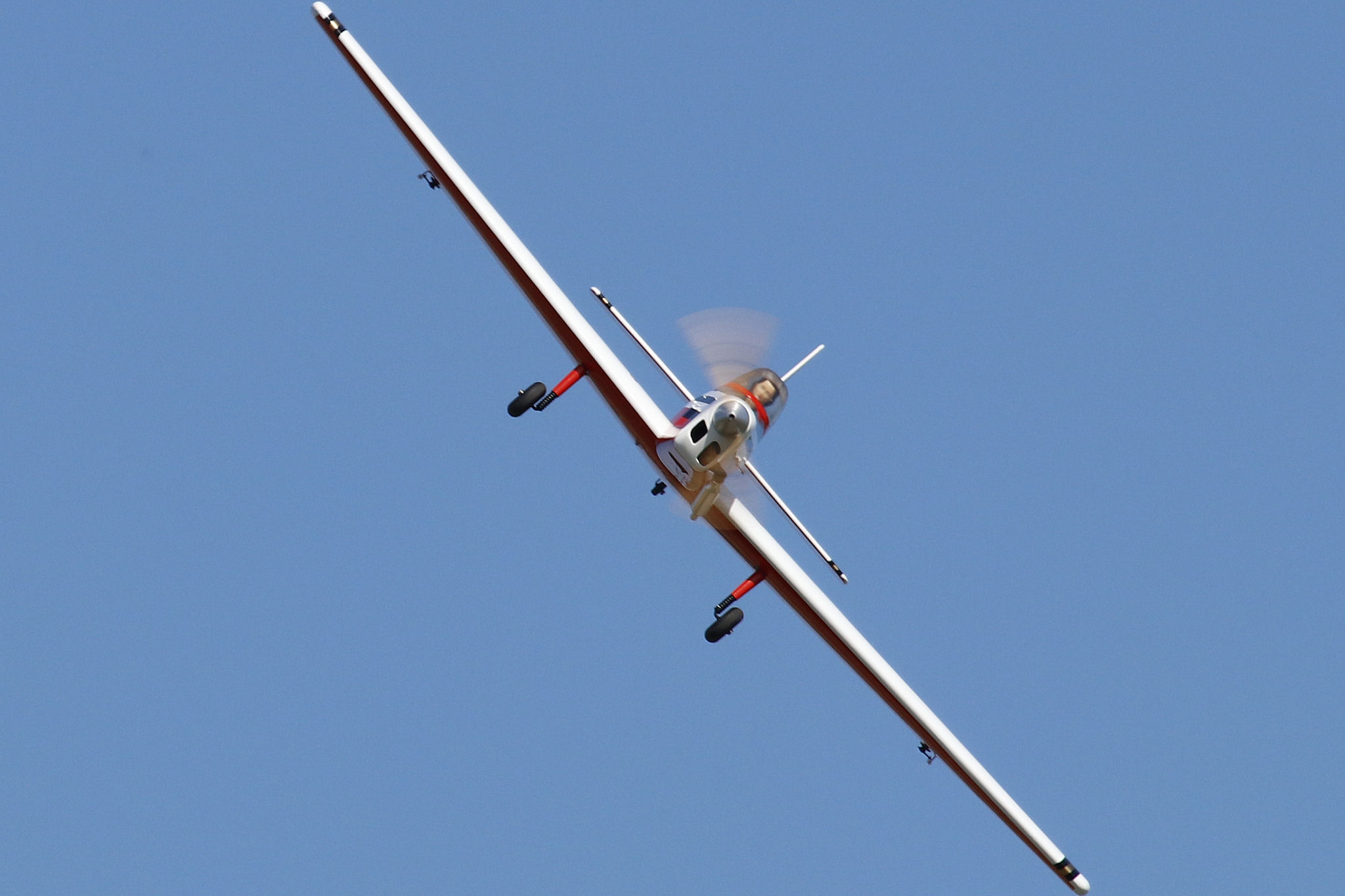
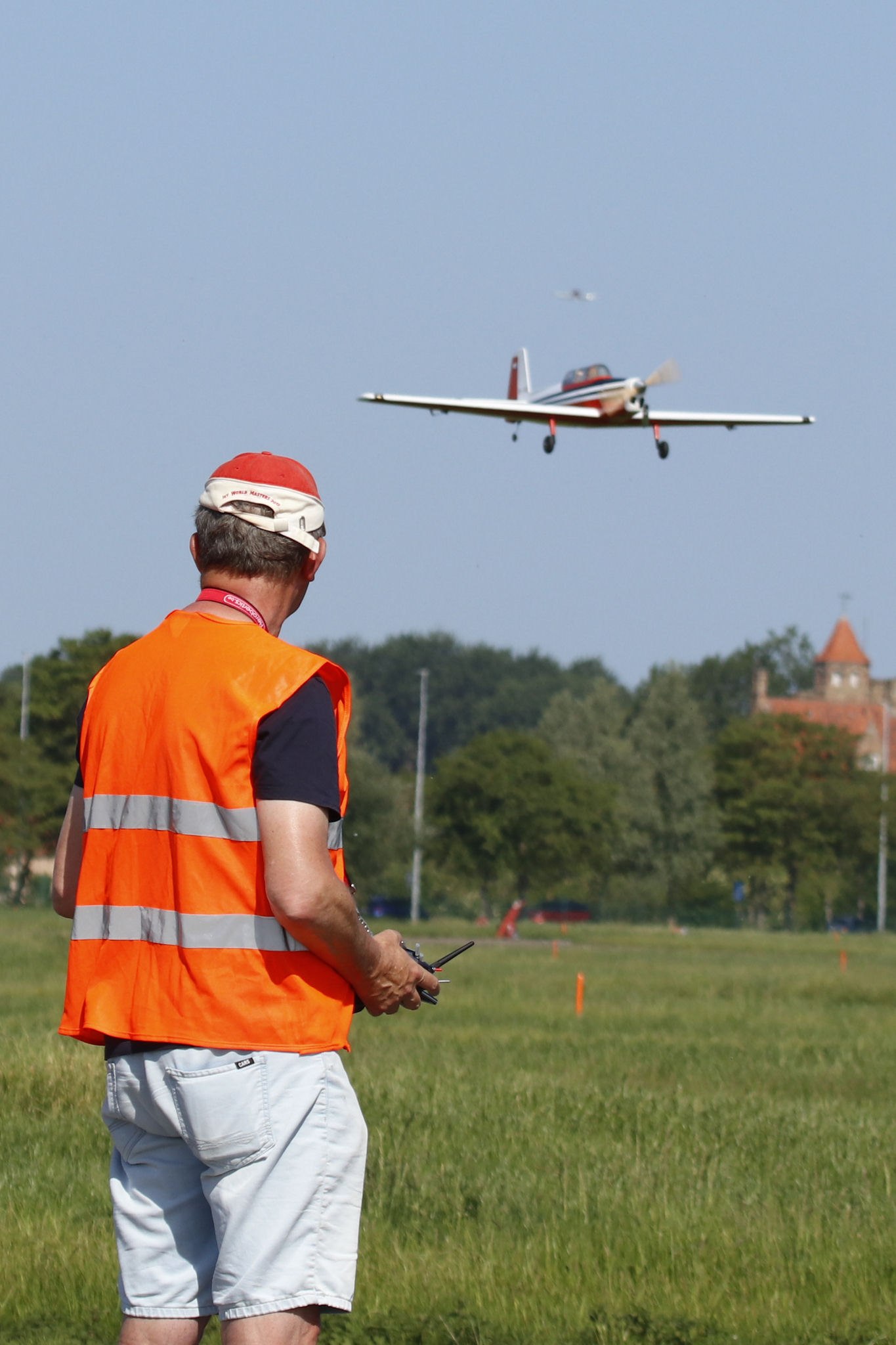
at the field, ready for another flight (Ron Steenacker photo) Finally, end of May 2026, at last a sunny day allowing some more impressive photographs to be taken by son Michel. Both my sons Michel and Bert enjoyed some flights with the Zlin (and the Sicroly) on that beautiful day.
Zlin 526 ready for flight with Sicroly in the background
Above series of photographs by Michel Avonds
|
|
Philip Avonds |
| Doornhofstraat 6 |
| B-8670 Koksijde |
| Belgium |
| e-mail: info@avonds.com |