1988 and 1990 FAI F4C Scale |
World Champion |
|
and also 2011 and 2013 Jet World Master in the 13.5 kg Class!
|
|
Philip Avonds won two World Champion titles and one European Champion title in the FAI F4C scale class. The first World Championship title was won in 1988 in Gorizia, Italy, the second title in 1990 in Warsaw, Poland. In between he won the 1989 European Championships in Périgueux, France. All these competitions were won with the original 1/9th scale F-15C Eagle model, powered with two 7.5 cc (.45) K&B Ducted Fan engines and Turbax I fan units. The weight limitation for the F4C class was only 6 kg (13 1/4 lbs) at the time of its competition début at the 1986 World Championships in Kjeller (near Oslo), Norway, where the Eagle gained a respectable 6th place. That extremely strict weight limit led to a few radical design features. In no particular order, it meant the main components had to be made of kevlar and carbon instead of fibreglass, the landing gear struts had to be made from carbon instead of metal, and a minimum of servos could be installed, dictating the use of "tailerons", which Philip succesfully pioneered. The balsa sheeting for the foam flying surfaces was carefully selected and no tuned pipes could be installed although these K&B DF engines featured long exhaust timing optimised for tuned pipe use in order to extract maximum power. That was partially compensated by substituting outboard marine cylinder liners which had a milder exhaust timing, allowing them to run with open exhaust and still deliver adequate power. You can imagine these engines were very loud (there were no noise restrictions in F4C Scale at that time). |
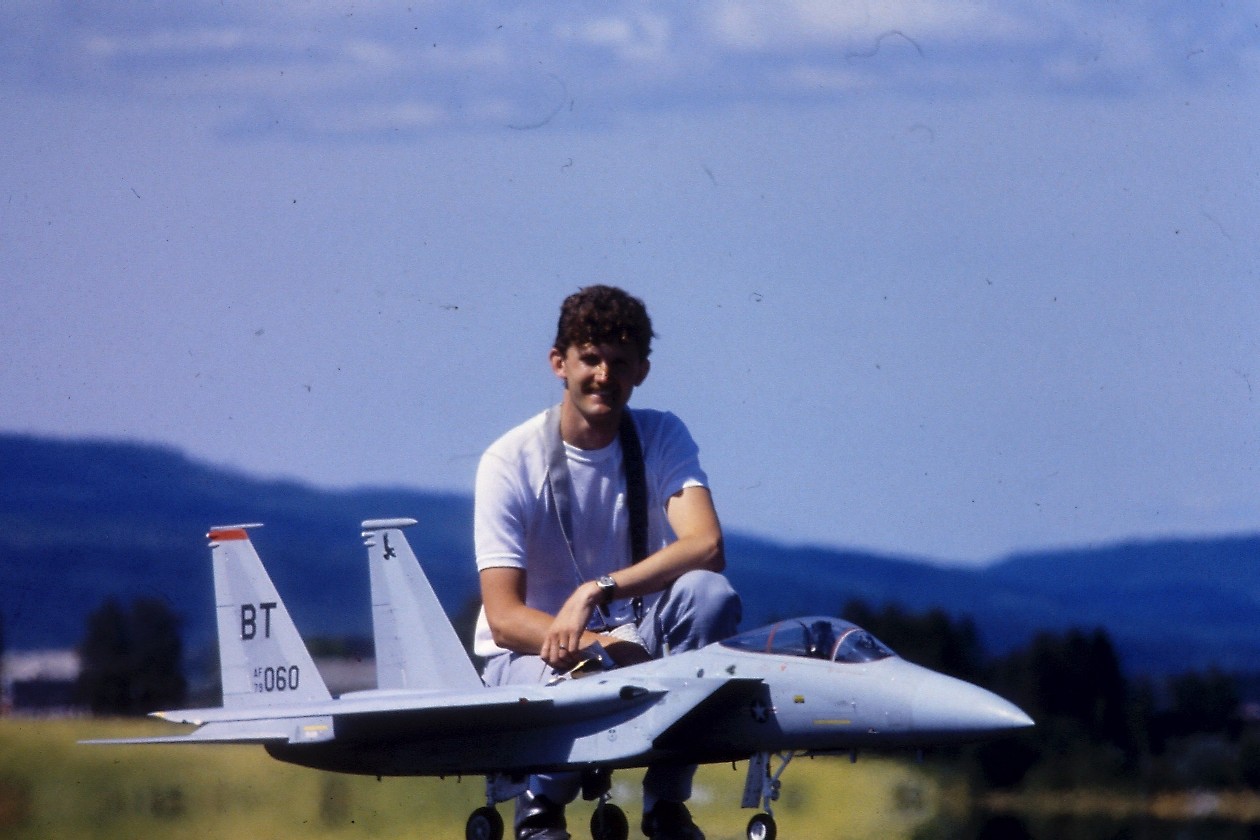 |
| Philip Avonds at the 1986 F4C Scale World Championships in Kjeller, Norway, ending in sixth place which was not too bad for the competition debut of the model |
|
Participation at the 1987 European Championships in Nyköping, Sweden resulted in a 2nd place missing 1st place by a very narrow margin, giving Philip high expectations for the next international competition... |
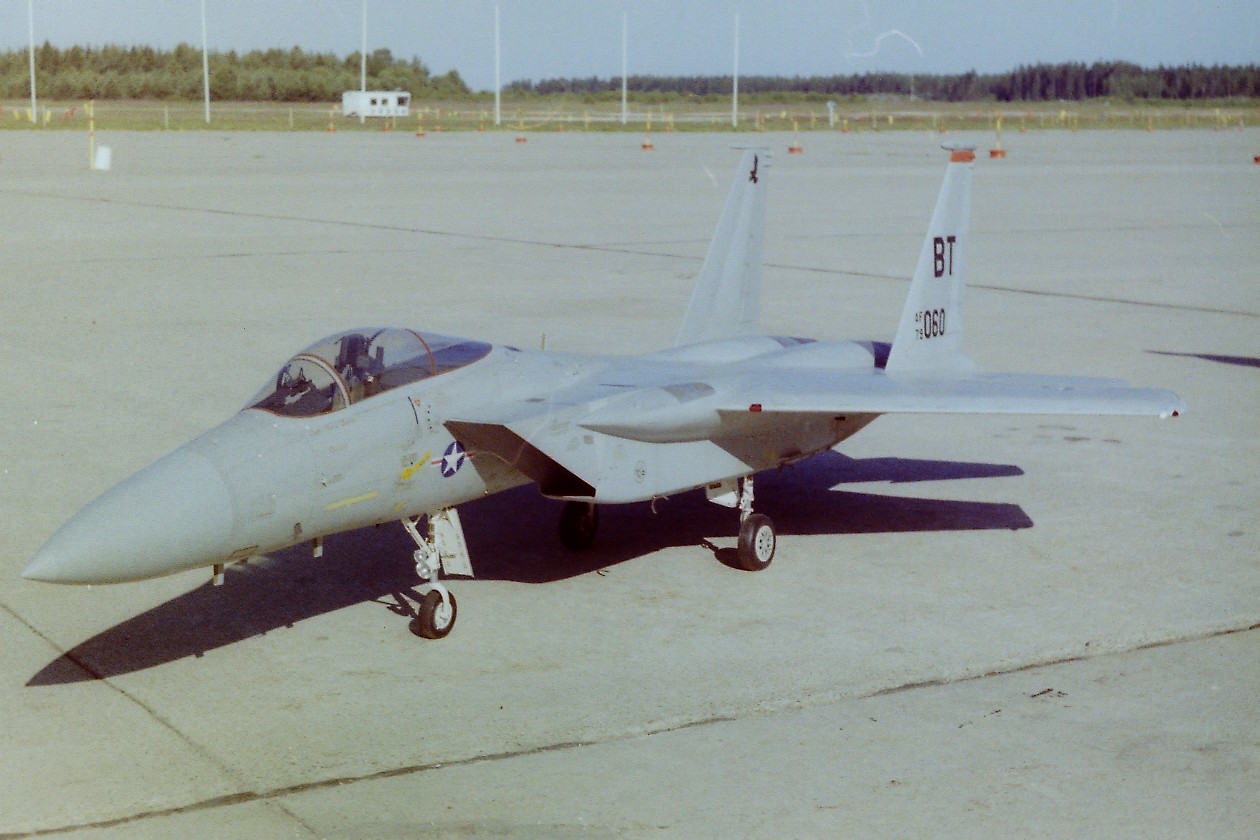 |
| Philip's F-15C model at the 1987 F4C SCale European Championships in Nyköping, Sweden, ending in second place |
|
In 1988 the weight limit was brought to 7 kg (15 1/2 lbs) giving the F-15 some more margin. This allowed Philip to install tuned pipes, making the model somewhat less noisy and to install aluminium oleo struts, allowing smoother landings. It is interesting to note that the winning flight at the 1988 WC was plagued with an engine out situation in the early stages of the flight. Everybody thought it was over for the title, except Philip... During the preparation before the competition, Philip had logged the flight time necessary to complete each of the maneuvres and this helped him to carefully plan the height gaining turnaround before diving into the vertical maneuvres. The immelman, the looping, the split s, the inverted flight and the roll were all done on a single screaming K&B 7.5 cc engine! After landing, the call "finished" was given with a mere 15 seconds of official flight time left (and on top of that, very low on fuel on the tank feeding the good engine...). |
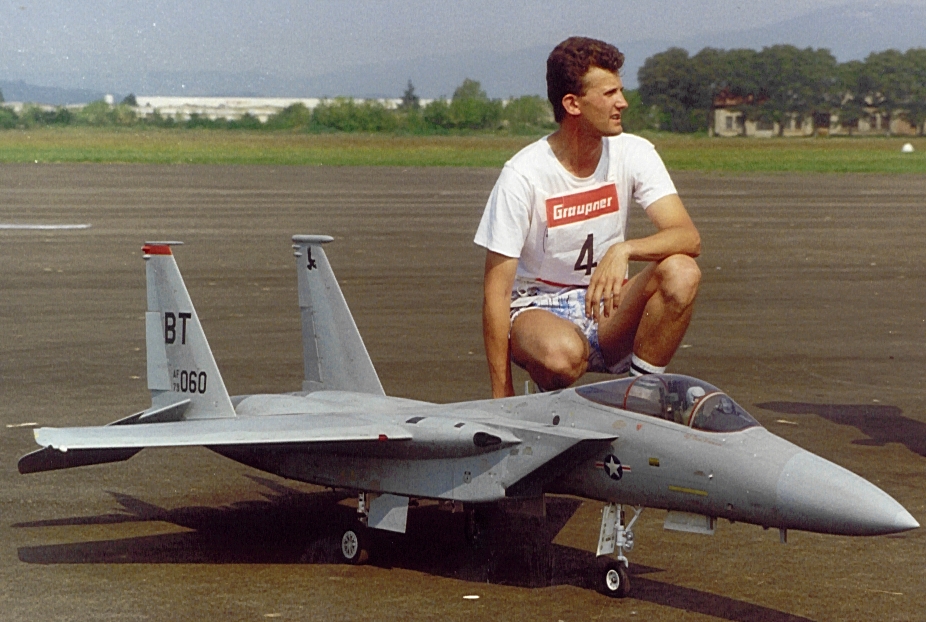 |
| Philip Avonds with his F-15C Eagle just after the winning flight that made him win the first FAI F4C Scale World Championship in 1988, Gorizia, Italy |
|
The same F-15 model was later converted to turbine power to compete at the 1997 IJMC Jet World Masters in Wroughton, UK. It was powered by a JPX T-260 turbine with a bifurcated tailpipe (another feature Philip Avonds pioneered). At the same time, full sequencing gear doors, full navigation lighting and wheel brakes were added. For the 1999 edition in Zeltweg, Austria, a SimJet NG85 was installed and a a functional airbrake. For the 2001 edition in Pattaya, Thailand, the F-15 was upgraded with scale grilles. The final touch was installed prior to the 2003 IJMC Jet World Masters in Zwartkop, South Africa: museum scale quality exposed nozzles ("turkey feathers" removed). Sadly, the F-15 did not fare too well at that competition: a flame out after take off, just as the gear up cycle had been initiated, resulted in a belly landing on the tarmac, ripping out all the gear doors and scale details and scraping the whole underside in the process. Perhaps this was the models' cry for retirement after no less than 17 years (!) of service... I've never repaired the bottom, but being suspended almost upside down in my attic, the damage is not visible. My attic constitutes sort of a private museum, which as a model enthousiast you can visit (on appointment only). |
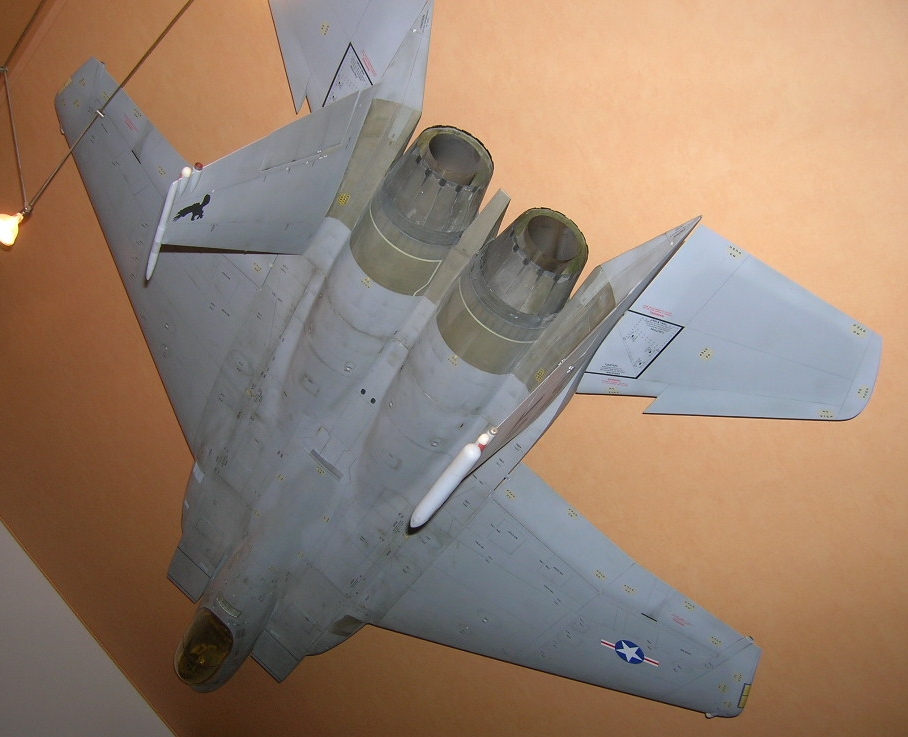 F-15 retired and suspended in my attic |
|
After retiring this model, I had to build another one: an all composite version of the F-15 with all scale details moulded in the skin... and a lot more improvements. I entered that model only once in competition (the 2007 Jet World Masters in Northern Ireland) before it was sold. Read more about the new F-15C ARF full composite here |
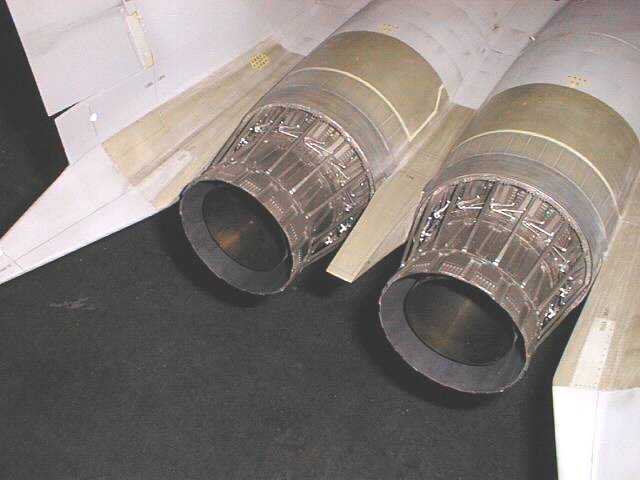 |
| Latest scale addition were these scale nozzles without "turkey feathers" |
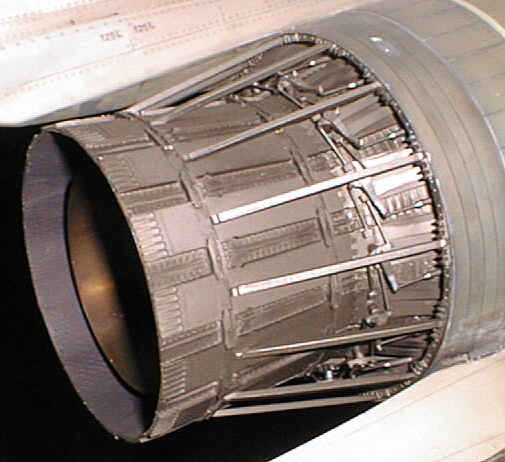 |
| Closer view of the F-15C scale nozzles without "turkey feathers" |
| Early competition successes |
| 1982 Woodvale Rally (UK) |
|
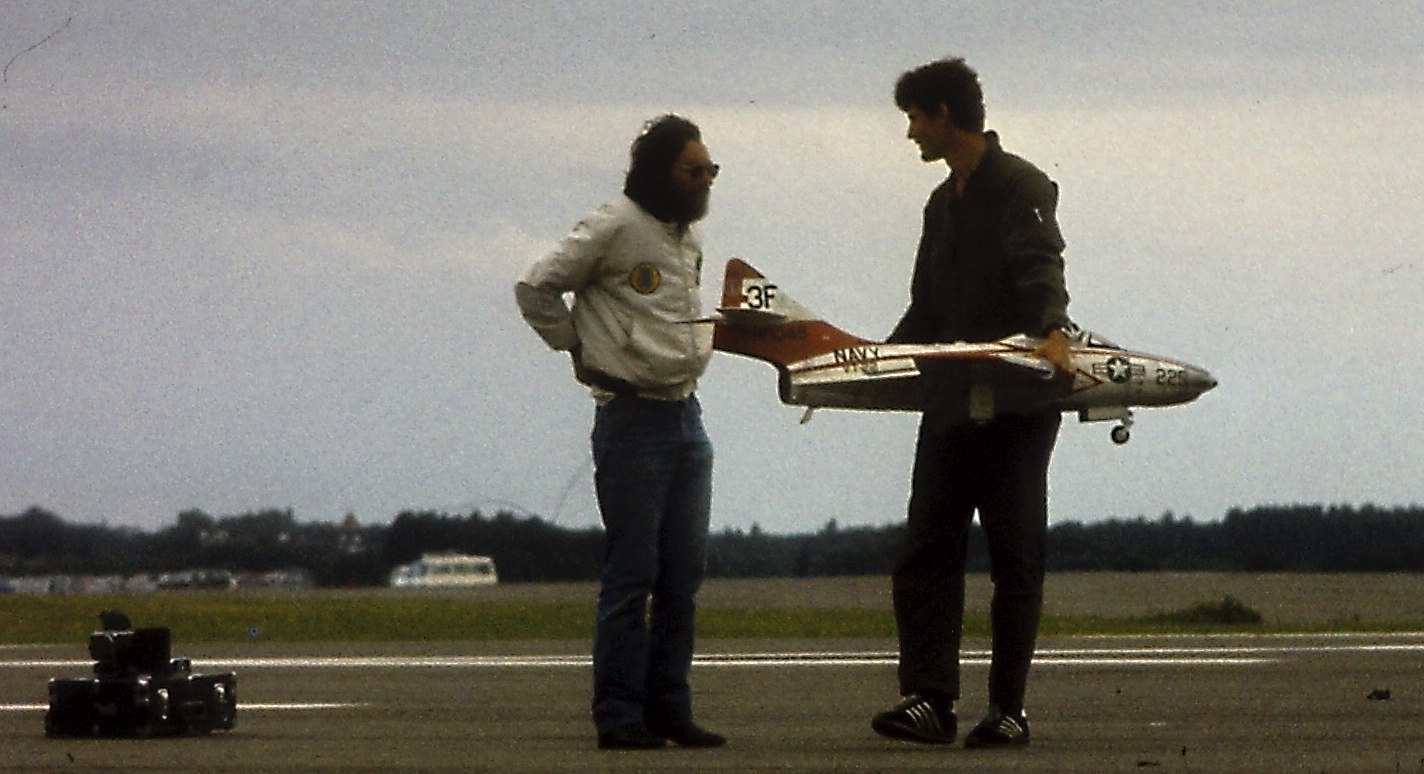
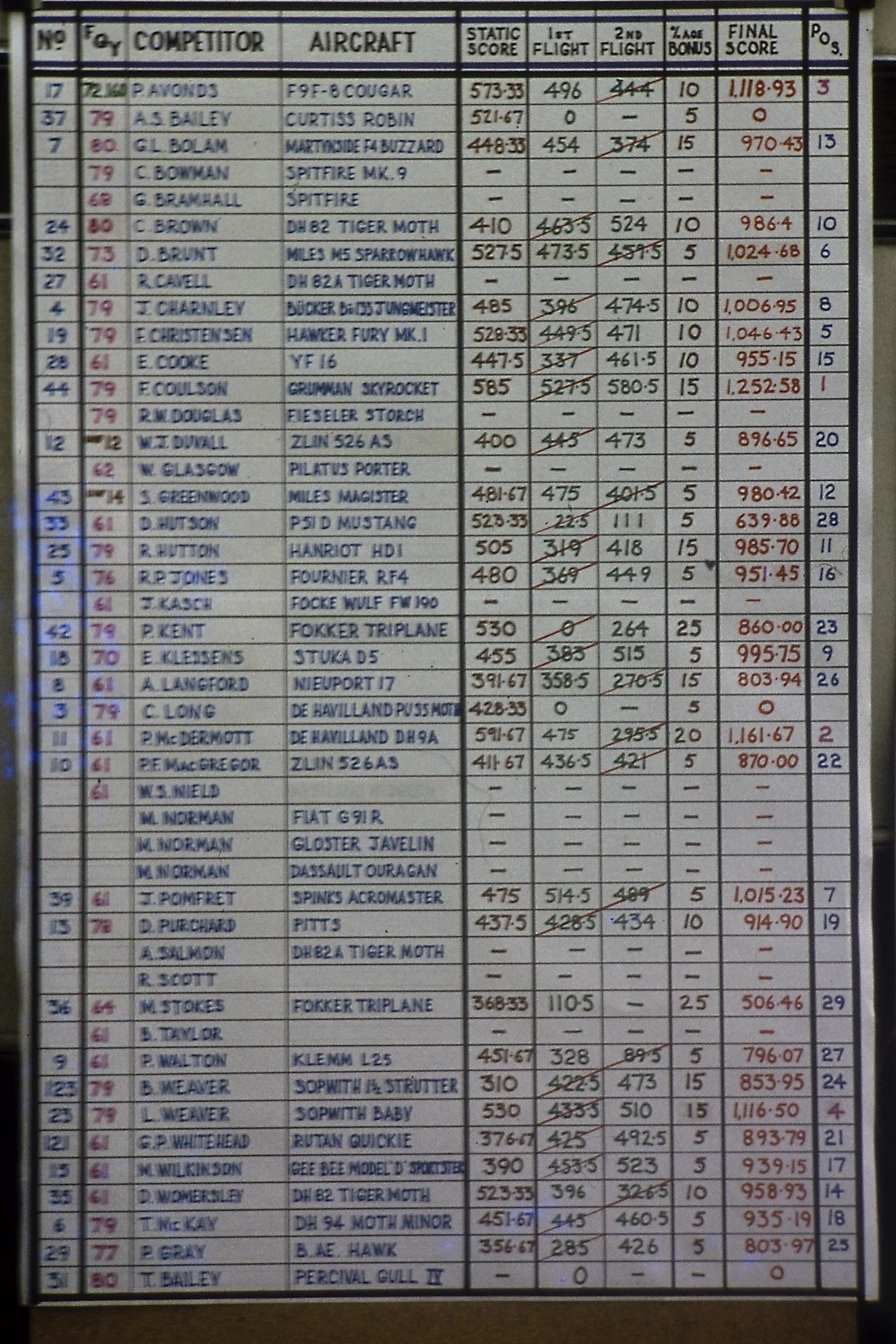
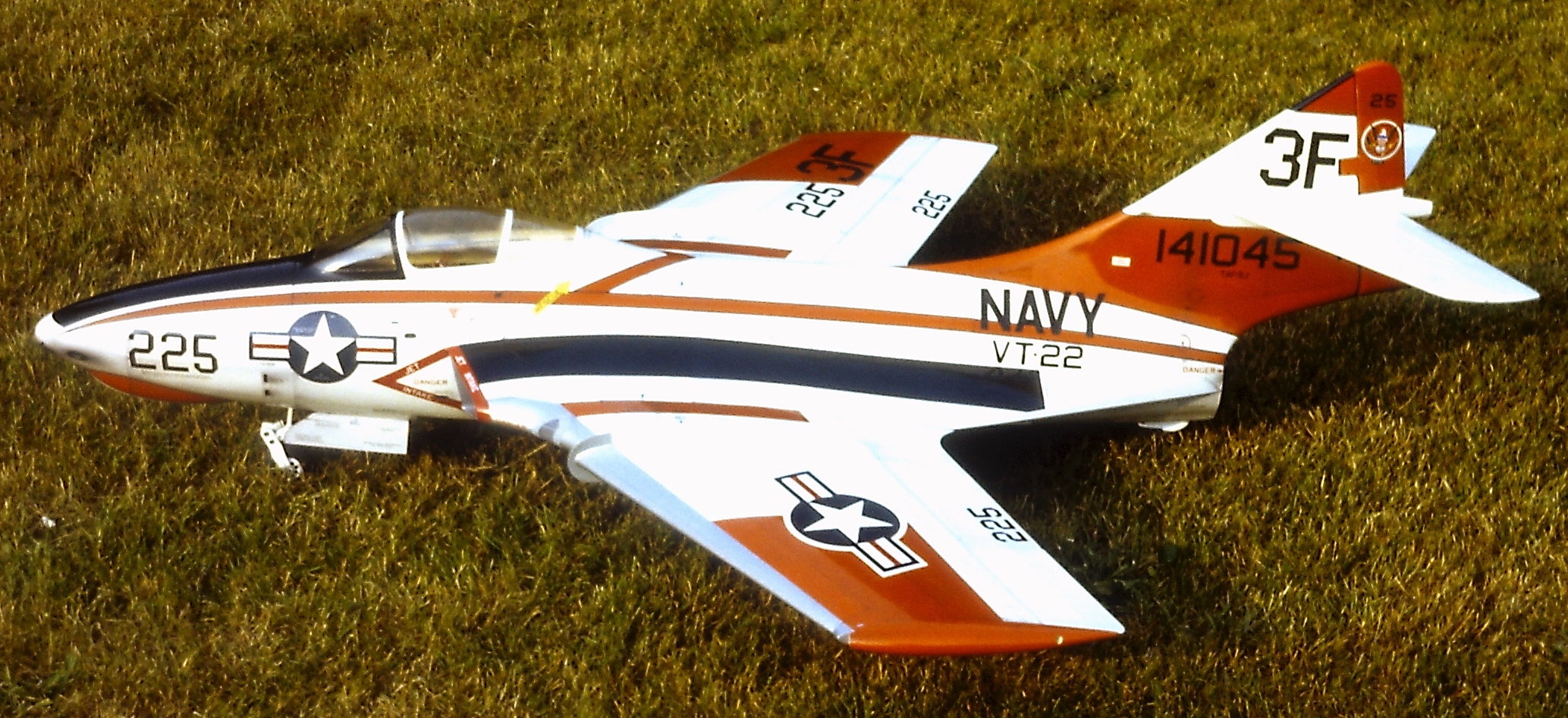
Philip entered his very first competition in 1982. Together with a clubmate, Eddy Klessens, also a rookie, he went to Woodvale (UK) to enter the Stand-Off scale competition. The model was an F9F-8 Cougar powered by a 7.5 cc (.45) K&B Ducted Fan engine and Turbax I fan unit. It was built from the Jet Hangar Hobbies semi kit. Philip finished in third place and Eddy finished 9th with his Stuka. All in all a very succesful competition start.
Philip with the competition model on the flight line
final scores of the 1982 Woodvale Rally
F9F-8 Cougar with Turbax I and K&B 7.5 cc power you can find a few more photographs of this model here
|
| 1984 F4C World Championships Le Bourget (F) |
|
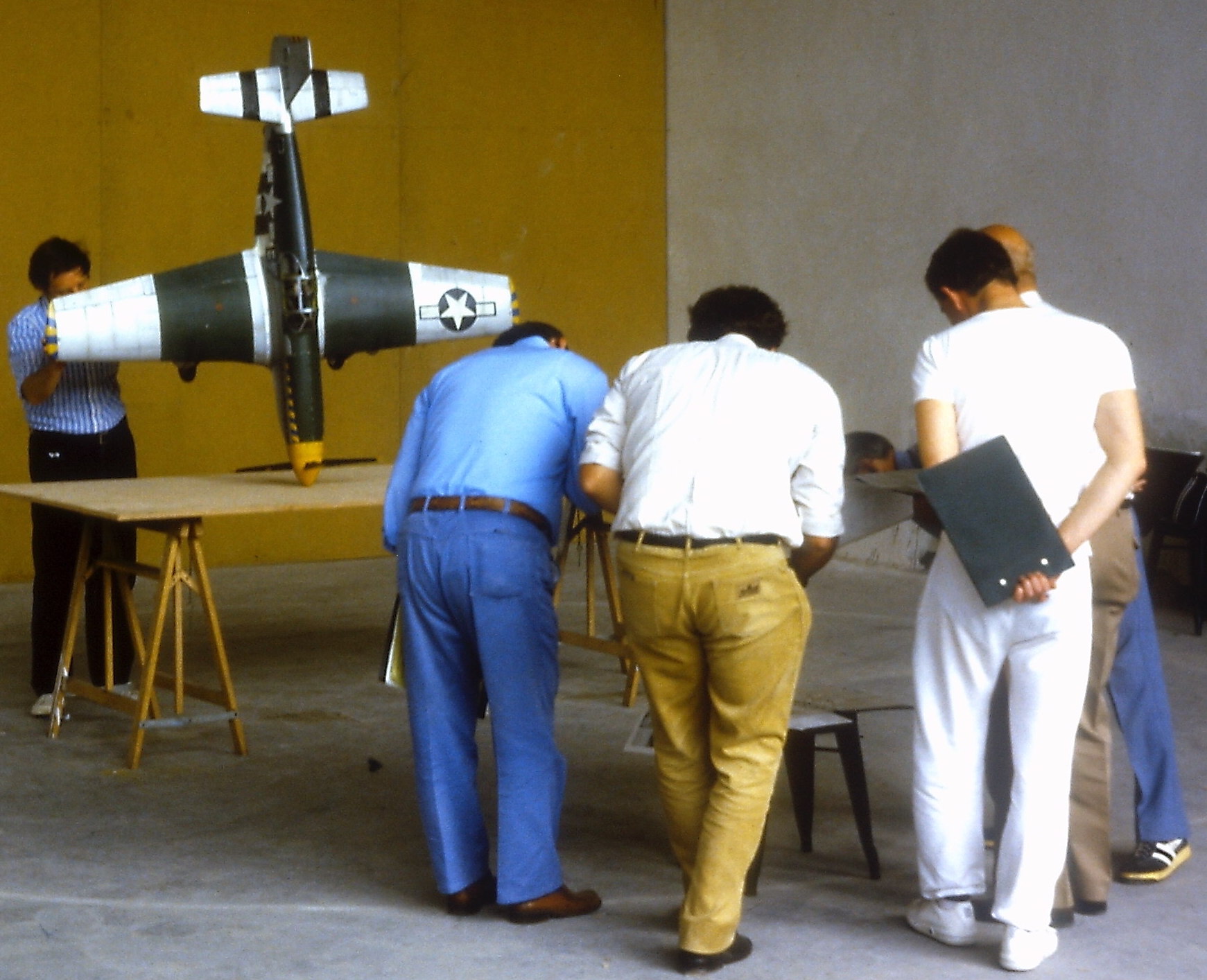
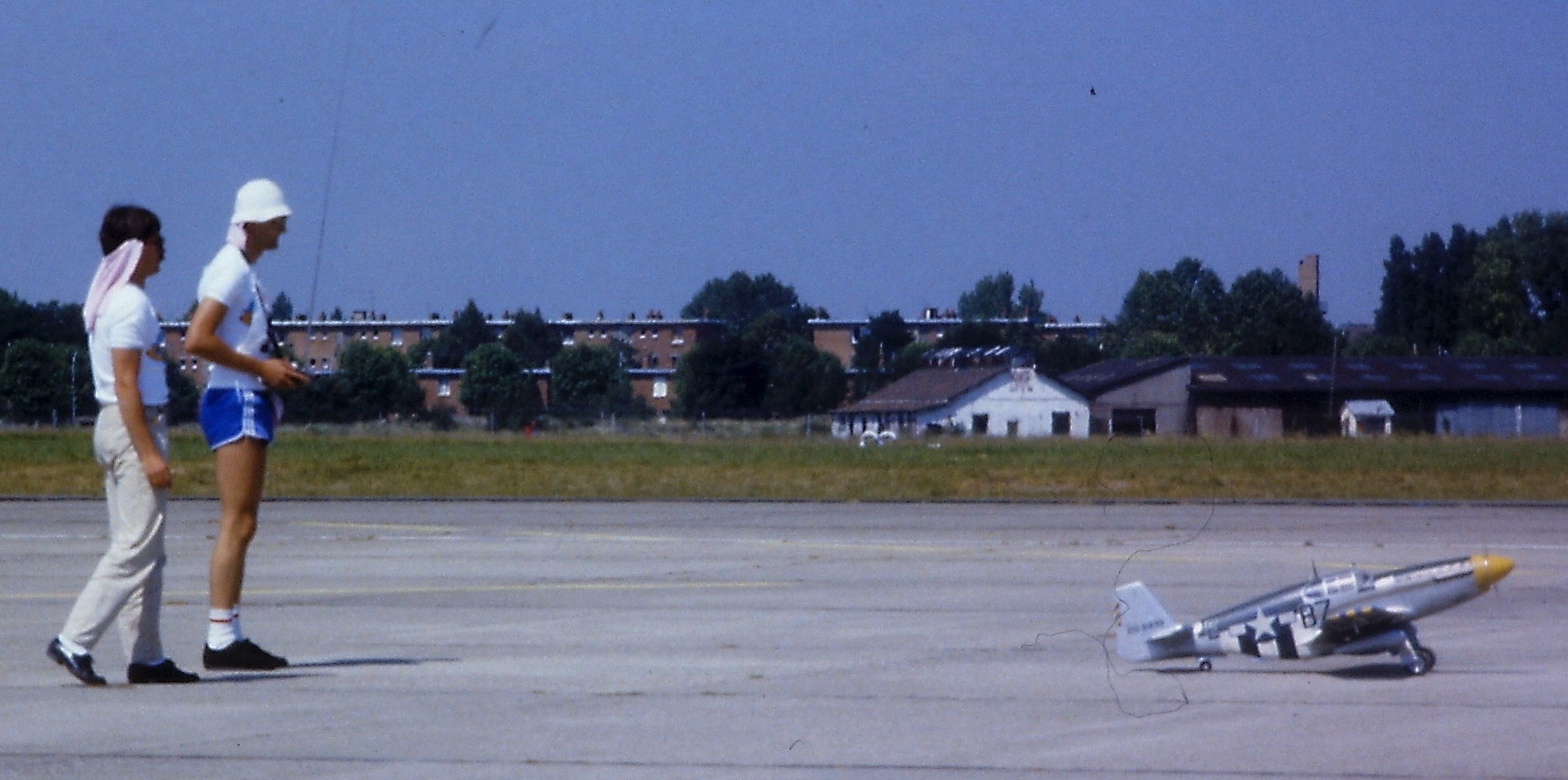
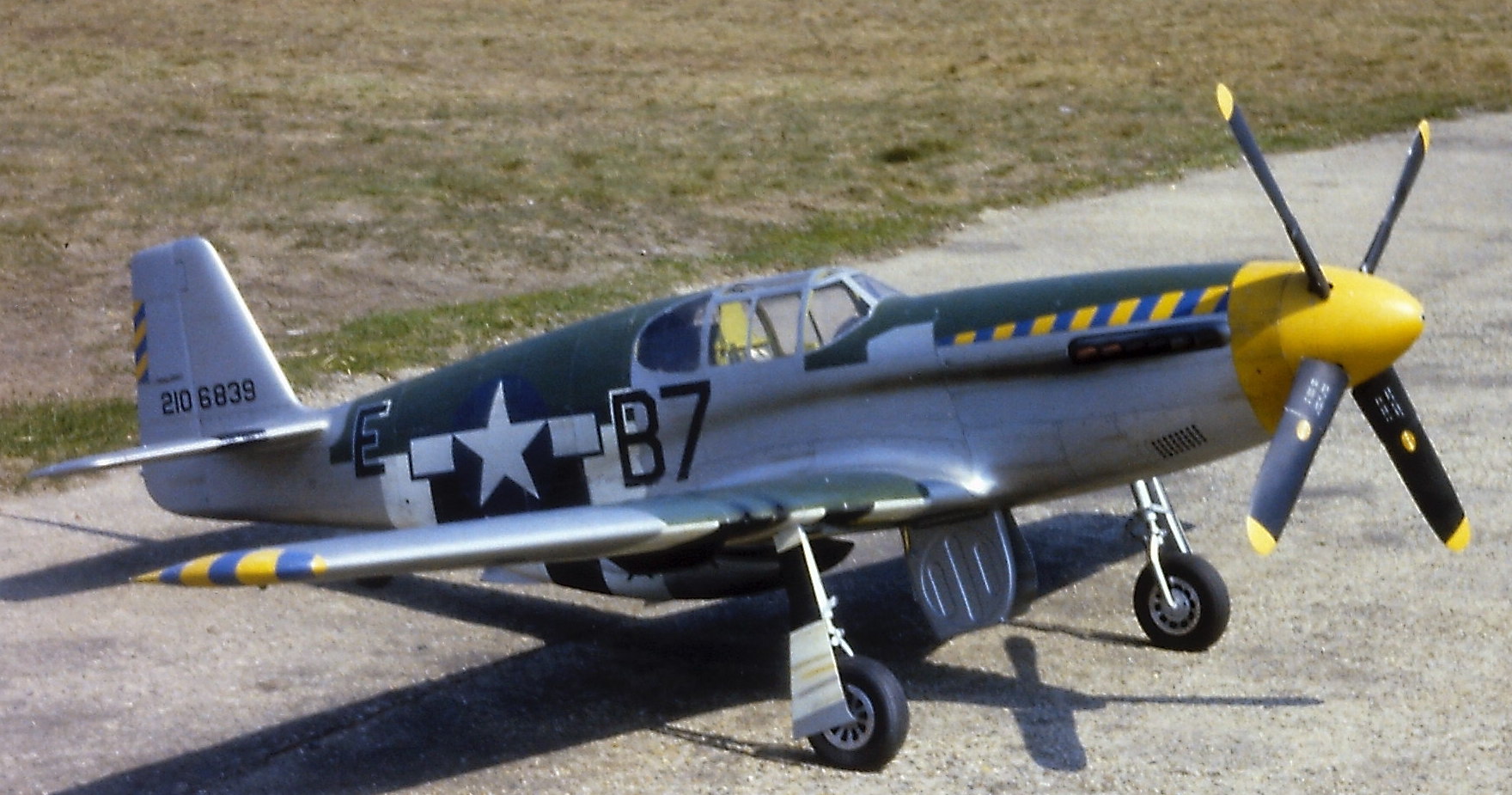
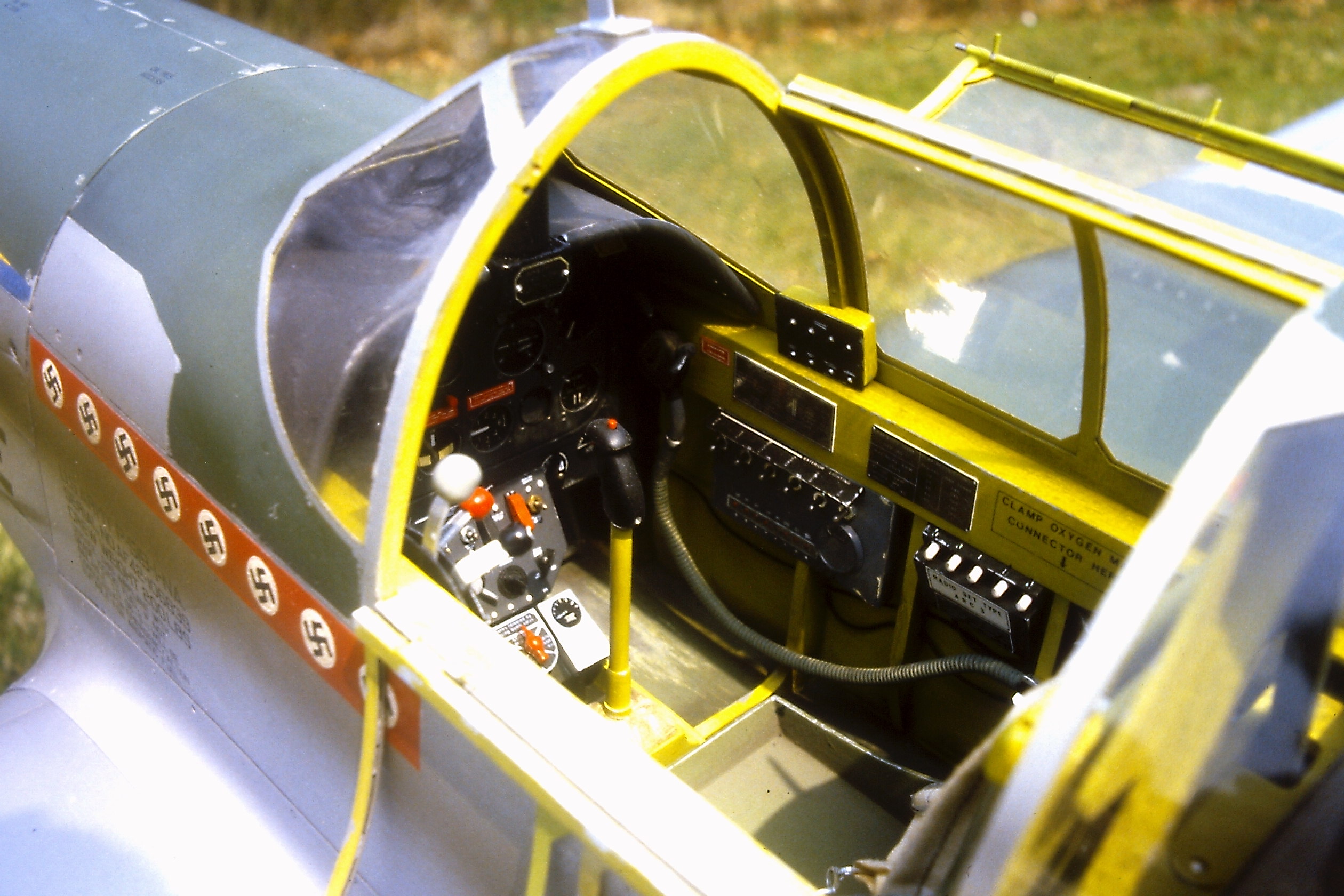
Philip chose to build a scale model of the P-51B Mustang for his first F4C World Championships entry. It was built from the David Vaughan plan published in RCM&E magazine. The final result was 8th place. The model was originally powered with a super reliable OS MAX 60 FSR engine. I used a similar engine to power my Blue Angel some 40 years later. Afterwards, the P-51B was updated with an OS MAX FS90 four stroke. Sadly, the model was lost in a crash and only the tail and a wing portion were salvaged. They adorn my attic now...
at the static judging table (helper is Augustin Goddet)
taxi to take off position (helper is Wim Reynders)
P-51B Mustang built from the David Vaughan plans
cockpit detail on the P-51B you can find a few more photographs of this model here
|
|
Philip Avonds |
| Doornhofstraat 6 |
| B-8670 Koksijde |
| Belgium |
| e-mail: info@avonds.com |